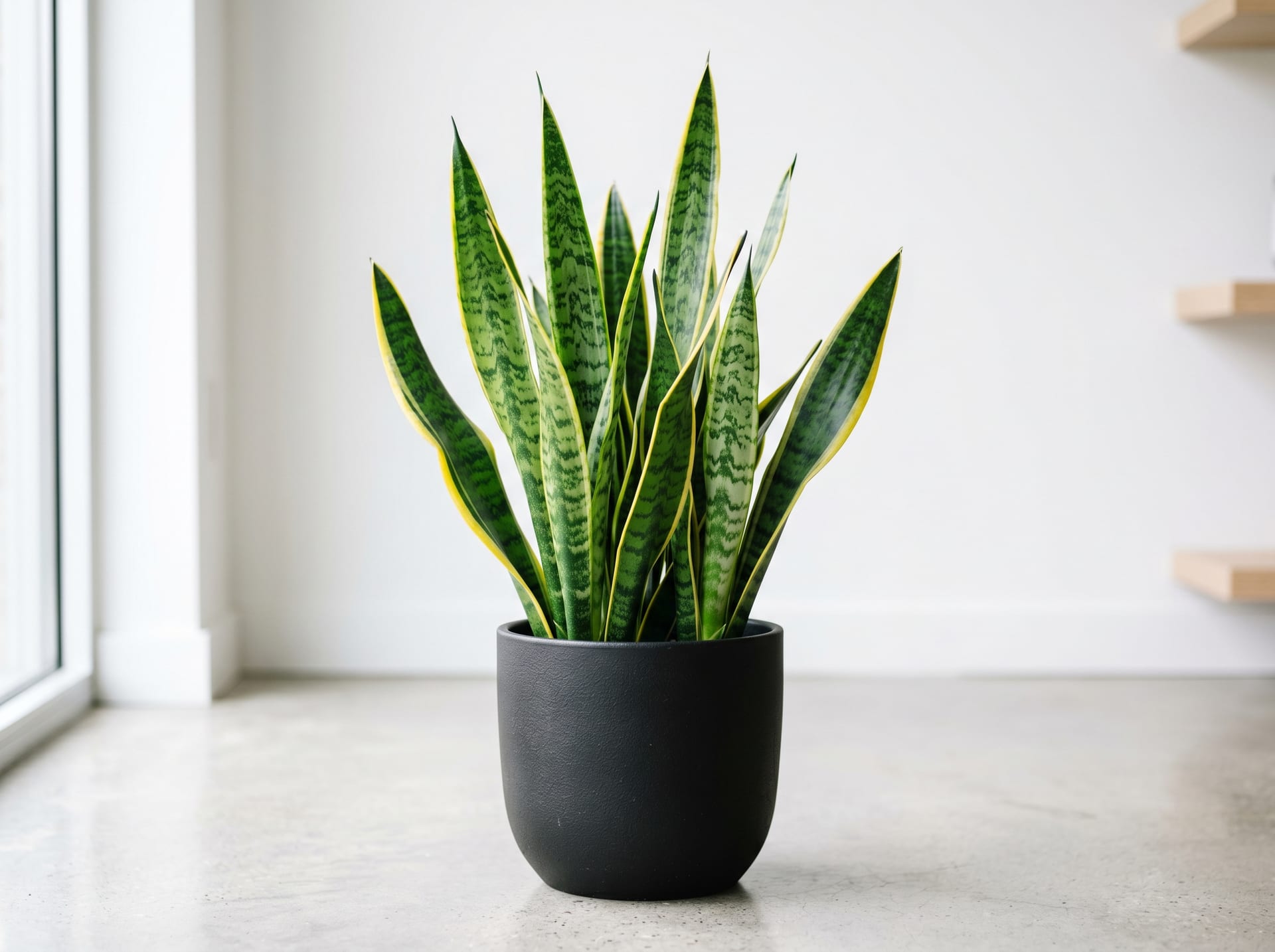
AI-generated image
Snake Plant
BeginnerSansevieria
Distinctive sword-like upright leaves. Selected as NASA air-purifying plant. Minimal watering, one of the hardest plants to kill.
About
Sansevieria, now reclassified as Dracaena trifasciata, is a perennial succulent in the family Asparagaceae, native to West Africa. Commonly known as the snake plant or mother-in-law's tongue, it is celebrated for its upright, sword-shaped leaves with striking horizontal banding in grey-green and darker green. Exceptionally drought-tolerant, requiring watering only once or twice a month. It thrives in bright light but tolerates deep shade, making it one of the most adaptable houseplants available. Sansevieria performs CAM photosynthesis, absorbing CO₂ at night, which has contributed to its reputation as a bedroom plant. NASA research has reported its ability to filter indoor air pollutants such as formaldehyde and benzene.
Source: Wikipedia (CC BY-SA 4.0)
Lifespan of the Snake Plant
The Snake Plant lives 10+ years.
Size of the Snake Plant
The Snake Plant grows to 20cm-1.2m (varies by variety).
Temperature & humidity for the Snake Plant
The ideal temperature for the Snake Plant is 10〜30℃. Ideal humidity is 30〜60%.
Basic Info
Origin
West Africa (Nigeria to Congo)
Lifespan
10+ years
Size
20cm-1.2m (varies by variety)
Temperature
10〜30℃
Humidity
30〜60%
Growing Tips
Placement
Bright location best but tolerates low light
Watering
Once or twice monthly. Extremely drought-tolerant
Temperature
Above 10°C. Almost no winter watering needed
Soil
Well-draining soil. Succulent mix works too
Propagation
Propagate by division or leaf cuttings. Variegated types lose their markings from leaf cuttings, so division is the reliable method.
Pests & Cautions
Sogginess is its worst enemy and leads to root rot. The leaves snap easily, so keep it out of reach of children and pets.
Snake Plant FAQ
QWhat is the growing difficulty level for Snake Plant?
Beginner. A variety suitable for beginners. No special equipment or experience is required—you can grow it without problems by setting up a basic cultivation environment.
QWhat is the ideal temperature for Snake Plant?
The ideal temperature for Snake Plant is 10〜30℃. Recommended humidity is 30〜60%. Avoid sudden temperature changes and maintain a stable environment.
QWhat is the lifespan of Snake Plant?
The average lifespan of Snake Plant is 10+ years. With proper cultivation environment and nutrient management, you can keep it healthy for a long time.
QHow large does Snake Plant get?
The mature size of Snake Plant is 20cm-1.2m (varies by variety). This may vary slightly depending on cultivation environment and individual differences.
QWhat is the typical price for Snake Plant?
The price of Snake Plant varies significantly by variety, characteristics, size, and lineage. Please check GrowerDirect's price guide for the latest market information.
Last updated: June 23, 2026
References & Sources
Edited & verified by: GrowerDirect Editorial Team
The classifications, regulations, and growing data on this page are created and verified based on the primary information database below.
Primary sources
Related Species
Find listings for this species
Related Articles
Complete Guide to Growing Sansevieria | Care and Management of a Hardy and Easy-to-Grow Houseplant Standard
A guide to growing Sansevieria, a classic houseplant recommended for beginners. Covers light, watering, repotting, and propagation methods including division and leaf cuttings.
Why New Leaves on Foliage Plants Are Smaller — Practical Solutions for Light, Humidity, and Nutrition
We analyze the causes behind stunted growth and smaller new leaves on foliage plants. From light environment and humidity management to fertilization strategy and root health, we explain each factor based on empirical data and introduce methods to restore new leaf size.
Spider Mite and Scale Insect Control: Practical Pest Prevention
Learn to identify spider mites and scale insects on houseplants and recognize damage signs, master practical spider mite control methods, discover effective scale insect elimination techniques, create pest-resistant environments with seasonal management, understand pesticide safety precautions, and discover early detection and prevention strategies.
Root Rot Prevention and Root Zone Regeneration Management in Foliage Plants | Soil Selection, Watering, and Early Diagnosis & Recovery Techniques
Root rot is the greatest threat to foliage plants. This article covers practical knowledge from the mechanisms of root rot development to prevention, early-stage diagnosis and treatment methods, and ensuring long-term plant health through soil and watering management.
🩺 Common diseases
Can't find the plant you're looking for?
Post your wishes for free and growers with matching plants will contact you with introductions.