Source: Wikimedia Commons
Sansevieria Cylindrica
BeginnerSansevieria cylindrica
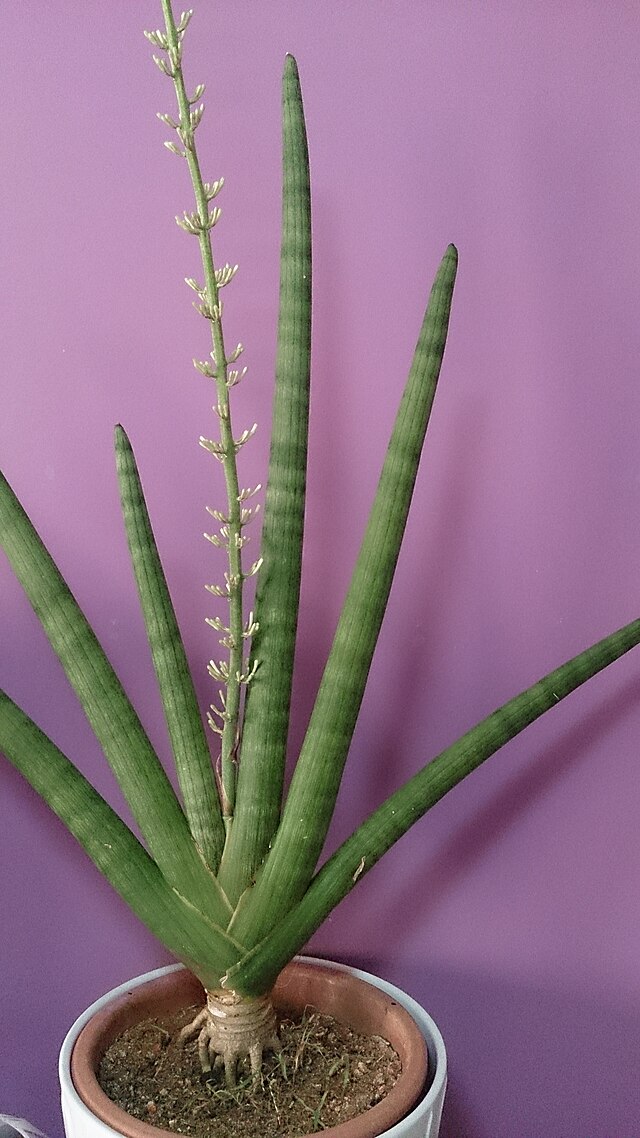
A unique sansevieria with cylindrical leaves growing straight up. Sometimes sold braided.
About
Dracaena angolensis (formerly Sansevieria cylindrica), the cylindrical snake plant or African spear plant, is a perennial in the family Asparagaceae, native to southern Africa, primarily Angola. Its most distinctive feature is its smooth, cylindrical, spear-like leaves that grow vertically from the base — circular in cross-section rather than flat, with sharply pointed tips. Leaves reach 50–150 cm in height and 1–3 cm in diameter. It is commonly sold with multiple leaves braided or fanned together for decorative effect. Like other sansevieria relatives, it is highly drought-tolerant, requiring watering only once or twice a month. Adaptable to a wide range of lighting from bright to quite low light. Its slim, geometric form takes up minimal floor space, making it ideal for narrow hallways and entrances. A dramatic, sculptural plant with the same legendary low-maintenance qualities as the common snake plant.
Size of the Sansevieria Cylindrica
The Sansevieria Cylindrica grows to 50-150cm.
Basic Info
Origin
Southern Africa (primarily Angola)
Lifespan
Perennial
Size
50-150cm
Temperature
15〜30℃
Humidity
50〜70%
Growing Tips
Light & Placement
Adapts from bright spots to partial shade and tolerates dim corners. Good light produces a compact, sturdy plant.
Watering
Extremely drought tolerant; watering once or twice a month is enough. It dislikes sogginess, so keep it on the dry side.
Temperature & Overwintering
It dislikes cold, so keep it in a warm room in winter. Avoid cold windowsills and placing it directly on an entryway floor.
Soil & Repotting
Use a free-draining or succulent mix. Once roots fill the pot, move it up one pot size.
Pests & Cautions
The leaf tips are very sharp, so avoid eye-level placement and walkway edges. Also watch for root rot from overwatering.
Sansevieria Cylindrica FAQ
QWhat is the growing difficulty level for Sansevieria Cylindrica?
Beginner. A variety suitable for beginners. No special equipment or experience is required—you can grow it without problems by setting up a basic cultivation environment.
QHow large does Sansevieria Cylindrica get?
The mature size of Sansevieria Cylindrica is 50-150cm. This may vary slightly depending on cultivation environment and individual differences.
QWhat is the typical price for Sansevieria Cylindrica?
The price of Sansevieria Cylindrica varies significantly by variety, characteristics, size, and lineage. Please check GrowerDirect's price guide for the latest market information.
Last updated: July 5, 2026
References & Sources
Edited & verified by: GrowerDirect Editorial Team
The classifications, regulations, and growing data on this page are created and verified based on the primary information database below.
Taxonomy & Authority
Regulations & Conservation Status
Foliage plant. Confirmed by document review to be non-applicable to CITES Appendix (Flora), designated invasive species, or designated animals (the genus does not appear in the CITES flora section; Dracaena spp. listings in CITES refer to a reptile genus of the same name; the plant Dracaena is not applicable).
Sources: CITES Appendices I/II/III (flora section, grepped via dbca mirror) / CITES Appendices (official) / Ministry of the Environment List of Specified Invasive Alien Species
Regulations may change. Always verify the latest information with the relevant authorities.
Related Species
Find listings for this species
Related Articles
Complete Guide to Growing Sansevieria | Care and Management of a Hardy and Easy-to-Grow Houseplant Standard
A guide to growing Sansevieria, a classic houseplant recommended for beginners. Covers light, watering, repotting, and propagation methods including division and leaf cuttings.
Why New Leaves on Foliage Plants Are Smaller — Practical Solutions for Light, Humidity, and Nutrition
We analyze the causes behind stunted growth and smaller new leaves on foliage plants. From light environment and humidity management to fertilization strategy and root health, we explain each factor based on empirical data and introduce methods to restore new leaf size.
Spider Mite and Scale Insect Control: Practical Pest Prevention
Learn to identify spider mites and scale insects on houseplants and recognize damage signs, master practical spider mite control methods, discover effective scale insect elimination techniques, create pest-resistant environments with seasonal management, understand pesticide safety precautions, and discover early detection and prevention strategies.
Root Rot Prevention and Root Zone Regeneration Management in Foliage Plants | Soil Selection, Watering, and Early Diagnosis & Recovery Techniques
Root rot is the greatest threat to foliage plants. This article covers practical knowledge from the mechanisms of root rot development to prevention, early-stage diagnosis and treatment methods, and ensuring long-term plant health through soil and watering management.
🩺 Common diseases
Can't find the plant you're looking for?
Post your wishes for free and growers with matching plants will contact you with introductions.