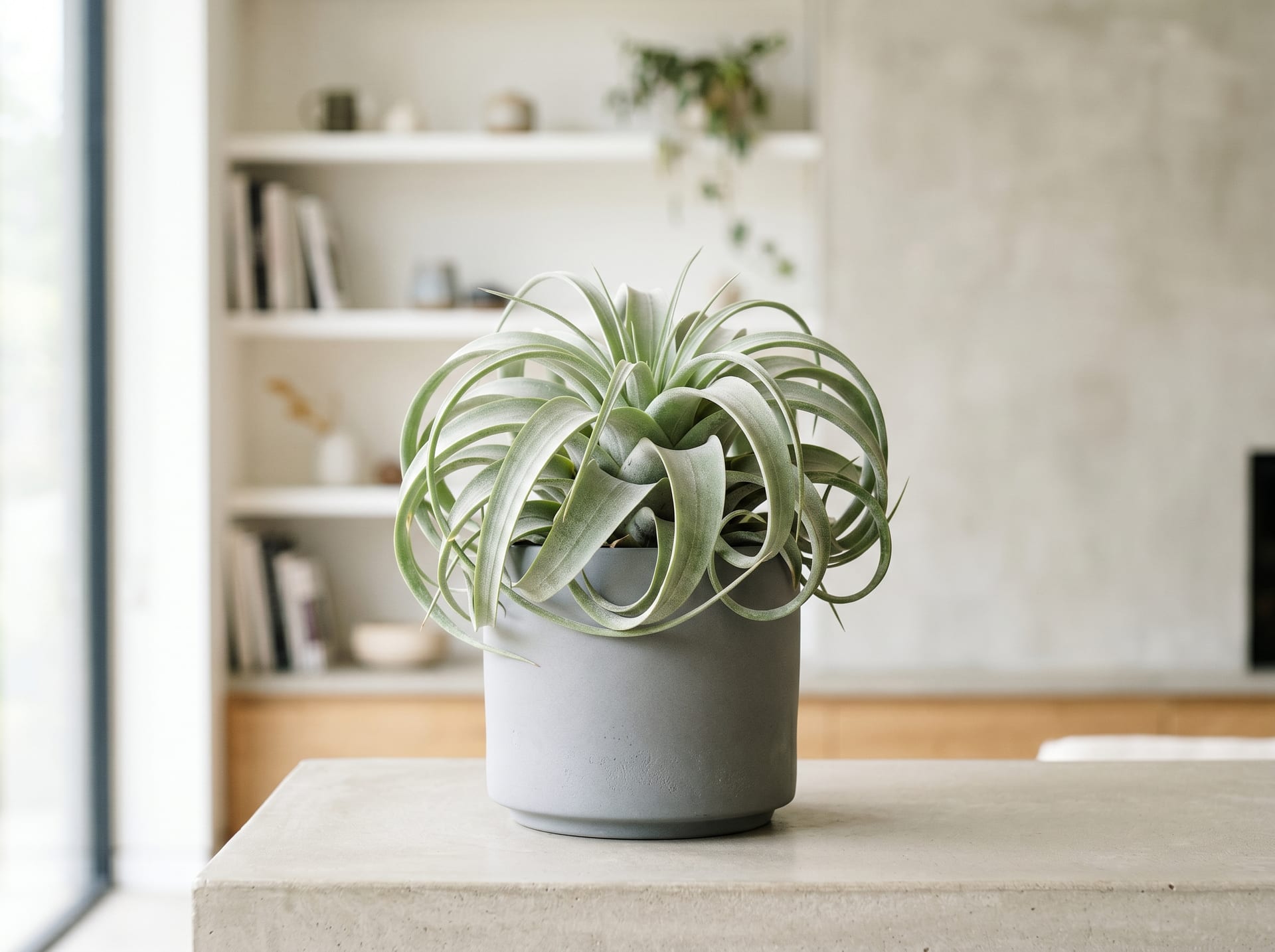
AI-generated image
Air Plant (Tillandsia)
BeginnerTillandsia spp.
Epiphytic tropical plants requiring no soil, absorbing moisture and nutrients through leaves. Native to Central and South America. Weekly misting sustains growth; minimal care needed, making them perfect for beginners.
About
Air plants (Tillandsia spp.) are epiphytes in the bromeliad family (Bromeliaceae) widely distributed across the Americas, from the southern United States to South America. They are unusual in needing no soil: they absorb moisture and nutrients from the air through fine scale-like structures on their leaves called trichomes. Their roots mainly anchor the plant to trees or rocks and play little role in feeding. Because they need no soil, they can be displayed freely on driftwood, wire or in glass vessels, which is a large part of their appeal. They prefer bright indirect light and dislike direct sun and stagnant heat. Water by misting once or twice a week or by soaking for a few hours, then dry them well to prevent rot. They like good air circulation and are easy for beginners.
Source: Wikipedia (CC BY-SA 4.0)
Basic Info
Origin
The Americas (southern North America to South America)
Temperature
10〜30℃
Humidity
40〜60%
Growing Tips
Light & Placement
Likes bright indirect light with good airflow. It dislikes direct sun and hot, stagnant air, so avoid a closed-up windowsill.
Watering
Mist 1–2x/week; soak monthly
Notes
Dry fully after watering; rot if left wet
Soil & Repotting
No soil is needed; mount it on driftwood or wire. The roots are only for anchoring, so water and nutrients are taken up through the leaf trichomes.
Propagation
Propagate by removing offsets from the base once they reach about half the parent's size. You can also leave them to form a clump.
Air Plant (Tillandsia) FAQ
QWhat is the growing difficulty level for Air Plant (Tillandsia)?
Beginner. A variety suitable for beginners. No special equipment or experience is required—you can grow it without problems by setting up a basic cultivation environment.
QWhat is the typical price for Air Plant (Tillandsia)?
The price of Air Plant (Tillandsia) varies significantly by variety, characteristics, size, and lineage. Please check GrowerDirect's price guide for the latest market information.
Last updated: June 23, 2026
References & Sources
Edited & verified by: GrowerDirect Editorial Team
The classifications, regulations, and growing data on this page are created and verified based on the primary information database below.
Primary sources
Related Species
Find listings for this species
Related Articles
Complete Guide to Growing Air Plants (Tillandsia) | Misting, Soaking, and Display Ideas
A comprehensive guide to growing Tillandsia air plants. Covers misting and soaking methods for soil-free epiphytes, light management for silver and green types, preventing rot from inadequate water drainage, growth promotion with liquid fertilizers, and mounting techniques on cork bark and driftwood.
Why New Leaves on Foliage Plants Are Smaller — Practical Solutions for Light, Humidity, and Nutrition
We analyze the causes behind stunted growth and smaller new leaves on foliage plants. From light environment and humidity management to fertilization strategy and root health, we explain each factor based on empirical data and introduce methods to restore new leaf size.
Spider Mite and Scale Insect Control: Practical Pest Prevention
Learn to identify spider mites and scale insects on houseplants and recognize damage signs, master practical spider mite control methods, discover effective scale insect elimination techniques, create pest-resistant environments with seasonal management, understand pesticide safety precautions, and discover early detection and prevention strategies.
Root Rot Prevention and Root Zone Regeneration Management in Foliage Plants | Soil Selection, Watering, and Early Diagnosis & Recovery Techniques
Root rot is the greatest threat to foliage plants. This article covers practical knowledge from the mechanisms of root rot development to prevention, early-stage diagnosis and treatment methods, and ensuring long-term plant health through soil and watering management.
🩺 Common diseases
Can't find the plant you're looking for?
Post your wishes for free and growers with matching plants will contact you with introductions.