Complete Guide to Growing Air Plants (Tillandsia) | Misting, Soaking, and Display Ideas
A comprehensive guide to growing Tillandsia air plants. Covers misting and soaking methods for soil-free epiphytes, light management for silver and green types, preventing rot from inadequate water drainage, growth promotion with liquid fertilizers, and mounting techniques on cork bark and driftwood.
Key Takeaways
A comprehensive guide to growing Tillandsia air plants. Covers misting and soaking methods for soil-free epiphytes, light management for silver and green types, preventing rot from inadequate water drainage, growth promotion with liquid fertilizers, and mounting techniques on cork bark and driftwood.
Related Species
What Are Air Plants (Tillandsia)
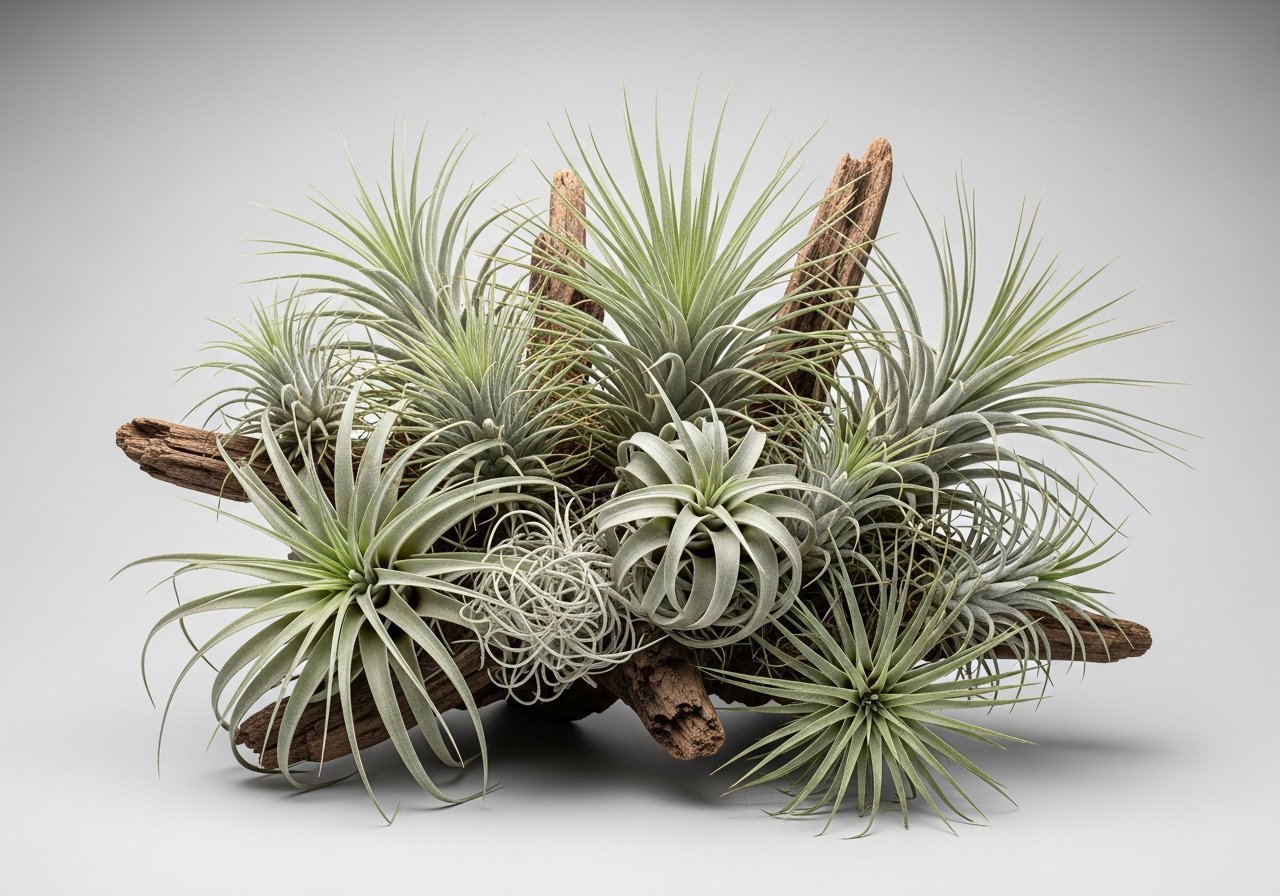
Tillandsia (Tillandsia) is an epiphytic plant belonging to the Bromeliaceae family. Over 650 species grow naturally from Central and South America and the Caribbean to the southern United States, and they are widely known by the common name "air plants." They do not require soil and possess specialized leaves (trichomes) that absorb moisture and nutrients from the air, allowing them to be mounted on cork, rocks, driftwood, and various decorative materials.
Tillandsia can be divided into two main morphological types.
| Type | Characteristics | Representative Species |
|---|---|---|
| Green Type | Green with broad leaves, adapted to humid environments | T. butzii, T. streptophylla |
| Silver Type | Covered in white trichomes, drought-resistant | T. ionantha, T. xerographica |
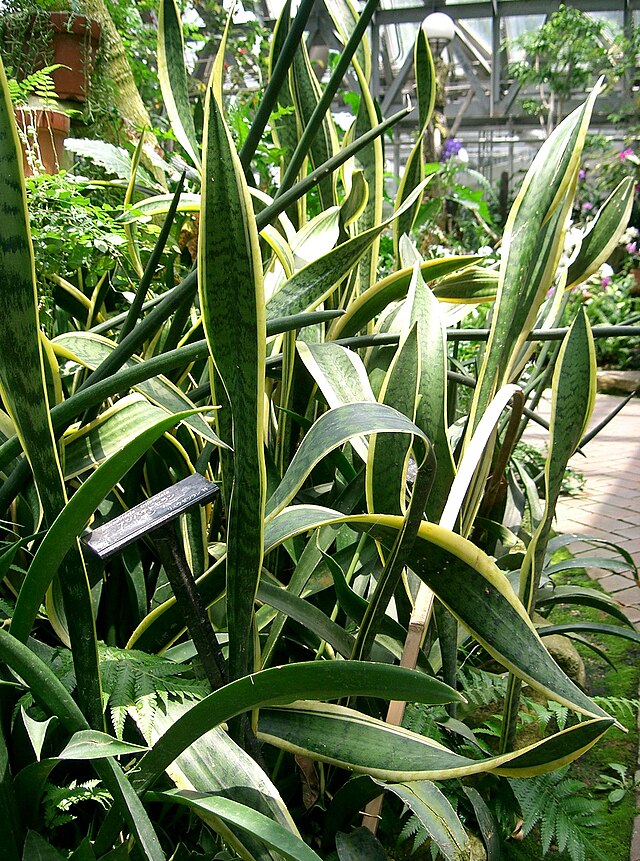
Silver types have well-developed white fine hairs (trichomes) and can efficiently absorb moisture from the air. Green types also absorb moisture through their roots, making them better suited to environments where the mounting material remains slightly moist. Like air plants, Sansevieria is also popular as a drought-resistant houseplant and is commonly recommended for beginners seeking to reduce watering frequency.
Location and Temperature Management
Since Tillandsia originates from tropical and subtropical regions, it fundamentally prefers warm environments.
Outdoor Management (April–October)
- Avoid direct sunlight; bright indirect light to partial shade is ideal
- Green types are particularly prone to leaf scorch under intense light
- Silver types (such as T. xerographica) tolerate light with 30–50% shade cloth
- They grow best in well-ventilated locations (shaded outdoor areas)
Indoor Management (Winter and Periods of Temperature Fluctuation)
- Maintain minimum temperatures of 10°C or above (5°C or below is dangerous)
- Provide supplemental light with indirect sunlight from a window or LED grow lights
- Avoid direct air conditioning drafts and excessively dry conditions
- In heated environments where humidity drops below 40%, consider using a humidifier. If leaf tips are prone to damage in winter, see the Complete Guide to Humidity Management for Houseplants
Watering (Misting and Soaking)
There are two methods for watering Tillandsia: "misting" (spray) and "soaking" (immersion).
Misting
Spray the entire plant uniformly with a mist bottle 2–3 times per week (or daily in dry indoor conditions). After watering, turn the plant upside down to drain excess water and allow it to dry within 30 minutes to 1 hour.
Soaking
Fill a bucket or basin with water and soak the plant for 30 minutes to 1 hour, then turn it upside down to drain. Aim for about once per week. This is especially effective during dry seasons, summer, and when air conditioning is in use.
Important Notes
- Water remaining inside the plant (in the tubular sections and rosette center) after watering can cause rot. Always turn the plant upside down to drain water
- If tap water mineral deposits remain visible, use rainwater, filtered water, or RO water to keep the plant clean
- Night watering promotes moisture buildup; daytime watering (morning to midday) is preferable
Fertilization and Nutrient Supply
Although Tillandsia grows without soil, appropriate fertilization promotes growth and flowering.
- Apply diluted liquid fertilizer for air plants or houseplants (1000–2000x dilution) via misting 1–2 times per month
- Solid fertilizers are unsuitable as they dissolve poorly and leave residue
- Rinsing with clean water 10–15 minutes after fertilizer application reduces salt accumulation at the base
- Excessive fertilization can cause salt damage; limit to about 2 times per month
Display and Styling
Tillandsia's greatest appeal is the freedom of layout without requiring soil.
Common Mounting Methods
- Securing to cork bark or driftwood with fishing line
- Hanging on wire mesh or wire frames
- Attaching to plaster board or wood panels with cyanoacrylate adhesive (use plant-safe formulations)
- Placement in glass containers or terrariums (always ensure adequate airflow)
When using a terrarium, do not seal the lid completely; ventilate daily to prevent moisture buildup.
Flowering, Pups, and Variety Guide
Flowering and Pups
Tillandsia flowers only once in its lifetime (monocarpic). Flowers are beautiful and often in vibrant colors such as pink, purple, or red. After flowering, the mother plant gradually dies, but before or after flowering, "pups" (offsets) emerge from the base. Once pups reach about half the size of the mother plant, they can be separated.
Recommended Varieties for Beginners
- Tillandsia ionantha (T. ionantha): A small, hardy, popular species with leaves that turn red during flowering
- T. xerographica (Xerographica): Large variety with beautiful broad silver leaves
- T. caput-medusae (Medusa's Head): Distinctive tentacle-like leaves with unique character
Troubleshooting Common Problems
Leaf Tips Turn Brown
This indicates dryness or insufficient water. Perform soaking and increase watering frequency.
Plant Becomes Soft or Rots
This occurs when water remains in the center, causing decay. Remove rotted sections and allow the plant to dry before recovery. Prevent this by thoroughly draining water after watering.
White Salt Deposits Appear
Tap water minerals have accumulated. Switch to rainwater or filtered water, and gently wipe off existing deposits with a soft cloth.
The Joy and Considerations of Growing Air Plants
Tillandsia has rapidly gained popularity as a houseplant in recent years due to its unique soil-free nature. Its major appeal is the ability to create displays with ideas difficult to achieve with conventional houseplants.
Ideas for Enjoying Air Plants
- Combine multiple species on driftwood for a jungle-inspired display
- Place in glass spheres (air plant globes) as decorative objects
- Hang from shelves or window hooks for a green curtain effect
- Arrange with succulents and cacti for a dry garden aesthetic
Tips for Long-Term Care
With proper watering and ventilation, Tillandsia can thrive for years to decades. Pups multiply to create multi-stem plants or clusters from a single specimen, adding to the enjoyment. Selecting a healthy plant at purchase (with firm leaves and no rot at the base) is the first step in long-term care. Choosing plants from growers or plant specialists with clear sourcing makes it easier to receive cultivation advice. If combining with other easy-care houseplants, the Top 10 Beginner-Friendly Houseplants is also helpful.
Summary: Key Points for Successful Tillandsia Cultivation
Care Checklist
- Watering: Mist 2–3 times per week + soak once weekly (more frequently in dry conditions)
- Drainage: Always turn the plant upside down after watering to drain the center
- Light: Bright indirect light to partial shade (avoid intense light for green types)
- Temperature: Maintain 10°C or above (avoid 5°C or below)
- Fertilizer: Apply diluted liquid fertilizer (1000–2000x dilution) 1–2 times per month
- Airflow: Avoid poorly ventilated, enclosed spaces
Air plants (Tillandsia) are easy to incorporate into indoor décor due to their soil-free nature and flexibility in placement. Once you master proper watering and light balance, even beginners can enjoy them long-term. Select specimens in your preferred shapes and colors, and create your own unique display. Growers and plant specialists offer diverse varieties and healthy specimens; the ability to confirm care methods at purchase provides great peace of mind. Combining multiple favorite varieties to create a collection is a uniquely rewarding way to enjoy air plants.