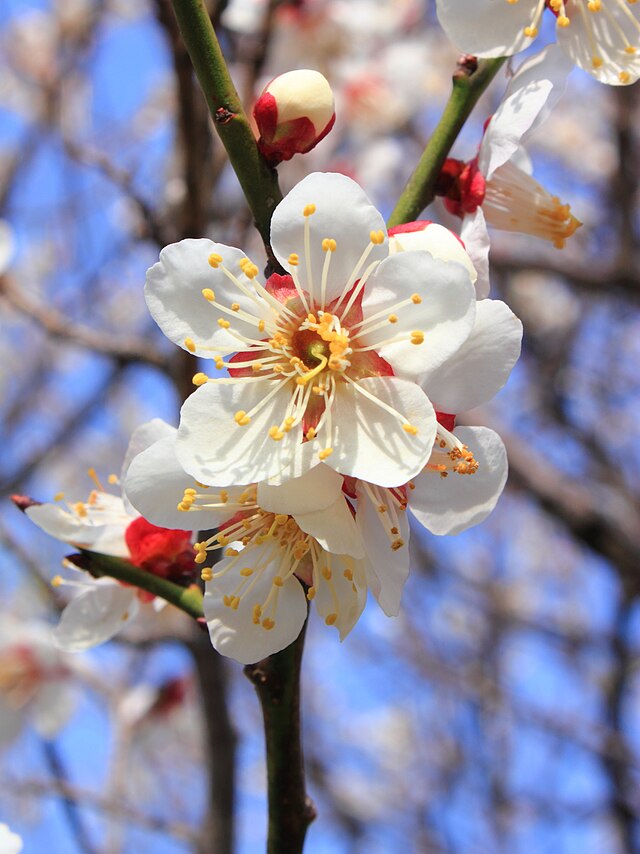
来源:Wikimedia Commons
梅
适合中级Prunus mume
早春开花盆栽的代表品种。具有古树般粗糙的树皮和优雅的花姿,体现了日本传统美学。作为松竹梅之一,自古以来备受推崇。
概述
梅是蔷薇科樱属的落叶乔木,原产于中国,据说在日本奈良时代之前就已传入。从《万叶集》时代起就被日本人深深喜爱,被誉为"花之兄",是宣告春天到来的树木。1~3月间,在寒冷季节里绽放白色、红色和淡粉色的花朵,散发甘甜的香气。花谢后会结出用于制作梅干和梅酒的果实。在盆栽艺术中,其苍古的树皮肌理和早春开花是最大的魅力所在,树龄越久的个体越具有深远的意趣。主要的造型方式有斜干、弯曲干和模样木等,其中白梅、红梅、野梅系的品种被广泛用于盆栽。养护方面喜欢充足的阳光,喜欢排水良好的土壤。表土干燥后要充分浇水。花后4月份要清理不必要的枝条,为促进花芽形成,从夏季开始应控制浇水量,这样可以保证第二年的开花旺盛。换盆每2~3年进行一次,最佳时间是花后立即进行。
Source: Wikipedia (CC BY-SA 4.0)
梅的寿命
梅的寿命为数百年。
梅的体型
梅的成体体型为15~60厘米(盆栽尺寸)。
梅的适宜温度与湿度
梅可耐受的温度范围为≥-15℃。
基本信息
产地
中国
寿命
数百年
尺寸
15~60厘米(盆栽尺寸)
温度
≥-15℃
栽培指南
放置位置
户外阳光充足处。花芽形成需要充足的日照
浇水
喜欢水分。特别是花后和夏季要浇足
整形修剪
花后立即修剪。修剪徒长枝,促进花芽形成
注意事项
注意蚜虫和介壳虫。定期消毒
梅常见问题
Q栽培梅的难度如何?
适合中级。这是一个中级难度的物种。建议有一定的栽培经验和环境管理知识。
Q梅能耐受的温度范围是多少?
梅可耐受的温度范围为≥-15℃。这是可耐受的极限范围,并非适宜生长的温度。请保持在范围内侧的稳定环境,并避免温度骤变。
Q梅的寿命是多长?
梅的平均寿命为数百年。通过适当的护理和营养,它们可以长寿健康地生活。
Q梅能长多大?
梅的成株通常可达15~60厘米(盆栽尺寸)。大小可能因栽培条件和个体遗传而异。
Q梅的一般价格是多少?
梅的价格因品种、大小和系统而有很大差异。请查看我们的市场价格页面获取最新价格信息。
最后更新: 2026年10月2日
栽培参数
- USDA耐寒区
- 6–9
参考与来源
编辑与数据核验: GrowerDirect编辑部
本页的分类·法规·栽培数据依据下列权威一手来源编制并核验。
分类与学名依据
法规与保护状况
相关物种
相关文章
初学者盆栽树种选择・完全培育路线图|从第1年到第5年的阶段性管理策略
盆栽初学者成功的关键在于树种的选择。选择五叶松、真柏等适合初学者的树种,通过从第1年到第5年的阶段性管理,逐步培育成完成盆栽。本文详细解说树形骨架构建、调整、完成的5年路线图。
盆栽古木制作技巧|枝条老化表现与树龄感的营造方法
介绍将年轻盆栽制作成看起来古老的盆栽的技法。从树皮质感、枝条构成、根系表现到时间推移带来的变化,介绍营造树龄感的实践性手法。
如何防止盆栽肥料烧伤|确定施肥量和浓度的方法
盆栽肥料烧伤为什么会发生。渗透压的原理、叶尖褐变等初期症状的识别方法、盛夏和换盆后容易发生的原因、紧急处理和预防措施。