Agave Indoor Overwintering Complete Guide | Safe Winter Survival with LED and Heating Mats
A detailed explanation of how to safely overwinter agave indoors. Covering the use of LED lights and heating mats, proper temperature and watering management, and transition procedures for spring—introducing key points for indoor winter care.
Key Takeaways
A detailed explanation of how to safely overwinter agave indoors. Covering the use of LED lights and heating mats, proper temperature and watering management, and transition procedures for spring—introducing key points for indoor winter care.
Why Indoor Overwintering of Agave Is Necessary and Preparing Your Mindset
Agave is a succulent plant native to arid regions of Mexico and North America, having evolved to adapt to intense sunlight and drought. For this reason, the combination of "low temperatures + overcast skies + high humidity" that characterizes Japanese winters creates an extremely harsh environment for agave.
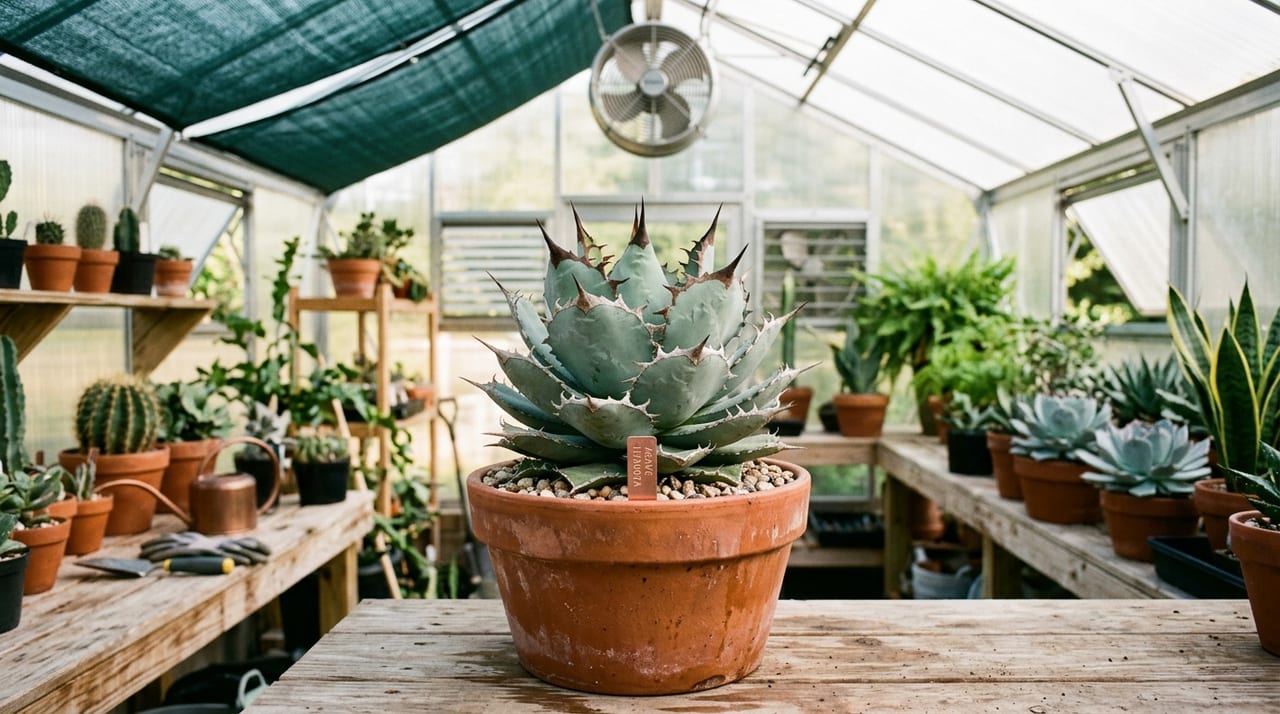
Especially popular varieties such as Agave titanota, Agave oteroi, and Agave horrida will have damaged leaves and become prone to root damage when exposed to frost or sub-freezing temperatures. Once a leaf is damaged, it cannot recover, so advance measures are essential to preserve the beautiful form of your plant through the following spring.
The basic approach to overwintering is "maintaining low activity rather than complete dormancy." If growth stops completely, the plant will be slow to recover in spring and tends to become weak and spindly. By combining LED lighting and a heating mat, you can achieve a "gradual overwintering" that maintains weak but continuous growth. Even beginners can manage successfully if they have the right equipment, so prepare your setup before you begin.
Timing of Indoor Transfer and Proper Temperature Management
The right time to bring your agave indoors is when the minimum temperature begins to consistently drop below 10 degrees Celsius. Depending on your region, this generally falls between late October and early November throughout Honshu. Don't delay by thinking "it's still fine"—sudden cold waves can arrive, so check the forecast frequently and make your decision with a safety margin.
After bringing the plant indoors, we strongly recommend placing a thermometer near the plant that records minimum and maximum temperatures. Even at room temperatures comfortable for people, windowsills can drop to around 5 degrees Celsius at night. The ideal is to keep the minimum temperature at 10 degrees Celsius or above, with a day-night temperature difference of 10 degrees Celsius or less. Even in rooms without heating, placing the plant more than one meter from the window toward the center of the room will avoid extreme cold.
Before bringing it inside, also observe the entire plant and confirm that pests such as scale insects and spider mites are not being brought into your home. If necessary, spray with pesticide or rinse the plant outdoors before bringing it in. Developing this habit will make subsequent management much easier.
How to Choose a Heating Mat and Use It Effectively
A heating mat is a device for warming the root zone directly from the pot bottom. If agave roots maintain activity, the leaves can tolerate colder temperatures better.
When choosing, select a product with a thermostat. However, placing the pot directly on the mat can make it too hot, so adjust by placing a wire rack or wooden slat between them. If managing multiple plants, using a large mat and arranging pots on it will also reduce electricity costs.
The guidelines for using a heating mat are as follows:
| Item | Target |
|---|---|
| Root temperature | 15–20 degrees Celsius (a key factor in successful overwintering) |
| Heating mat surface temperature setting | 25–30 degrees Celsius |
| Power consumption (typical reptile/plant heating mats) | Approximately 20–45W |
| Electricity cost | Approximately 300–600 yen per mat per month; even with multiple mats, usually around 1,000 yen per month |
By activating the roots, new shoots will emerge more quickly in spring, and this also helps preserve the value of your specimen.
Achieving Zero Stretching Through Winter with LED Lighting
The most challenging aspect of indoor management is dealing with insufficient light. Indoor spaces in winter, even near windows, receive severely reduced light levels. Leaving this unaddressed causes agave to stretch toward the light, developing elongated, spindly growth. A plant you've carefully kept compact can lose its form in a single winter—this is the most common failure pattern with indoor overwintering.
To prevent this, supplemental lighting through LED fixtures is effective. Guidelines are as follows:
- Output: Full-spectrum LED panel equivalent to 50–100W (a large output is unnecessary for maintenance-only overwintering; 50W is sufficient)
- Distance from plant: 20–30cm (adjust while observing leaf color and firmness; too far causes insufficient light, too close risks leaf burn)
- Lighting duration: 12–14 hours per day is ideal (use a timer for reliable automation)
Fixing the lighting and darkening times stabilizes the agave's internal rhythm and ensures a smoother transition in spring. If LED heat raises room temperature too much, use a circulating fan to move air around and help prevent moisture buildup.
Preventing Root Rot with Winter Watering and Humidity Management
The most common winter failure with agave is "root rot from overwatering." When growth is slowed, excess water causes the soil to remain damp for extended periods, encouraging the growth of anaerobic bacteria.
Watering frequency guidelines are as follows:
- When using a heating mat: 2–3 times per month
- When not using a heating mat: approximately once per month
These are rough guidelines, however. The key is to develop a feel for "waiting 3–5 days after the soil has completely dried before watering again." When you do water, give it enough to drain from the pot bottom, and remove water from the saucer immediately afterward.
Foliar misting is unnecessary in winter. In fact, water collecting at the leaf base (the center of the rosette) can cause rot, so avoid spraying water directly on the leaves. Regarding indoor humidity, if it is extremely dry (relative humidity below 20%), simply maintain around 30–40% with a humidifier. Over-humidification increases the risk of moisture buildup and should be avoided.
Summary | Meeting Spring in Perfect Condition
Indoor overwintering of agave can be successfully managed by beginners with the right preparation and tools. The foundation is combining these four elements:
- Proper timing of indoor transfer
- Protecting roots with a heating mat
- Supplementing light with LED
- Reducing watering frequency
When spring arrives and minimum temperatures consistently exceed 15 degrees Celsius, begin transitioning outdoors. Avoid exposing to direct sunlight immediately, as this causes leaf burn. For the first 1–2 weeks, gradually acclimate with shade or cloudy days. At the same time, increase watering frequency and return the plant to its growing-season rhythm.
GrowerDirect lets you purchase agave directly from growers. Through the messaging feature with grower listings, you can directly confirm what LED equipment and heating mats they use, their overwintering methods, and other details—providing reassurance for those attempting indoor overwintering for the first time. Obtain healthy specimens from experienced growers and approach winter survival with confidence.