Agave Pot Selection Guide: Comparing Slit Pots, French Pots, and Terracotta Pots
A guide to choosing the right pot for agave cultivation. We explain the differences in breathability, drainage, and weight among slit pots, French pots, terracotta pots, and plastic pots, along with detailed tips on selecting pots based on agave varieties and your management style.
Key Takeaways
A guide to choosing the right pot for agave cultivation. We explain the differences in breathability, drainage, and weight among slit pots, French pots, terracotta pots, and plastic pots, along with detailed tips on selecting pots based on agave varieties and your management style.
Why Pots Are Critical for Agave
Agave is one of the plants that hates excess moisture most. Native to the deserts and semi-arid regions of Mexico, it is highly susceptible to root rot in poorly draining environments, and plants that have been carefully cultivated can die within days. Japan's rainy season and summer are especially challenging—high heat and humidity create the harshest conditions for agave. Choosing the right pot is essential to help your plants survive this difficult period.
Agave roots are delicate; when soil remains waterlogged, rot begins at the root tips and gradually spreads damage throughout the entire plant. Conversely, with a pot that provides proper aeration and drainage, your plants can recover even if you water slightly more frequently. Since pot material and shape directly affect drainage and aeration, it's no exaggeration to say that "70% of successful agave cultivation depends on pot selection." For a deeper understanding of how pot choice fits into the broader cultivation context, see Agave Growing Environment and Watering.
Slit Pots (Square Slit & Round Slit)
Slit pots are plastic pots with vertical slits cut into the sides. Originally developed for seedling production, they have become widely popular among succulent and caudex plant enthusiasts in recent years.
Their defining feature is the "air pruning effect." When root tips touch the air through the slits, growth halts at that point, and new lateral roots branch out instead. This prevents roots from spiraling endlessly within the pot, allowing them to spread three-dimensionally throughout the container and improving water and nutrient absorption.
Slit pots come in round and square shapes; square types maximize storage efficiency and waste minimal space when arranging multiple pots side by side. They offer a wide range of sizes, from #1 (3 cm diameter) up to large #10 and beyond.
Advantages:
- High aeration reduces root rot risk
- Lightweight, making repotting and moving easy
- Affordable and readily available in bulk
- Air pruning effect improves root development
Disadvantages:
- Plastic appearance lacks decorative appeal
- Dries quickly, requiring more frequent watering (especially critical in peak summer)
- UV-sensitive material degrades over a few years and can crack
Best for: Propagation, seedling raising, and high-volume collections. When plant growth is the priority and aesthetics are secondary.
French Pots (French-Made Terracotta)
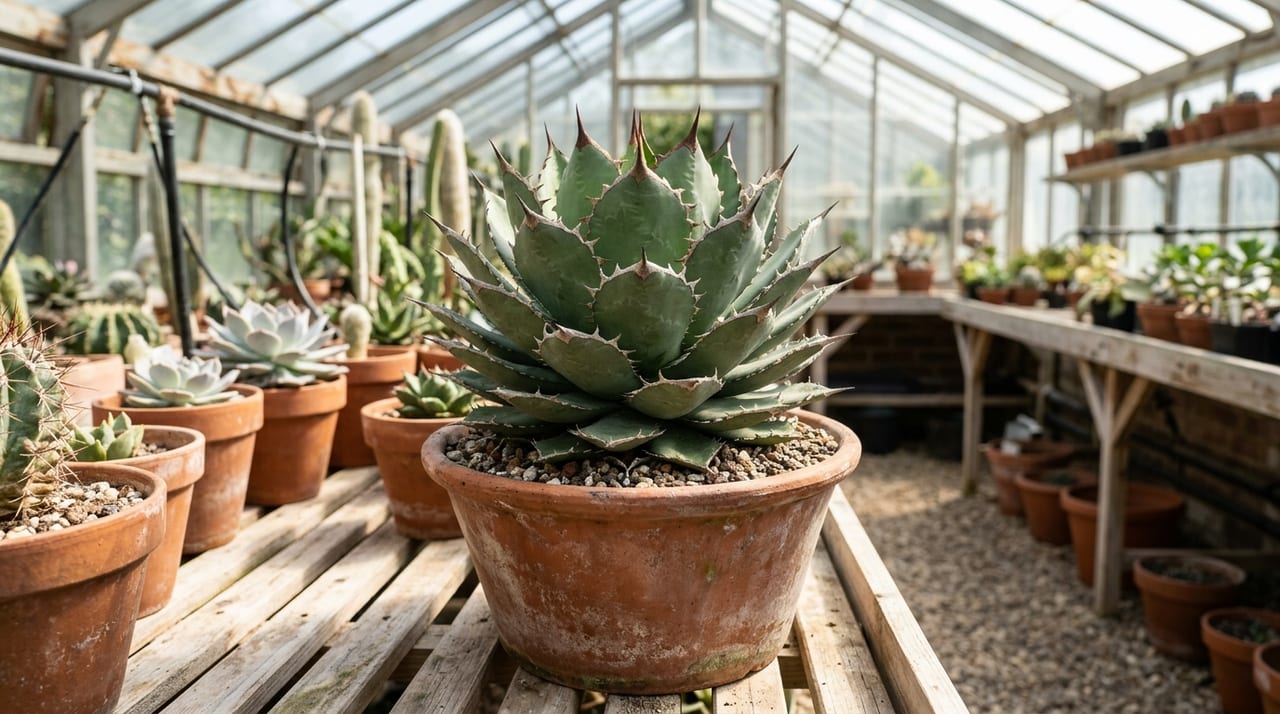
French-made terracotta pots are highly favored among agave enthusiasts. Compared to Italian and Spanish terracotta, they have thinner walls and lower material density, resulting in exceptionally high breathability. The color ranges from orange to cream, and their distinctive appearance enhances the beauty of collector specimens.
One practical standout feature is the ability to judge watering timing by pot color. Terracotta darkens when wet and returns to a lighter shade as it dries. By reading this visual cue, you can assess internal soil moisture without touching the soil, helping you prevent overwatering.
Additionally, as water evaporates through terracotta walls, the latent heat of vaporization cools the pot interior, which is particularly beneficial during summer. Since agave roots are also vulnerable to heat damage, this cooling effect is a valuable secondary benefit.
Advantages:
- Excellent breathability and drainage
- Pot color changes provide visual confirmation of soil moisture
- Attractive appearance with high decorative value
- Reduces excessive pot temperature during summer
Disadvantages:
- Heavy, especially large sizes, making handling difficult
- Breaks easily if dropped
- More expensive than domestic or other imported terracotta
- Can crack in freezing conditions (be cautious with outdoor winter exposure)
Best for: When you want plants displayed as interior décor, long-term cultivation of collector specimens, and indoor display.
Terracotta Pots (Domestic Standard Terracotta)
Domestic red terracotta pots are readily available at garden centers and nurseries and are a standard choice. Though thicker-walled and slightly heavier than French pots, they deliver excellent breathability and drainage—more than sufficient for agave cultivation.
At less than half the price of French pots, they are a practical option for collectors managing large numbers of plants. They come in simple cylindrical shapes and deeper variants, allowing you to choose based on root depth and plant size. However, like French pots, they are vulnerable to freezing and impact, so care is needed during winter outdoor storage and transport.
Best for: Balanced, cost-conscious cultivation and outdoor-focused growers.
Plastic Pots (with Drainage Holes) in Comparison
Standard plastic pots lack sufficient aeration, making them inherently less suitable for agave on their own. However, you can make them work by adjusting soil composition to create a fast-draining mix. Specifically, increase the ratio of pumice, akadama, volcanic soil, and sand while reducing moisture-retentive materials like peat moss and leaf mold. This allows agave to thrive even in plastic pots.
For large outdoor collections or budget-conscious setups, they make practical sense. That said, they fall short of slit pots and terracotta in terms of air pruning and aeration, so they are not recommended for high-value collector plants. If you're reconsidering pot selection after importing bare-root agave, see Agave Import Rooting Management Guide for additional insights.
Summary: Choosing Pots by Variety and Management Style
| Pot Type | Aeration | Appearance | Weight | Cost | Best Use |
|---|---|---|---|---|---|
| Slit Pot | ◎ | △ | Light | Low | Growth priority, high-volume management, seedlings |
| French Pot | ◎ | ◎ | Heavy | High | Interior décor, collector display |
| Domestic Terracotta | ○ | ○ | Heavy | Medium | Balanced management, outdoor cultivation |
| Plastic | △ | △ | Light | Low | Cost-focused, compensated with soil mix |
Experienced agave growers typically use a mixed-pot approach. Small to medium collector plants are displayed as indoor décor in French or domestic terracotta pots, while large plants, breeding stock, and seedlings receive growth-focused care in slit pots—this dual-system strategy is both practical and rational.
The fact that simply changing pots can significantly alter management difficulty is part of what makes agave cultivation rewarding. Start by organizing your current plants by size and growing environment, then use this comparison table to select pots that work best for your situation.