Agave Companion Plant Guide | Practical Dry Garden Layout Design
Learn how to pair agave with complementary plants, design and create dry gardens, and master container arrangement techniques. A practical guide to landscape design centered on agave.
Key Takeaways
Learn how to pair agave with complementary plants, design and create dry gardens, and master container arrangement techniques. A practical guide to landscape design centered on agave.
Related Species
Before Learning About Plants That Pair Well with Agave
Agave is drought-tolerant, and its sharp spines and geometric rosette form make it a striking succulent. While it commands attention on its own, combining it with other plants dramatically improves the overall balance of a dry garden. However, pairing it with incompatible plants can lead to root rot from excess moisture and competition for sunlight. To create successful combinations that showcase agave, the basic approach is to think along three axes: "drought tolerance," "adaptation to good drainage," and "visual contrast."
Agave is native to the deserts and rocky grounds of Mexico and the southwestern United States. These regions receive minimal annual rainfall and are exposed to intense summer sunlight and dry winters with low temperatures. Therefore, the conditions for companion plants that pair well with agave are naturally limited. The basic candidates are plants that dislike excess moisture, can establish strong root systems in well-draining soil, and tolerate full-sun light levels.
Choosing Companion Plants: Keep Visual Contrast in Mind
Agave's rosette form has a radial, linear silhouette. When pairing it with other plants, choosing for "textural contrast" creates depth in the space.
Plants that Create Contrast Through Soft Texture
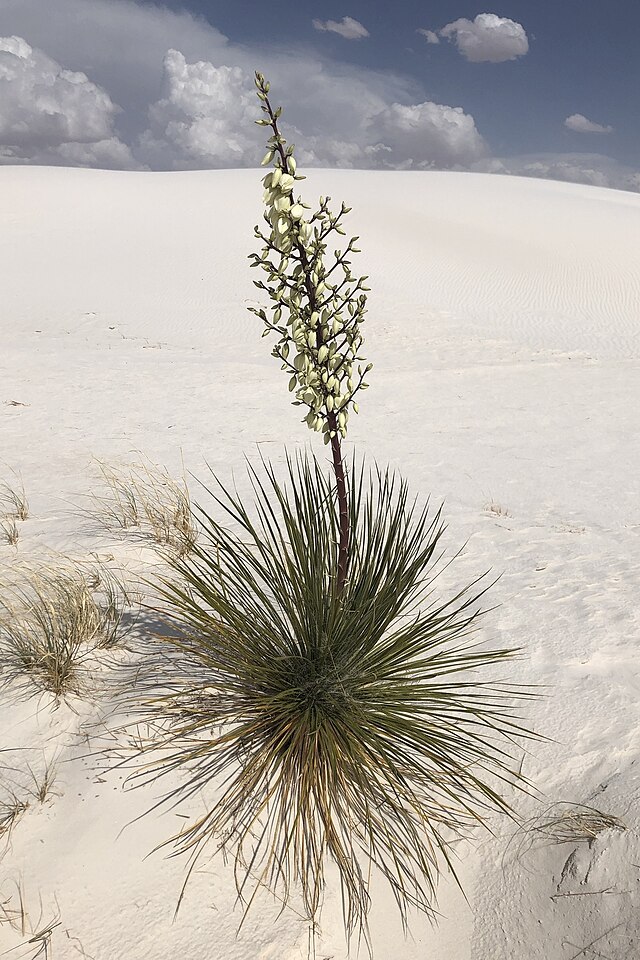
- Yucca (Yucca): Like agave, it has a linear form, but its leaves are finer and softer. If agave spreads horizontally, yucca reaches upward vertically. Height variation creates three-dimensionality.
- Ruschia carcicarvillosa: Its gray-blue, rounded leaves contrast with agave's sharpness, making the overall appearance softer.
- Phylloca actus (leaf cactus): Its flat, leaf-like stems create a contrasting line with agave's sword-shaped leaves.
Plants That Create Harmony Through Similar Texture
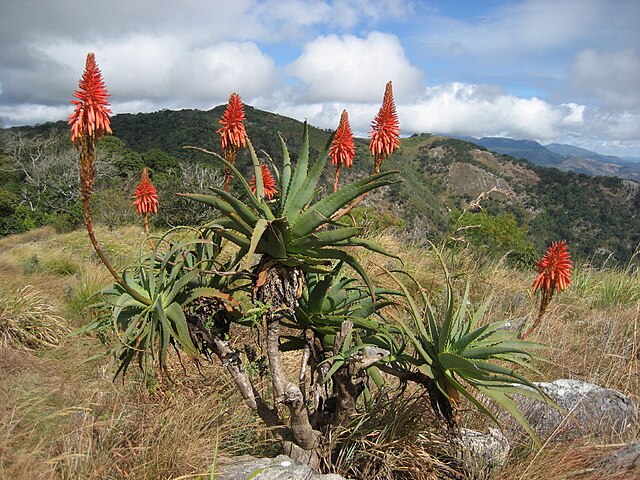
- Aloe: Also rosette-forming and succulent. Arranging different color varieties (like reddish Aloe aristata) together creates unity with variation.
- Dasylirion (Dasylirion): A Mexican native plant with long, narrow leaves radiating outward. Because it grows in the same environment as agave, compatibility is excellent.
- By placing a broad-leafed, substantial agave species like Agave funkiana as the focal point, and adding fine-leaved Dasylirion at its base, you can create textural contrast even between agave specimens of the same genus.
Using Ground Cover Plants and Shrubs in Dry Gardens
When agave is planted alone on the ground, empty spaces between plants become noticeable. By combining ground cover plants and shrubs, you can fill these gaps and recreate a natural dry landscape.
Ground Cover Plants Suited to Gravel Gardens
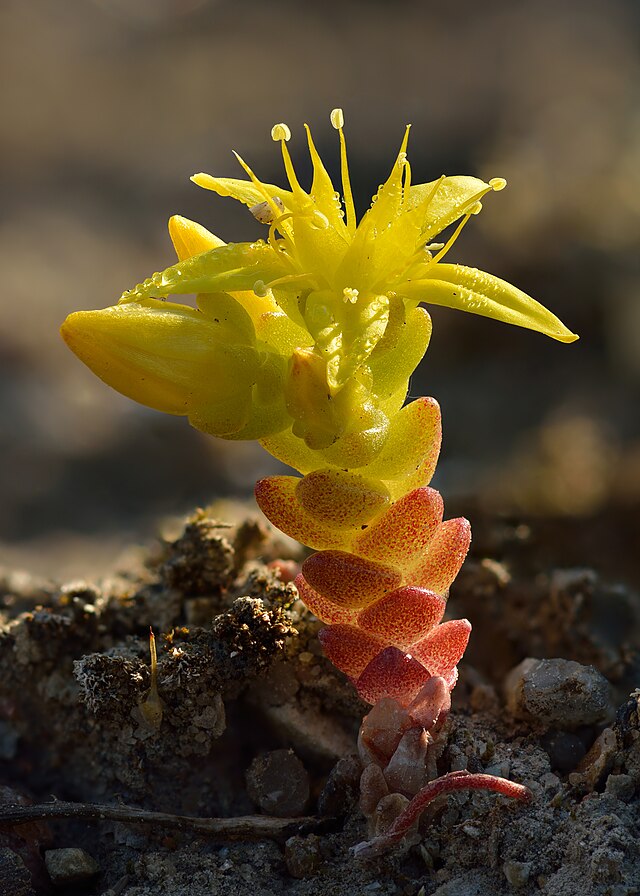
- Sedum (Stonecrop): In well-draining environments, it spreads low to the ground and tightens the space at agave's base. Especially Sedum rupestre 'Angelina' displays beautiful yellow-green to orange autumn foliage that creates striking color contrast with agave's blue tones.
- Dichondra (silver leaf): Its small, silver-white leaves spread easily even in gravel areas and suits a dry aesthetic.
- Lamb's Ear (Stachys byzantina): Its elliptical leaves covered in white fuzz create a pleasant contrast with agave's sharp foliage. It also has excellent drought tolerance.
Shrubs for the Mid-ground
- Russian Sage (Perovskia atriplicifolia): From summer into fall, slender purple spikes stand upright, gently balancing the weighty presence of agave.
- Lavender: A Mediterranean-climate plant with excellent drainage and drought tolerance. When scattered around agave, it adds aromatic appeal.
- Olive (dwarf varieties): Combining silver-foliaged olive with agave creates a Mediterranean unity.
Combinations to Avoid and Important Considerations
Placing incompatible plants nearby not only compromises agave's health but also disrupts visual balance.
Never Mixed-Plant with Moisture-Loving Species
When plants that thrive in moist conditions—such as hosta, ferns, and begonias—are planted in the same bed or container as agave, one will suffer. Especially in containers, soil moisture retention differs significantly, so always use separate pots.
Be Careful of Plants with Intense Root Competition
Mint and grass species that spread via underground rhizomes (such as Miscanthus) have vigorous root systems and easily encroach on agave's base. Because agave requires a robust root system, intense root competition leads to growth problems.
Consider the Danger of Spines When Placing
Agave's spines are sharp and cause deep wounds if they pierce people or animals. Avoid planting near pathways where small children or pets frequently pass. If planting along work paths or entryways, either trim the leaf-tip spines or choose low-spine varieties (such as Agave attenuata) for safety.
Practical Dry Garden Layout: Creating Planting Layers
To make a dry garden visually attractive, a three-layer structure of "tall-tree layer, mid-tree layer, and ground-cover layer" is effective. Due to agave's strong personality, it is most often positioned as a "focal point."
Example of Basic Three-Layer Structure
| Layer | Plant Examples | Role |
|---|---|---|
| Tall trees / tree-form | Yucca rostrata, Olive | Vertical axis, skyline formation |
| Shrubs / mid-shrubs | Agave americana, Dasylirion | Focal point |
| Ground cover | Sedum, Lamb's Ear, gravel | Texture, ground coverage |
As a large focal point, a dark purple-toned agave species like Agave nigra, displayed as a single specimen for prominence, surrounded by bright silvery-leaved ground cover, is also an effective composition.
Combining with Materials
Beyond plantings alone, combining gravel (white pea gravel, black gravel), driftwood, and larger stones enhance the dry-garden character. Laying coarse-grained pumice or gravel at agave's base improves drainage and adds visual refinement.
Creating Seasonal Variation
Agave is evergreen and maintains the same silhouette year-round. Placing seasonal plants nearby creates variation. Spring brings new lavender foliage, summer brings Russian sage spikes, and autumn brings sedum autumn color—supporting players compose the season's character.
Using Companion Plants in Container Planting
Even where ground planting is difficult, large planters or mixed containers can recreate a dry-garden atmosphere.
Container Arrangement Tips
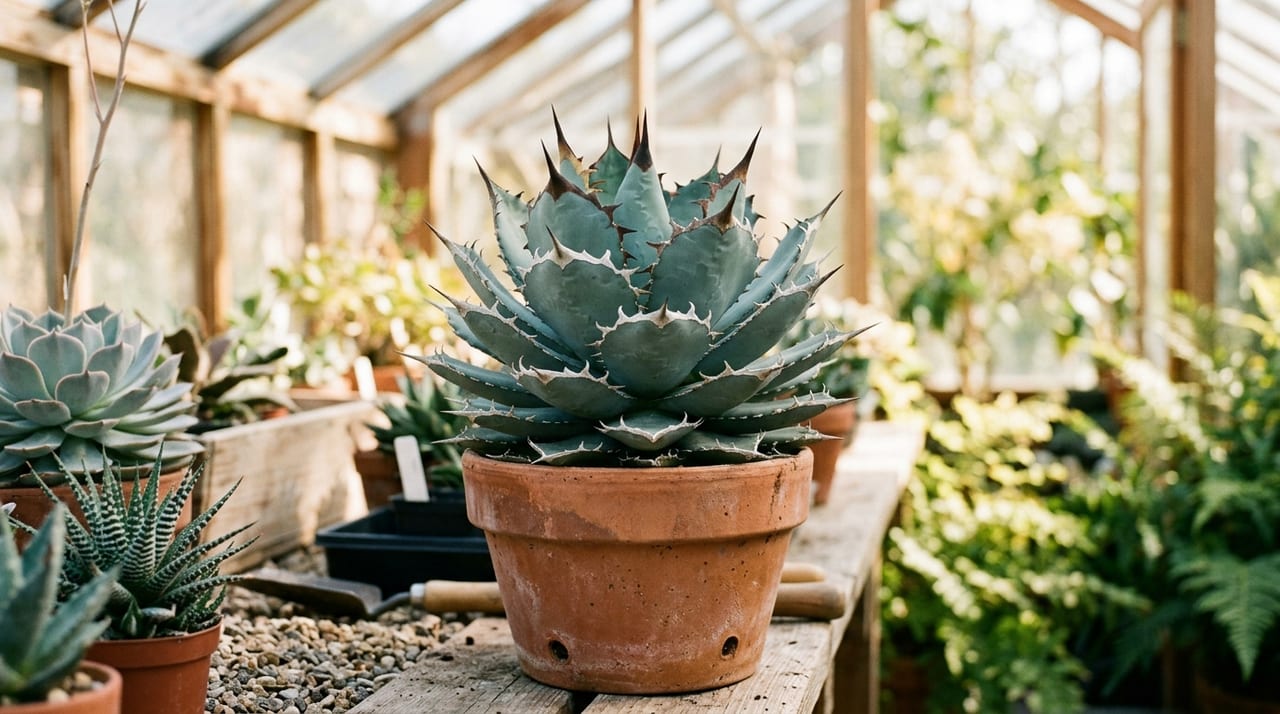
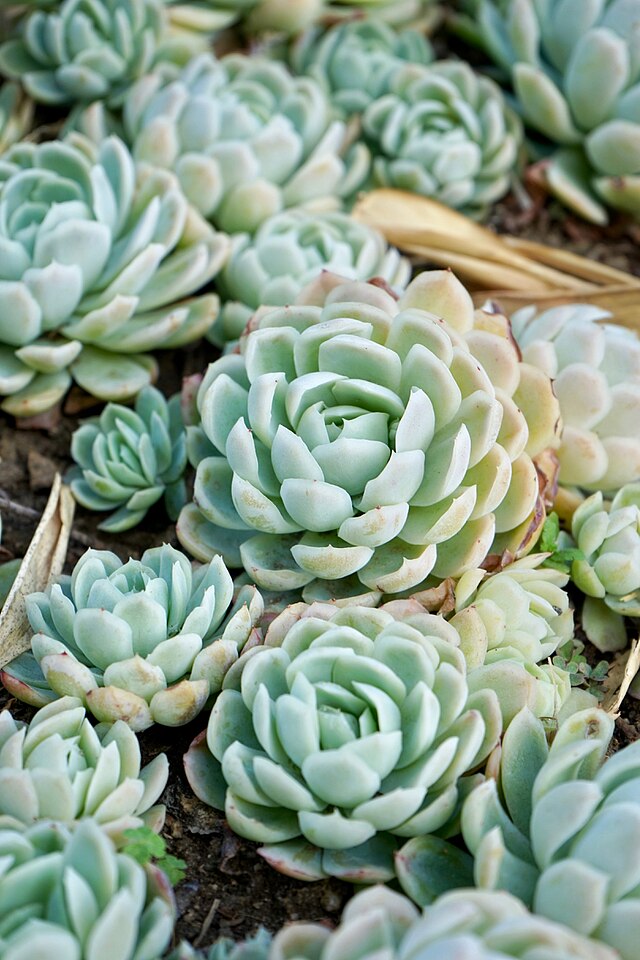
Placing agave at the center with ground-cover sedums or echeveria arranged toward the pot's rim is a time-tested approach that rarely fails. Use well-draining succulent-specific soil and layer a thick base of pumice in the pot.
The Method of Grouping Individual Pots
Because large agave requires significant root space, mixed plantings are often impractical. Positioning "pots together" is more realistic. Arranging pots of varying sizes at different heights and laying gravel on boards or wooden trays creates unity.
Agave's powerful form can be enhanced or diminished depending on the choice and placement of surrounding plants. Based on the core principles of "shared drought tolerance" and "visual contrast," choose companion plants that suit your garden's conditions and your preferences.