5 Recommended Agave Plants for Beginners | Carefully Selected Easy-to-Grow Varieties
5 agave varieties recommended for beginners. Explanations of hardy, easy-to-grow types such as Titanota, Horrida, and Kisshokan.
Key Takeaways
5 agave varieties recommended for beginners. Explanations of hardy, easy-to-grow types such as Titanota, Horrida, and Kisshokan.
In recent years, agave has become an increasingly popular genre among succulents. People are fascinated by the jagged serrated edges, powerful rosette shape, and the way these plants grow slowly and steadily over time. However, we often hear concerns like "Agave seems difficult" and "I don't know which variety to start with."
In fact, if you choose the right variety, agave is a plant that beginners can definitely grow. In this article, we'll introduce five varieties that are especially recommended for beginners, along with details about their ease of care, price range, and characteristics.
Essential Basics to Know Before Growing Agave
Before introducing the varieties, let's go over the basic care principles common to all agave. Understanding these will help you succeed regardless of which variety you choose.
Location and Light
Agave is, above all, a plant that loves light. Ideally, it should be placed in a location with direct sunlight outdoors. Insufficient light can cause etiolation (becoming thin and stretched). If growing indoors, place it by a south-facing window or another spot with sufficient light, and try to move it outside for a few days each week if possible.
Watering Basics
While many assume agave is drought-resistant and water it very little, it's important to water it well during the growing season (spring through fall). The key is "water thoroughly once the soil is completely dry." Make sure not to leave water in the saucer, and focus on good drainage. In winter, reduce watering to about once or twice per month.
Soil and Pots
Drainage is essential. Mix 20–30% perlite or pumice into commercial cactus and succulent soil for ideal drainage. Terra cotta pots are recommended for their breathability and ability to promote drying, but plastic pots with drainage holes work fine too.
5 Agave Varieties Recommended for Beginners
1. Titanota (No Name)
Difficulty: ★★☆☆☆ / Price Range: ¥3,000–¥10,000
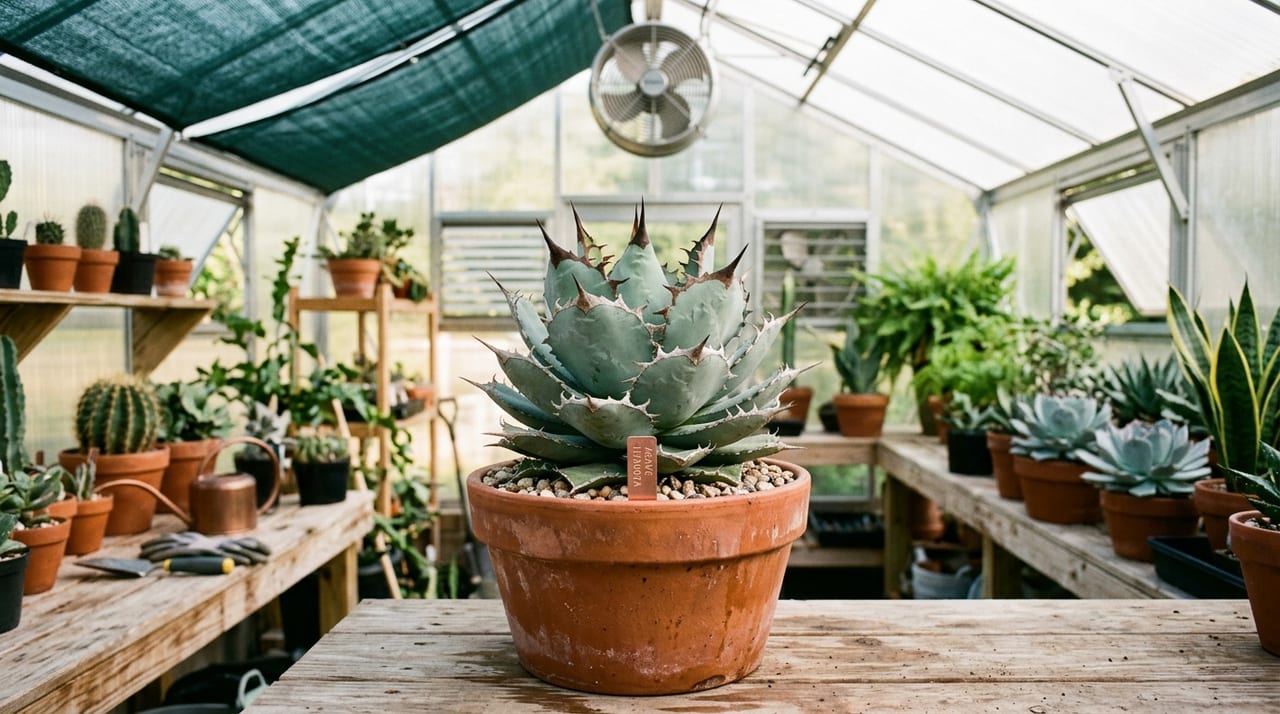
Titanota is the most classic agave variety; it's where people start. It's characterized by thick, powerful serrated edges (the jagged edge of the leaves), and its compact yet striking form is what makes it so popular.
"No Name" refers to seedlings without a specific cultivar name. Because of genetic variation from parent plants, there's "the fun of not knowing what individual you'll end up with." Since prices start at around a few thousand yen, it's an excellent choice for your first plant.
The care is essentially the same as other agave varieties: manage it with strong light, minimal water, and prioritize good drainage. Growth is slow, but that's part of its appeal—you get to enjoy it for a long time.
2. Kisshokkan
Difficulty: ★☆☆☆☆ / Price Range: ¥2,000–¥5,000
One of the most recommendable varieties for agave beginners. Its broad leaves spread beautifully in a rosette pattern, and despite its visually polished appearance, it's surprisingly hardy and easy to grow.
It has cold tolerance and can endure temperatures around 0°C, so it can be grown with relative confidence even in regions where temperatures drop. It grows at a moderate pace, gradually becoming a impressive plant over a few years.
With its low price point and abundant availability, you can find it at home centers and garden shops. It's perfect as your first plant and as a "training plant" to learn the basics of agave care.
3. Holida
Difficulty: ★★☆☆☆ / Price Range: ¥2,000–¥8,000
A variety with beautiful sharp spines arranged neatly along the edges of its elongated leaves. Compared to Titanota, it has a sleeker, more stylish appearance, making it popular as an interior plant.
It's more readily available than Titanota, which is great for beginners. It also grows faster than many agave varieties, so you can enjoy seeing changes over a shorter period.
Care is basically the same as other agave, but because the leaf spines are extremely sharp, we recommend wearing leather gloves when handling it. If you have children or pets, be especially careful about where you place it.
4. Parry
Difficulty: ★☆☆☆☆ / Price Range: ¥2,000–¥5,000
An elegant and beautiful variety with bluish-gray-green foliage. It has black spines at the leaf tips, and the contrast with the blue leaves is striking.
Parry's greatest feature is its exceptional cold hardiness. Depending on the cultivar, some can survive temperatures below −10°C, making outdoor winter survival possible even in cold regions. It's especially highly recommended for those wanting to grow agave in snowy climates.
It's also drought-tolerant and forgiving of occasional missed waterings, making it beginner-friendly. It's widely available with stable pricing, making it easy to obtain.
5. Attenuata
Difficulty: ★☆☆☆☆ / Price Range: ¥1,000–¥3,000
Known as the "spineless agave," this variety has little to no spines (or very soft ones) at the leaf tips, making it safe to grow in households with children or pets.
Its soft silhouette and bright green foliage give it a gentler feel than other agave varieties, making it highly popular as a houseplant. It grows relatively quickly, so watching it flourish is rewarding for beginners.
However, it has lower cold tolerance than other agave varieties and can suffer damage below 5°C, so indoor winter care is essential. With that one caveat, it's very easy to care for and rarely fails.
Summary of Tips for Choosing Varieties
Looking at the characteristics of these five varieties, choosing based on the following considerations will minimize mismatches.
- If you want dramatic, quintessential agave appeal → Titanota (No Name)
- If you want a foolproof beginner plant → Kisshokkan or Parry
- If you prefer a sleek, stylish look → Holida
- If you live in a cold climate or want outdoor winter hardiness → Parry
- If you're concerned about spines or want a houseplant → Attenuata
Regardless of which you choose, the key takeaway is that agave grows reliably with proper management of three things: strong light, well-draining soil, and proper watering.
How GrowerDirect's Safe and Secure System Works
When purchasing agave, especially if you're looking for rare varieties or high-quality plants, it's recommended to buy directly from growers or collectors. GrowerDirect is a direct-sales platform that connects plant growers with buyers.
Why GrowerDirect is Chosen
- Direct from growers for peace of mind: Without middlemen, you can get information directly from the grower about plant care and management history.
- Price transparency: Without middleman markups, you get fair pricing without inflated retail margins.
- Clear plant provenance: You can verify the growing conditions and parent plant information, making post-purchase care easier.
- Transaction safety: Payment terms are arranged directly between the grower and the buyer. Support is in place in case any issues arise.
For beginners especially, purchasing healthy plants from trusted growers is the key to agave success. Find your first plant on GrowerDirect today.