5 Caudex Plants Recommended for Beginners | Carefully Selected Easy-to-Grow Varieties
5 caudex plants recommended for beginners. Explains easy-to-grow varieties including Adenium and Pachypodium.
Key Takeaways
5 caudex plants recommended for beginners. Explains easy-to-grow varieties including Adenium and Pachypodium.
Related Species
Caudex plants (caudiciformes) are unique plants that store water and nutrients in their stems and roots, captivating plant enthusiasts with their distinctive silhouettes. While their care methods resemble those of cacti and succulents, their individualistic forms and vigorous life force have recently drawn attention as indoor greenery. However, many people say, "There are so many types that I don't know where to start." This article carefully selects 5 varieties that beginners can grow with confidence, explaining the characteristics and key care points for each in detail.
Basic Care for Caudex Plants
Before introducing individual species, let's cover the fundamentals of care common to all caudex plants.
Location and Sunlight
Most caudex plants love strong light. Outdoors, a spot with direct sunlight is ideal; indoors, a bright location near a window works best. Insufficient light causes etiolation (stretchy, elongated growth), so ensuring adequate light is essential.
Watering Principles
"Let it dry out completely, then water thoroughly" is the golden rule. Water deeply until it flows from the drainage holes, 2-3 days after the soil has completely dried. During the growing season (spring to autumn), you can water actively, but during winter dormancy, reduce watering to once or twice per month or stop entirely. Frequent, light watering causes root rot and is strictly forbidden.
Soil and Containers
Well-draining soil is essential. Mix commercial succulent potting soil with 20-30% pumice or small red clay balls to improve drainage. Use breathable pots such as terracotta or unglazed ceramic pots.
1. Adenium obesum (Desert Rose)
Difficulty Level: ★★☆☆☆ / Price Range: ¥1,000–¥5,000
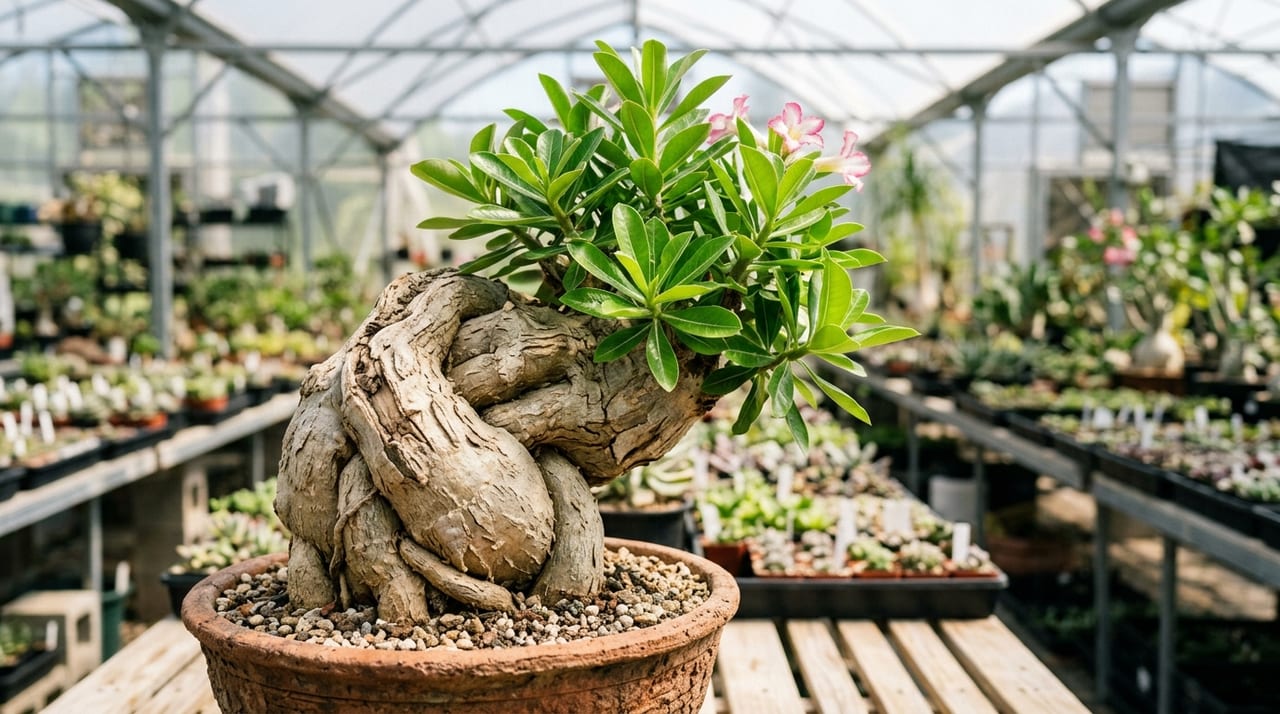
Adenium obesum, beautifully known as the "Desert Rose," is the classic beginner's caudex plant. It is prized for its plump, rounded stem and vibrant pink to red flowers that bloom from spring through summer. As a flowering caudex plant, it is extremely popular.
Seedlings are widely available and can be purchased for under ¥1,000, making them perfect as your first specimen. As it matures, the stem thickens substantially and the entire plant gains presence.
Growing Tips
- Sunlight: Loves even intense summer direct sun. Seek maximum light
- Watering: Water once or twice weekly during the growing season. Complete drought in winter is standard
- Cold Tolerance: Move indoors when temperatures drop below 10°C. Never expose to frost
- Caution: The sap is toxic; wear rubber gloves when handling
2. Pachypodium lamerei
Difficulty Level: ★★☆☆☆ / Price Range: ¥2,000–¥8,000
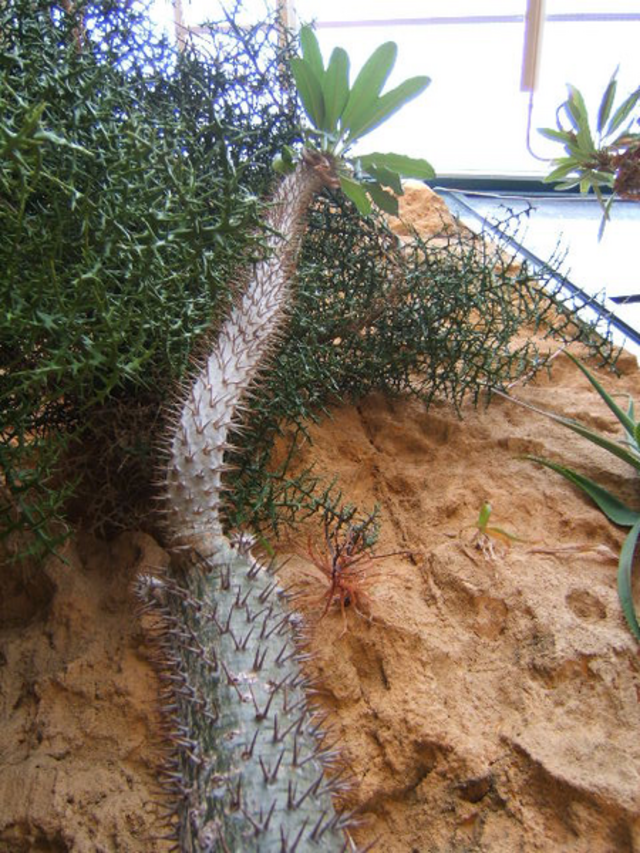
Among Pachypodium species native to Madagascar, Pachypodium lamerei is the most widely available and easiest to grow. Its spiny, elongated stem grows upright with fine leaves at the crown, resembling a palm tree, making it popular as interior greenery.
Pachypodium species are generally expensive, but lamerei is relatively affordable and grows quickly, allowing you to enjoy visible changes. This is a major advantage.
Growing Tips
- Sunlight: Direct sunlight outdoors is ideal
- Watering: Water thoroughly when soil dries. In winter, reduce to minimal or stop watering entirely
- Cold Tolerance: Maintain temperatures above 5°C. Overwinter indoors in a bright location
- Caution: Spines are sharp; wear heavy gloves when repotting
3. Stephania erecta
Difficulty Level: ★★☆☆☆ / Price Range: ¥3,000–¥10,000
Stephania erecta features a smooth, round caudex from which heart-shaped leaves emerge—a uniquely charming plant. By exposing the caudex above soil, its distinctive form becomes striking, offering high design value as decor. It is popular with many female enthusiasts, sometimes described as "less like growing a plant and more like displaying one."
It is a summer grower with a growing season from spring to autumn. As temperatures rise, vines grow vigorously and leaves develop. In winter, it goes dormant and sheds its leaves, but fresh foliage returns in spring.
Growing Tips
- Sunlight: Thrives in bright shade to partial shade. Direct sun can cause leaf scorch
- Watering: Water thoroughly when soil dries during the growing season. Complete drought during dormancy (winter)
- Cold Tolerance: Maintain temperatures above 10°C
- Caution: Do not bury the caudex; expose more than half above soil
4. Fouquieria edulis (Martian)
Difficulty Level: ★★☆☆☆ / Price Range: ¥2,000–¥8,000
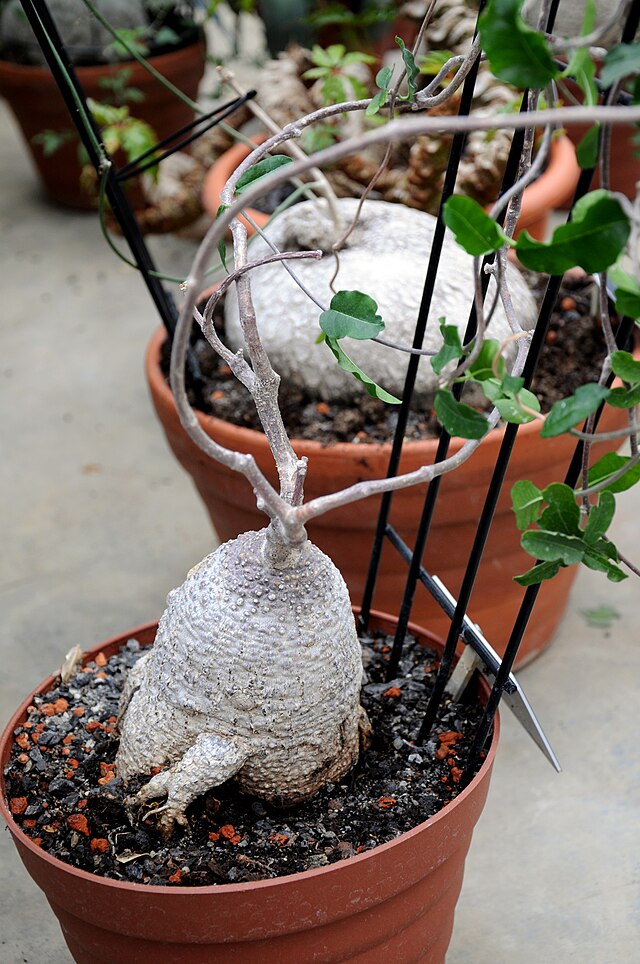
Fouquieria edulis, affectionately nicknamed the "Martian," attracts beginners with its bumpy round caudex, from which vines with small leaves emerge in a unique and endearing way. "Cute from every angle," as enthusiasts say.
Known as one of the most hardy and easy-to-manage caudex plants, it tolerates irregular watering and environmental changes with impressive resilience. The reasonable price and abundant availability make it an excellent choice for your first specimen.
Growing Tips
- Sunlight: Prefers bright locations but grows in partial shade
- Watering: Highly drought-tolerant for a caudex. Water thoroughly when soil dries
- Cold Tolerance: Survives winter above 5°C. Relatively cold-hardy
- Caution: Pinch or trellis the vines periodically for neat growth
5. Operculicarya pachypus (Reference)
Difficulty Level: ★★★★☆ / Price Range: ¥30,000–¥500,000+
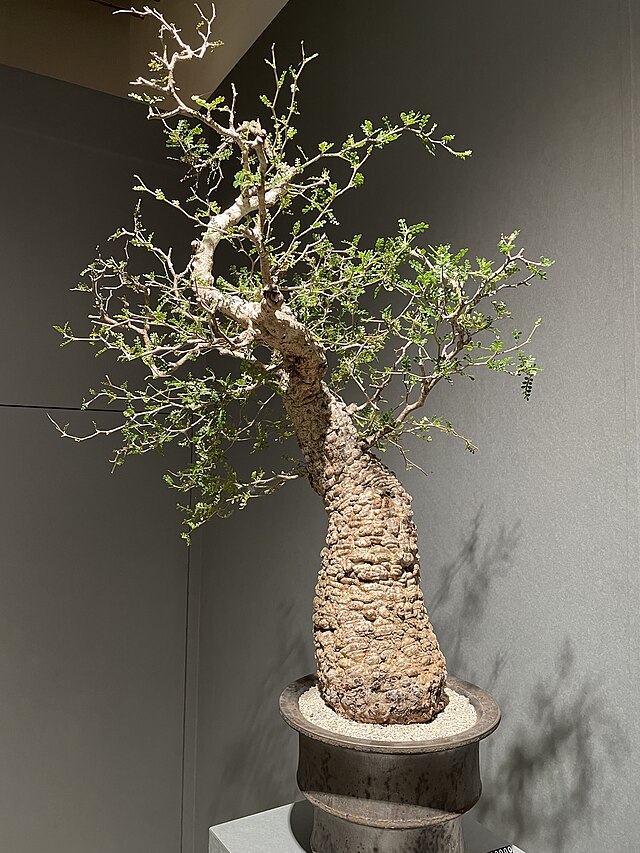
Operculicarya pachypus, called the "king" of caudex plants, is native to Madagascar. Its massive, craggy caudex and tree-like stem command overwhelming presence. Some wild specimens are said to exceed 300 years old, making them prized by collectors.
The high price makes immediate ownership risky for beginners, but knowing about this plant as a long-term goal is worthwhile. First, gain experience with the four varieties above, then challenge this species.
Growing Tips (Reference)
- Growth is extremely slow; patience and a long-term perspective are necessary
- Upon purchase, source from trusted sellers and select healthy specimens
- Winter management (balancing low temperatures and drought) is difficult and rewards experience
Welcome Your Caudex Plants with Confidence at GrowerDirect
Due to their rarity, caudex plants often suffer from quality inconsistency and opaque pricing. GrowerDirect is a platform where plant-loving growers (growers and cultivators) list directly. Bypassing middlemen allows you to ask growers directly about plant care history and management techniques.
When choosing your first caudex plant, understanding "how it was grown" and "what care it needs" is invaluable. GrowerDirect lets you message sellers to ask questions freely, giving beginners confidence to purchase.
Find your first caudex plant and start your "caudex plant life" at GrowerDirect today.