Bonsai Cascade Styling Guide: Creating a Waterfall-Like Tree Form
Explains the fundamentals of cascade and semi-cascade styles—distinctive bonsai forms—including how to select suitable species, practical techniques for branch shaping and wiring, and pot-and-stand coordination.
Key Takeaways
Explains the fundamentals of cascade and semi-cascade styles—distinctive bonsai forms—including how to select suitable species, practical techniques for branch shaping and wiring, and pot-and-stand coordination.
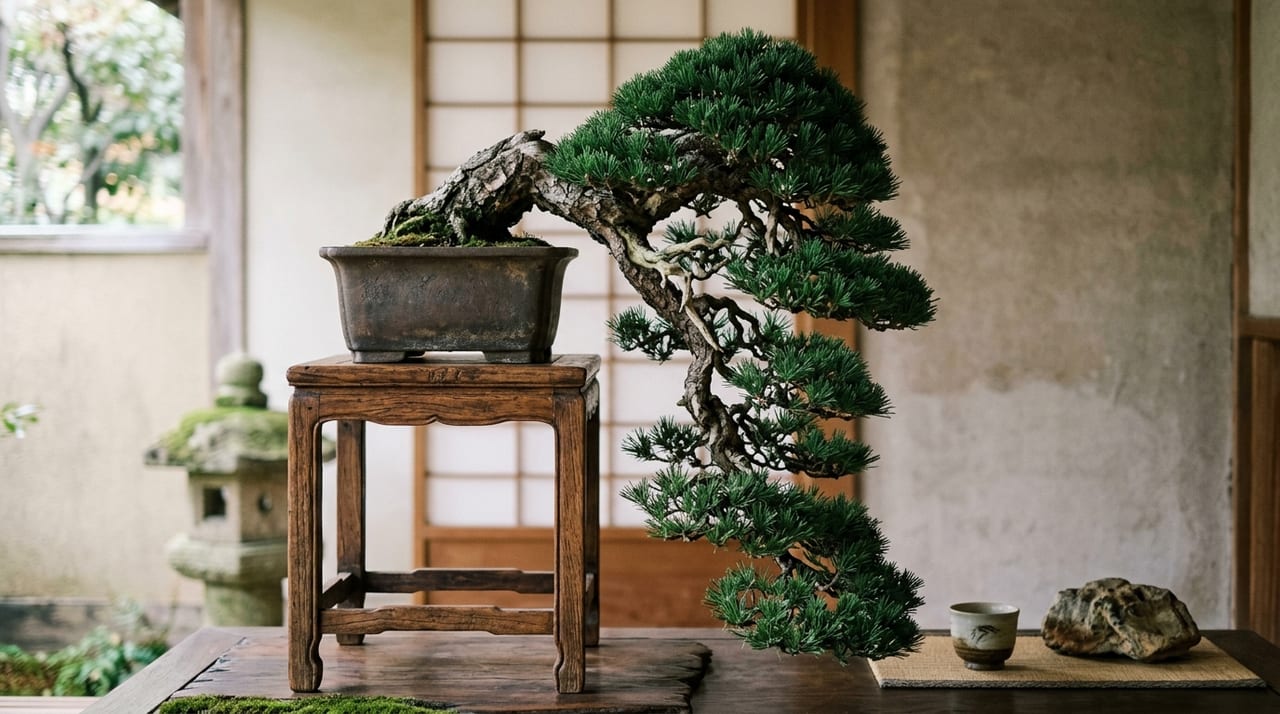
Cascade (known as kengai in Japanese) is a tree form where the trunk and branches droop downward beyond the pot's rim, expressing the dynamic quality of water cascading down a cliff face along rocks. It is one of the most distinctive styles among the basic bonsai forms, making a greater visual impact on the viewer than upright or slanting styles.
While cascade styling is often perceived as difficult, beginners can attempt it with proper material selection and an understanding of basic branch shaping and wiring techniques. As of 2026, cascade entries at international bonsai exhibitions show an increasing trend, and global recognition of the style continues to grow.
Types of Cascade Styles
Cascades are divided into two main categories based on the degree of drooping.
Cascade (Full Cascade)
This style features the trunk and primary branches drooping below the bottom of the pot. It is the most challenging form, displayed with tall raised pots or hanging pots, and a tree 2 shaku tall (approximately 60 cm) may droop an additional 30–50 cm.
The key is to select material that already has a curved trunk, rather than starting with thin, matchstick-like material.
Semi-Cascade
The trunk droops to the pot's rim but does not reach the bottom. This style offers greater expressive freedom and is considered beginner-friendly. The development period is shorter than full cascade, with the form often setting within 2–3 years.
Species Suited to Cascade Styles
Pines: Pines represent the pinnacle of cascade styling, with long life spans and naturally graceful branching.
Broadleaf trees: Maples, zelkovas, pomegranates, and others also work well for cascade styling. In deciduous species, the beauty of the branching structure becomes even more pronounced in winter.
Flowering species: Plums and cherries can also be styled as cascades, and their beauty when in bloom is exceptional.
Wiring Technique
The main challenge of cascade styling is bending a long trunk evenly while maintaining a natural curve.
- Use soft aluminum wire (3–5 mm diameter) to bend the entire trunk gradually.
- Rather than bending sharply all at once, adjust the angle gradually over monthly intervals.
- Avoid wiring during the active summer growth period when the trunk is more prone to breaking; instead, apply wiring during the gentler growth periods of spring and autumn.
It typically takes 1–2 years from initial wiring to completion. The secret to creating a natural curve is working patiently and in stages.
Branch-Shaping Key Points
In cascade styling, lateral branches along the drooping trunk are arranged in tiers. The following points are important:
- Keep branching fine at the top, and allow branches to grow progressively larger as they descend.
- Arrange branches alternately left and right to create three-dimensional depth.
- As branches progress toward the tip, angle them increasingly horizontal or downward.
I recommend learning the basic branch-shaping methods of bonsai and then practicing the branch placement techniques specific to cascade styling.
Pot Selection and Display
For cascades, the impression created during display is equally important as the tree form itself.
- Height: approximately equal to the tree's height (a 60 cm tree pairs with a raised pot about 60 cm tall).
- Color: subdued tones (navy, black, dark brown) accentuate the cascade's natural curves.
- Material: porcelain pots with a solid feel convey stability.
Changing from a hanging display to a stand display can reveal an entirely different character.
Watering and Care
Pay special attention to the roots at positions difficult to reach—particularly at the drooping tip. Delayed intermediate drying can lead to root rot.
Seasonal care methods are explained in the Bonsai Seasonal Care Guide.
Common Mistakes
Branches breaking midway: This may result from too-aggressive wiring or from selecting a species that is sensitive to wire. Choose material with adequate thickness rather than thin, matchstick-like pieces.
Lower branches dying: The drooping sections receive less light and reduced nutrient supply from the roots. Perform regular renewal pruning to refresh fine branches.
Conclusion
Cascade styling is the bonsai form that offers the most dramatic visual transformation. Although it takes many years from material selection to completion, that journey itself is your opportunity to experience the depth of bonsai. Engage with the aesthetics of the cascade.