Bonsai Display Guide: From Traditional Tokonoma to Modern Interior
A guide to bonsai display and exhibition. Learn about display philosophies that emphasize ma (negative space) and seasonal sensibility, types of display stands and selection tips, accompanying plantings and herbaceous bonsai, traditional alcove displays, modern interior arrangements, and viewing appreciation tips at bonsai exhibitions.
Key Takeaways
A guide to bonsai display and exhibition. Learn about display philosophies that emphasize ma (negative space) and seasonal sensibility, types of display stands and selection tips, accompanying plantings and herbaceous bonsai, traditional alcove displays, modern interior arrangements, and viewing appreciation tips at bonsai exhibitions.
Bonsai is an art form that is cultivated and also displayed to be appreciated. No matter how magnificent a tree may be, its charm changes greatly depending on how it is displayed. From traditional tokonoma display methods to modern exhibition techniques suited to contemporary living spaces, we will introduce the depth of bonsai display.
Basic Principles of Bonsai Display
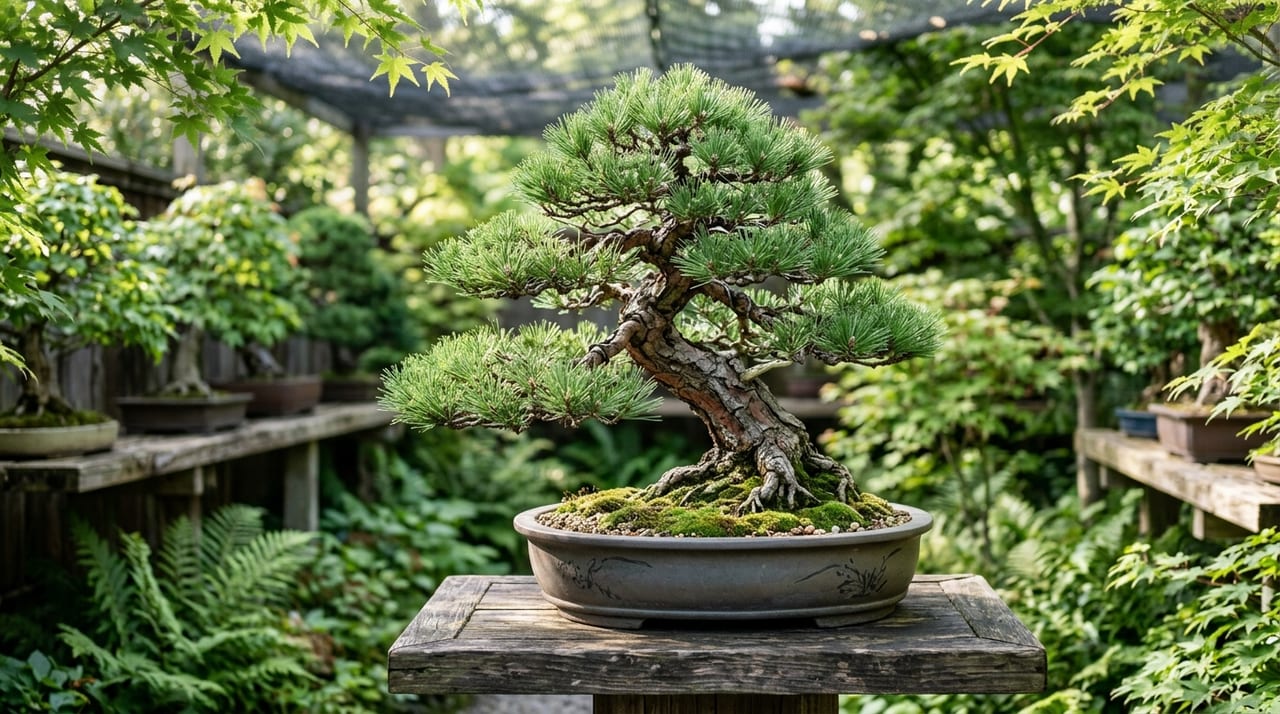
The act of displaying bonsai is fundamentally different from simply placing a plant somewhere. Bonsai display aims to "condense and express natural landscapes," and this reflects Japan's unique aesthetic sensibility.
- Valuing "space": Provide ample space around the bonsai and make use of the beauty of empty space
- Expressing seasonal feeling: Display trees according to the season—spring's fresh greenery, summer's deep green, autumn's autumn colors, and winter's bare branches
- Relationship between main tree and companion: Create a single scene composed of the main bonsai and accompanying elements (grass plantings and viewing stones, etc.)
- Creating height variation: Adjust the height of display stands to create visual rhythm
- Harmony between pot and tree: Select a pot that matches the tree's character to create overall unity
Types of Display Stands and How to Choose Them
The stand (table) on which you place the bonsai is an important element that greatly influences the impression of the display.
Jiiita (Base Board) A thin, board-like stand and the simplest type of display stand. Traditionally, materials include premium hardwoods such as pear wood, rosewood, and ebony. Choose according to the grade of the bonsai. For high-grade conifer bonsai, a substantial hardwood base board works well; for deciduous tree bonsai, lighter-colored wood is appropriate.
Takashoku (High Stand) A high stand with legs. Used when displaying the main tree at the front of a tokonoma. Chinese-style hardwood construction is considered more formal. Design variations include rounded legs, square legs, and openwork carving.
Chushoku (Medium Stand) A stand at an intermediate height between the high stand and base board. Often used for displaying companion elements and grass plantings. It plays an important role in creating height variation with the main tree's high stand.
Hirashoku (Low Stand) A flat stand with low legs. Used for casual displays and as a base for groundcovers and viewing stones. Its form blends easily with modern interiors.
The basic principle in choosing a stand is harmony with the bonsai. For showy flowering bonsai, choose a subtle stand; for simple conifer bonsai, choose a stand with presence. If the stand asserts itself too strongly, the bonsai's charm diminishes.
Companion Plantings and Grass Plantings
In bonsai display, companion elements that enhance the main tree play an important supporting role.
Kusamoto (Grass Planting) Bonsai created by planting mountain and wild plants in small pots. Arranged at the base or side of the main tree to express seasonal feeling. Different herbaceous plants are used according to season: spring violets and dandelions, summer hostas and miscanthus, autumn gentians and Japanese false hellebore, and winter hardy chrysanthemums and sarcandra.
Suiseki (Viewing Stone) Natural stone that expresses landscapes such as mountains, waterfalls, and islands. Combined with bonsai, it can express more magnificent natural scenery. Viewing stones are often placed on water trays, and the harmony with the water surface is also a highlight.
Small Companion Ornaments Small ceramic or metal figurines. Motifs include fishermen, cattle, deer, and cranes, adding narrative quality to the bonsai landscape. However, excessive use becomes cluttered, so keeping to one or two is more refined.
Traditional Display in Tokonoma
The most formal display location for bonsai in a Japanese home is the tokonoma.
Santenkazari (Three-Point Display) The basic form of tokonoma display. Composed of three elements: main tree, companion (grass planting or viewing stone), and hanging scroll.
Configuration basics:
- Main tree is placed slightly left or right of center in the tokonoma
- The hanging scroll is hung on the opposite side from the bonsai (if bonsai is left, scroll is right)
- Companion elements are arranged diagonally from the main tree
- The subject of the hanging scroll coordinates with the bonsai's seasonal feeling (for example, a snow-scene scroll with pine bonsai)
Seasonal Changes in Display
- Spring: Use flowering bonsai (cherry, plum, wisteria) as the main tree, with grass plantings of rape blossoms or horsetail
- Summer: Use refreshing deciduous tree bonsai as the main tree, combined with viewing stones or cool-feeling grass plantings
- Autumn: Use autumn-coloring maple or fruit-bearing bonsai as the main tree, with grass plantings of autumn herbs
- Winter: Use the winter form of conifer bonsai as the main tree, expressing winter atmosphere with grass plantings of hardy chrysanthemums and sarcandra
Bonsai Display in Modern Interiors
In contemporary homes, many lack a tokonoma, and the style of enjoying bonsai in living rooms or studies is becoming mainstream.
On Shelves or Sideboards A style of placing bonsai on Scandinavian furniture or modern shelves. Simply adding a wooden base board brings Japanese atmosphere and blends naturally with Western-style rooms. With a white wall as background, the bonsai's silhouette stands out.
Display at the Window A windowsill with natural light is an ideal location that combines bonsai appreciation with adequate sunlight. However, if direct sunlight is excessive, adjust with lace curtains.
Installing a Dedicated Display Shelf A modern style of displaying bonsai on wall-mounted shelves (floating shelves). Installing multiple shelves at varying heights creates a gallery-like display space.
Combination with Lighting Illuminating bonsai with spotlights or indirect lighting casts shadows on the wall, creating an atmospheric effect. LED lighting minimizes heat concerns and minimizes stress on the plant.
Grouping Mini Bonsai A method of displaying 3–5 mini bonsai together. Combining different tree species and pot forms allows for varied display even in small spaces.
Viewing Tips at Exhibitions and Bonsai Shows
There are points worth knowing when visiting a bonsai show that make appreciation more rewarding.
- Finding the front: Bonsai has a "front." The angle where the trunk's movement appears most beautiful is the front
- Observing the root flare: Roots that spread powerfully across the base (root flare) express the bonsai's stability and the weight of time
- Following trunk movement: The trunk's form from base to apex (patterned trunk, formal upright, cascade, etc.) shapes the tree's individuality
- Checking branch placement: Notice branches extending alternately left and right, branches in back that create depth, and the space between branches
- Harmony with the pot: Appreciate the balance between the tree's character and the pot's color, form, and size
- Overall composition of display: Enjoy the world expressed by the unity of main tree, companion, and stand
Find Strikingly Beautiful Bonsai on GrowerDirect
To enjoy bonsai display, begin by obtaining an attractive tree. On GrowerDirect, you can purchase bonsai carefully cultivated with display beauty in mind directly from professional growers. The unique appeal of direct sales is that you can hear advice on the tree's front and display methods directly from the grower. Find your favorite specimen from the bonsai category.