Cultivating Bonsai Root Flare (Nebari) | Techniques for Developing Surface Roots
Explains how to cultivate root flare (nebari), which determines the beauty of bonsai. Introduces techniques for thickening root flare, including root trimming, board planting, and ring-barking (girdling).
Key Takeaways
Explains how to cultivate root flare (nebari), which determines the beauty of bonsai. Introduces techniques for thickening root flare, including root trimming, board planting, and ring-barking (girdling).
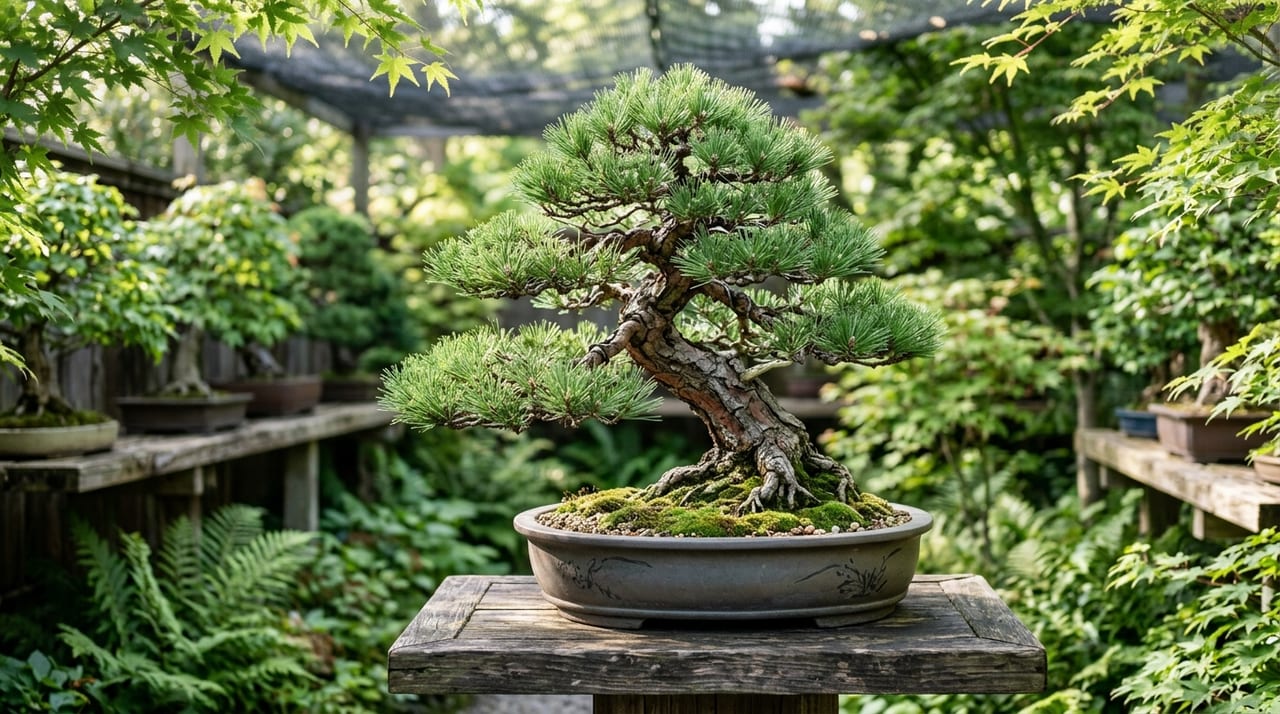
In bonsai, "root flare (nebari)" is one of the most important elements that determines the beauty and stability of a tree. Thick surface roots spreading radially from the base of the trunk express the presence of a large, deeply rooted tree and greatly influence the overall impression of the bonsai. Superior root flare cannot be created overnight; it requires deliberate management and technique over years to decades.
Conditions for Beautiful Root Flare
Ideal root flare in bonsai has several defining characteristics.
- Omnidirectional flare: Roots spreading evenly in all directions from the trunk is the foundation. When roots concentrate in only one direction, it creates an unstable impression, so it is especially important that thick roots extend left and right when viewed from the front.
- Thickness and angle: The thickness of roots should ideally be proportional to the thickness of the trunk, tapering naturally from the base of the trunk and blending into the ground. Roots spreading gently from the trunk create a more natural impression than those extending at sharp angles.
- Single-sided roots and floating roots: Single-sided roots (where roots develop only on one side) and roots that lift away from the ground (floating roots) are generally considered flaws in bonsai. However, some styles, such as driftwood-style presentation, deliberately make use of single-sided roots, so judgment of root flare should match the style of the tree.
- Number of roots: Having more roots is not necessarily better; 3-5 thick roots spreading radially give the strongest impression. Many thin roots only make the tree appear weak.
Root Organization and Directing During Repotting
The most fundamental method for developing root flare is organizing and directing roots during repotting. When repotting, spreading and positioning roots and directing them to grow radially establishes the foundation for future root flare.
First, remove the tree from the pot and carefully break apart the root ball, gently separating each root. Among the thick roots, trim back those growing straight downward from the trunk (taproot). Cutting back the taproot encourages development of roots growing sideways (lateral roots).
When positioning roots in the pot, aim to arrange them radially and evenly. If roots overlap, remove one or reposition it in another direction. Placing a thin stone or plastic plate under the roots discourages roots from burrowing downward and promotes horizontal development.
Strengthening Root Flare Through Board Planting
Board planting is a technique particularly effective for developing root flare. Instead of a normal pot, the tree is fixed to a flat board (slate or ceramic) and roots are spread horizontally and developed in this manner. Since roots have little space to grow downward, they are forced to develop sideways.
The procedure for board planting is as follows: first, place a tree with roots trimmed short on the board and secure it with wire. Pack soil between the roots and cover the surface with sphagnum moss to prevent drying. Watering is required more frequently than with a normal pot, but in return root activity becomes vigorous and thick roots develop quickly.
Continue board planting for 2-3 years, then repot into a normal shallow pot. At this point, radially spreading thick roots should have formed. If thickness is insufficient, continue board planting for another 1-2 years.
Improving Root Flare Through Air Layering
Air layering is a method for fundamentally improving poor root flare. This technique involves removing the bark around the trunk at the ideal location, encouraging new roots to emerge there, and then separating the section. This allows you to create roots at your preferred location and in your preferred direction.
Perform air layering during the active growing season from May to June. Remove the bark around the trunk with a knife (1-2 cm wide), cover the exposed area with moistened sphagnum moss, and wrap it with vinyl to prevent drying. New roots will emerge in the sphagnum moss within 2-3 months. Once roots have developed sufficiently, cut at that point and plant it in a new pot.
Because new roots from air layering can be controlled for both position and direction, it is possible to deliberately create ideal root flare. However, the separated section will have few roots, so place it in partial shade to recover before returning to normal care.
Fertilization Management to Thicken Root Flare
Root thickness is proportional to the overall vigor of the tree. Trees growing vigorously will develop thicker roots. When you want to thicken root flare, use a slightly larger pot and provide sufficient fertilizer to encourage vigorous growth of the entire tree—a "heavy fertilization period."
During the heavy fertilization period, prune sparingly and allow foliage to grow abundantly. The more foliage, the more active photosynthesis becomes, and the more vigorous root growth will be. During this time the tree form as bonsai will suffer, but consider it an investment in future root flare.
Once roots are sufficiently thickened after 2-3 years of heavy fertilization, return to formal bonsai styling. Prune unnecessary branches, repot into a shallow pot, and reorganize the roots. This rhythm of "growing periods" and "styling periods" is the key to creating superior bonsai.
Watering also affects root flare development. Allowing moderate drying before watering (dry-side watering) stimulates roots to extend further in search of water. However, extreme dryness damages roots, so balance is important.
Common Beginner Mistakes and Countermeasures
- Trimming thick roots all at once: Cutting back thick roots aggressively to create root flare disrupts the balance between roots and above-ground growth, causing branch dieback. The principle is to trim gradually with each repotting.
- Changing orientation with each repotting: Root directing becomes effective through repeated action in a fixed direction. Changing direction each time prevents any root from developing fully. Decide on a front facing and create radially arranged roots from that perspective over several years.
- Removing the board before roots fully develop: Board planting should be removed only after roots have sufficiently spread along the board. Remove it too early and the form will revert. Leave it in place for at least 2-3 seasons minimum.
Purchasing Bonsai with Excellent Root Flare on GrowerDirect
On GrowerDirect, you can purchase bonsai with excellent root flare directly from specialist growers. Beautiful root flare is the crystallization of years of cultivation technique and is one of the areas where a grower's dedication most clearly shines. The strength of GrowerDirect is that you can also seek direct advice from growers about how to cultivate root flare.