How to Keep Cut Flowers Fresh Longer | Water Uptake, Storage, and Flower Food Techniques
Explains the water uptake methods, storage environment, and how to use flower food (cut flower-specific nutrient solutions) to keep cut flowers like roses, hydrangeas, and gerberas fresh longer. We introduce type-specific tips and step-by-step procedures to follow from the day you receive them in an easy-to-understand way for beginners.
Key Takeaways
Explains the water uptake methods, storage environment, and how to use flower food (cut flower-specific nutrient solutions) to keep cut flowers like roses, hydrangeas, and gerberas fresh longer. We introduce type-specific tips and step-by-step procedures to follow from the day you receive them in an easy-to-understand way for beginners.
The Basic Principles of "Water Uptake" That Determine Cut Flower Lifespan
The main reason cut flowers wilt is "lack of water." As time passes, the cut edge of the stem that was cut at the flower shop oxidizes when exposed to oxygen in the air, and the water pathway (vascular bundles) becomes clogged. In this condition, the flower cannot absorb sufficient water and will wilt within a few hours to a day.
"Water uptake" refers to a series of treatments performed so that cut flowers can absorb water efficiently. Simply by performing proper water uptake treatment, the lifespan of flowers can change by 2 to 3 times, making it the most important task in cut flower management. The success of water uptake depends entirely on "how well you can keep the cut edge fresh."
What to Do Right After Receiving Flowers
When you receive flowers, process them as soon as possible following the steps below. The condition of the cut edge worsens over time, so it's important to do this right away when you get home.
1. Place Immediately in Water Place them immediately in a clean container filled with water right after bringing them home from the shop. Since the cut edge dries and oxidizes in air, it's important to get them in contact with water as soon as possible.
2. Recutting Underwater (Hydro-cut) In a bucket filled with deep water, recut the tip of the stem at a 45-degree angle by 2-3 cm. The reason for angled cutting is that even when the stem sits flush against the bottom of the vase, the cut edge won't be blocked, allowing you to maximize the water absorption area. Cutting in air causes new oxidation, but cutting underwater prevents air from entering and significantly improves water absorption efficiency. Using a florist knife or utility knife that's sharper than scissors allows you to keep the water uptake pathway wide without crushing the vascular bundles.
3. Remove Excess Leaves Remove all leaves that would be submerged below the water line. Leaves in water quickly begin to decay and cause bacteria to multiply rapidly. As bacteria increase, the cut edge becomes more likely to clog, so removing leaves is essential from a water quality management perspective.
4. Condition in Deep Water for 1-3 Hours After processing, place the stems in the deepest water possible in a cool, dark location for 1-3 hours (or overnight for difficult flowers like roses) to allow them to fully absorb water. This is called "deep water conditioning," and flowers will last longer when displayed after they've regained their vigor.
Water Uptake Techniques by Flower Type
Since different types of flowers have different stem structures and compositions, the optimal water uptake method varies. Let's learn the methods for representative flower types.
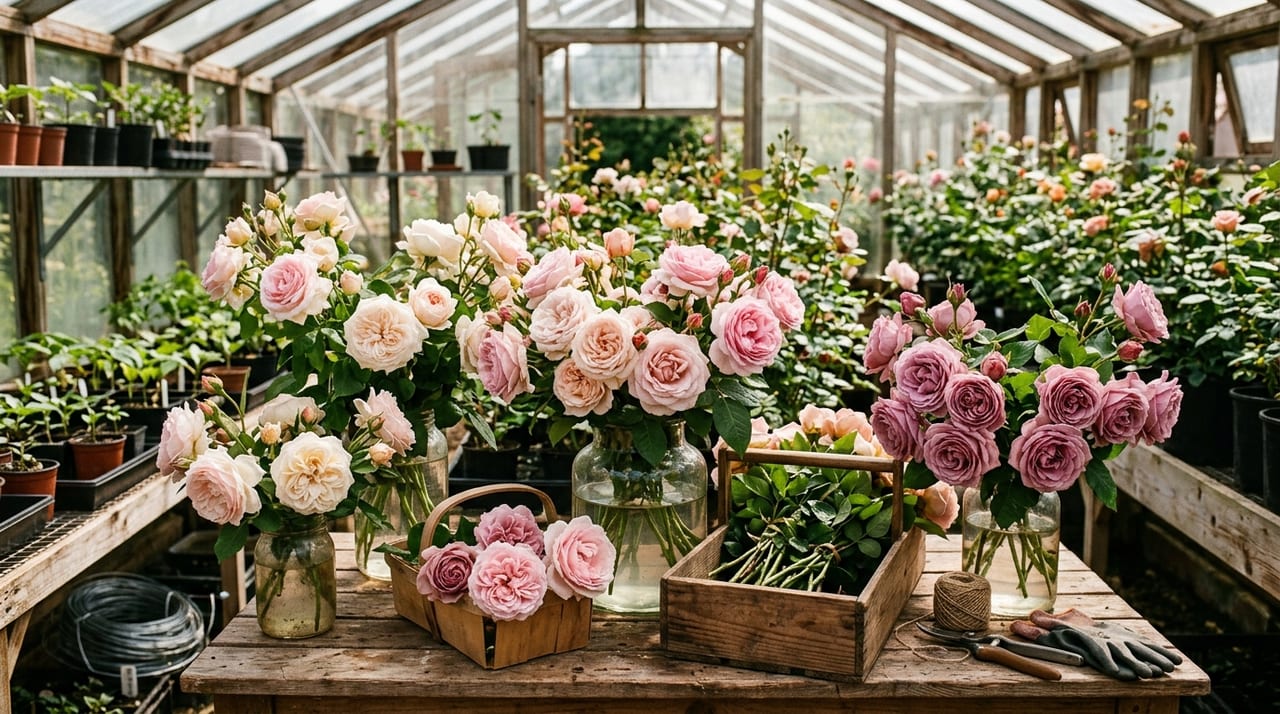
Roses (A Representative Difficult Flower Type) Roses have hard stems with vascular bundles that clog easily, requiring careful treatment. Recut the stem by 5 cm or more, always using an angled cut underwater. Additionally, "bending conditioning" is also effective—slightly bending the stem to physically open the vascular bundles increases water absorption. After recutting, the basic method is to condition in deep water overnight. The easiest time for water uptake is when the petals are soft and the flower is just beginning to open.
Hydrangeas (Prone to Wilting and Require Special Treatment) Hydrangeas are among the most difficult flowers for water uptake conditioning. You can increase the water absorption area by using the "split conditioning" method (making a cross-shaped cut at the stem base with a sharp knife) or "hammer conditioning" (crushing the stem with a wooden mallet). Additionally, "flame conditioning" (briefly searing the cut edge over an open flame for 10-20 seconds before immediately placing in water) or "hot water conditioning" (immersing in 80-90°C hot water for 10-15 seconds before transferring to cold water) are also effective. Once wilted, hydrangeas can sometimes be revived using the "full submersion method" (submerging the entire stem in deep water). For those who want to learn more about growing and caring for hydrangeas, check out Complete Guide to Growing Hydrangeas | How to Change Colors, Pruning Time, and Variety Selection.
Gerberas Gerberas have thin, soft stems and are prone to clogging from bacteria. Daily recutting by 2-3 cm and "shallow water management" (keeping water level low) are effective. In deep water, stems absorb too much water and rot easily, so keep the water level at about 3-5 cm.
Tulips Tulips continue to grow even after being arranged. There are different preferences regarding whether to cut the stem at an angle or vertically, but both work fine; what's important is that the flower moves based on light exposure. Keeping them in a cool place helps maintain their shape longer. Be careful not to let leaves become submerged in water.
Proper Use of Flower Food (Cut Flower Nutrient Solution)
Commercial cut flower-specific flower foods (such as "Fresh Happiness," "Flower Food," or "Oasis Floral Preservative") contain sugar, antibacterial components, and water absorption enhancers. Simply mixing them into your vase water is said to extend flower lifespan by an average of 1.5 to 2 times. It's convenient to purchase them together when buying flowers at a shop.
Key Points When Using Flower Food
- Always use at the recommended concentration (too strong can be counterproductive)
- Add the appropriate amount each time you change the water
- Keep the container clean (to maximize the effectiveness of flower food)
Homemade Flower Food Recipe If you don't have flower food on hand, you can substitute with sugar (10g) + household bleach (2-3 drops) + water (1 liter). The sugar provides nutrients to the flowers, while the bleach acts as an antibacterial agent and maintains water quality. However, it's important to use the correct amount of chlorine bleach—too much can damage stems.
Does the 10-Yen Coin Method Work? The well-known method of "putting a 10-yen coin in the vase" aims for antibacterial effects from copper ions, but its effectiveness is limited compared to commercial flower food. Use it only as an emergency alternative.
Setting Up the Right Storage Environment for Longer-Lasting Flowers
Temperature Control Is Most Important The ideal temperature for most cut flowers is 15-20°C. Avoid direct air conditioning, direct sunlight, and areas near heating devices, as these accelerate water loss from flowers. Moving them to a cool location like an entryway or hallway at night can extend lifespan by 1-2 days. In summer, choose a location indoors with air conditioning but away from direct airflow.
Water Change and Recutting Routine Water should be changed about once every 2-3 days, but change it sooner if it becomes cloudy. Each time you change the water, recutting the stem by 1-2 cm resets bacterial effects and restores water absorption ability. Washing the vase each time also prevents bacterial growth.
Be Careful of Ethylene Gas Don't place flowers near fruits like bananas, apples, or pears. Ethylene gas released from these fruits acts as a ripening/aging hormone for flowers, rapidly accelerating blooming and wilting. Carnations and baby's breath are particularly sensitive to ethylene, so be especially careful.
Emergency Revival for Wilted Flowers
The following emergency treatments are effective for flowers that have wilted after being arranged.
Hot Water Conditioning This method involves immersing the stem's cut end in 80-90°C hot water for 20-30 seconds, then immediately transferring to cold water. The heat drives out air bubbles and promotes rapid water absorption. It's effective for many flowers including roses, sunflowers, and hydrangeas. Cover the upper part of the stem (leaves and petals) with paper towel to protect from steam damage.
Deep Water Submersion Submerging the entire flower in deep water for 1-2 hours is also effective. By allowing absorption through both the stem and petals, you can revive wilted flowers. It's especially effective for hydrangeas and gerberas.
With proper treatment and environmental management, cut flowers can last 2 to 3 times longer. To help special gifts and flowers in your home retain their beauty longer, please make water uptake conditioning and daily care a habit.
Once cut flowers finish their lifespan as fresh flowers, you also have the option to preserve them as dried flowers rather than discarding them. Tips on how to make them are detailed at How to Make and Display Dried Flowers | Drying Techniques for Roses, Hydrangeas, and Statice.
Special Care for Keeping Cut Roses Fresh Longer
Leaf Removal
- Remove all leaves that would be submerged (to prevent water decay)
- Keep 2-3 leaves at the top (to create nutrients through photosynthesis)
Thorn Removal
- Remove thorns on the part that will be submerged
- Prevent bacteria from entering through thorn wounds
Removal of Outer Petals
- Remove outer petals as soon as they show damage
- Damaged petals release ethylene, which promotes aging of other petals
Emergency Treatment When the Stem Droops
- If the flower head droops downward, wrap it tightly in newspaper and apply deep water conditioning
- Recut the stem freshly and try hot water conditioning
- Recovery often occurs within a few hours
Enjoying as Dried Flowers
Another way to enjoy flowers is to dry them before they wilt completely.
- Hang roses upside down to dry when they are about 70% open
- Dry in a well-ventilated shaded area for 1-2 weeks
- Using silica gel allows you to create vibrant-colored dried flowers