Growth Acceleration Strategy for Large Agave Plants | Fertilization, Light, Temperature, and Repotting Timing
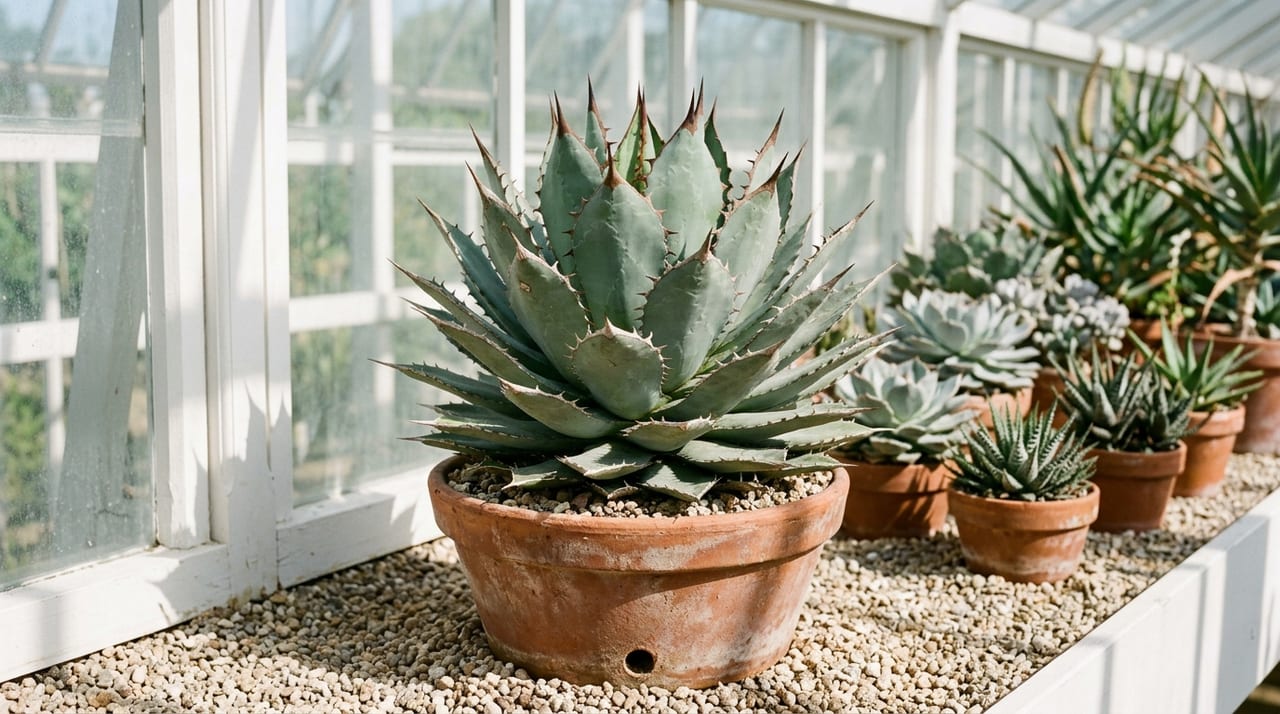
Maximizing the growth of large agave plants requires strategically optimizing four key elements: fertilization, light, temperature, and repotting. A growth rate 3 to 5 times faster than normal is achievable within one year.
Key Takeaways
Maximizing the growth of large agave plants requires strategically optimizing four key elements: fertilization, light, temperature, and repotting. A growth rate 3 to 5 times faster than normal is achievable within one year.
Related Species
Introduction: Growth Management in Large Agave Cultivation
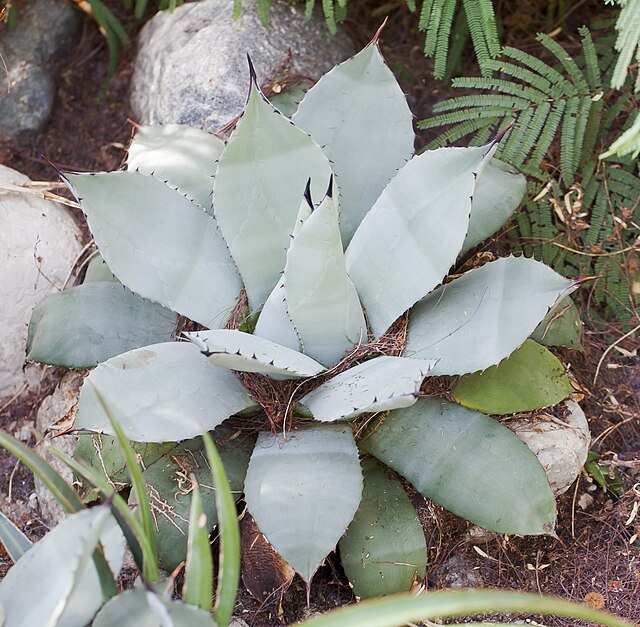
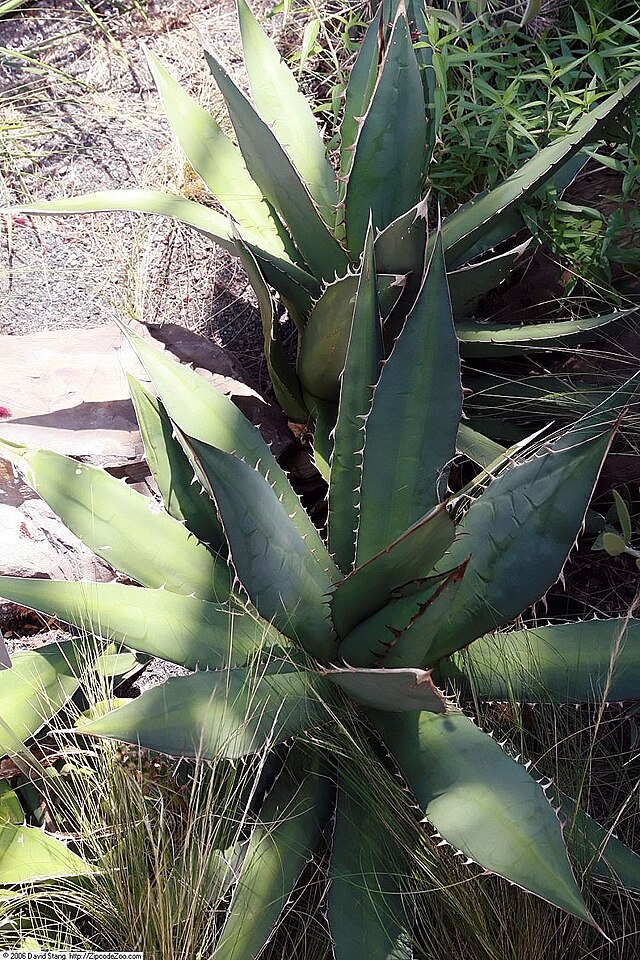
Among agave varieties, cultivating "large-species" plants (those reaching over 100 cm at maturity) requires more than simply preventing them from dying. To grow large varieties such as Agave titanota and Agave parryi to their "maximum potential," strategic management optimizing fertilization, light, and temperature is essential. This article provides detailed, practical methods for growing large agave plants to their full size in a short period.
Understanding Large Agave Physiology and Growth Rate
Agave titanota and Agave parryi evolved in the semi-arid regions of Mexico, developing concentrated growth during limited rainy seasons. In nature, they achieve 70% of their annual growth in just 3 to 4 months of the rainy season.
In horticultural cultivation, we can artificially create this "concentrated growth period" to achieve growth rates equivalent to nature. Under standard cultivation, diameter growth of 2–3 cm per year is typical, but strategic management can realistically achieve 5–10 cm of diameter growth annually.
Fertilization Strategy: The Most Critical Element for Growth Promotion
Basic Principles of Fertilization
To accelerate the growth of large agave plants, it is not merely about "nutrient supply" but rather "optimizing fertilization for each growth phase."
Annual growth cycle of agave:
- Winter (November–February): Dormancy period. Minimal to no growth. Minimize fertilization.
- Spring (March–May): Gradual growth begins. Begin light fertilization.
- Summer (June–September): Peak growth period. Continue maximum fertilization.
- Autumn (October): Growth rate declines. Gradually reduce fertilization.
Detailed Fertilization Methods and Formulations
Spring Fertilization (March–May):
- Liquid fertilizer: Once weekly, water-soluble fertilizer at 150 ppm nitrogen (N-P-K = 5-10-10)
- Solid fertilizer: Once monthly, slow-release organic fertilizer (granular, N-P-K = 5-5-5)
This combination allows new leaf expansion and root growth to occur simultaneously.
Summer Fertilization (June–September): Peak Growth Period
- Liquid fertilizer: Once weekly, 150–200 ppm nitrogen (higher nitrogen content)
- Solid fertilizer: Twice monthly, nitrogen-rich fertilizer (N-P-K = 10-5-5)
- Foliar fertilizer: Twice monthly, spray over entire leaves (containing magnesium, calcium, and trace elements)
Summer fertilization is the most critical period, accounting for over 50% of annual growth. Weekly liquid fertilizer is essential.
Autumn Fertilization (October):
- Liquid fertilizer: Reduce to once monthly
- Solid fertilizer: Apply one final dose mid-month
Winter Fertilization (November–February):
- Solid fertilizer only: Mid-December, apply slow-release fertilizer at the base
- Discontinue liquid fertilizer as a rule
Damage from Over-fertilization and How to Recognize It
Agave is susceptible to over-fertilization and prone to root rot. Signs of excessive fertilization:
- Leaves darken or become soft and mushy
- Foul odor near the base
- New leaves show deformities (twisting or warping)
If these signs appear, immediately stop liquid fertilizer application and remove the plant from the pot to inspect the roots. If blackened roots are found, repotting with complete soil replacement is necessary.
Light Management: A Key Factor Affecting Growth Rate
Optimal Light Intensity and Duration
The optimal illuminance for large agave plants is 5,000–10,000 lux (3–4 hours of direct sunlight, strong morning light).
- Light below 3,000 lux: Growth is severely delayed; leaf color becomes pale
- Light 5,000–7,000 lux: Standard growth rate
- Light 8,000 lux or above: Maximum growth rate is achieved
For indoor LED cultivation, placing a 40W LED light 20–30 cm from the plant achieves 5,000 lux.
Seasonal Light Patterns
Spring (March–May):
- Direct sunlight: 3–4 hours daily (8 AM to noon)
- Afternoon indirect light: 2–3 hours (2 PM to 5 PM)
During this period, temperatures are mild and leaf burn risk from strong direct sunlight is low, allowing maximum light provision.
Summer (June–September): Peak Growth Period
- Direct sunlight: 4–5 hours daily (5 AM to 9 AM)
- Shade cloth: Use 30% shade cloth for peak sunlight (noon to 3 PM)
Even large varieties like Agave titanota require afternoon shade during temperatures above 35°C to prevent leaf burn and transpiration stress on roots.
Autumn (October):
- Direct sunlight: 4–5 hours daily (unrestricted)
- Remove shade cloth
When temperatures fall below 30°C, shade cloth can be completely removed.
Winter (November–February):
- Direct sunlight: 2–3 hours daily is sufficient
- Since growth is nearly dormant, light intensity is secondary
Light Spectrum and Growth Mechanisms
Red light (600–700 nm) promotes root growth and leaf expansion. Blue light (400–500 nm) enhances leaf color depth and disease resistance. Utilizing both wavelengths naturally present in direct sunlight is optimal for growth management.
Temperature Management and Growth Promotion
Optimal Temperature Range and Growth Rate
Agave growth rate is extremely sensitive to temperature.
| Temperature | Growth Rate | Management |
|---|---|---|
| 5–15°C | Stopped to very slow | Overwintering/protection only |
| 15–20°C | Slow | Preparation for spring–autumn |
| 20–25°C | Standard | Optimal temperature range |
| 25–30°C | Maximum rate | Ideal growth period |
| 30°C and above | Rapidly declining | Heat stress—shade cloth and humidity essential |
From a growth promotion perspective, maintaining 20–28°C year-round is ideal.
Summer Heat Mitigation
Agave is susceptible to high heat; temperatures above 35°C halt root respiration and accelerate root rot.
Strategies:
- When forecasts exceed 32°C, morning misting lowers temperature by 2–3°C
- Place white sheets around the pot and use ground heat reflection to lower temperature
- Nighttime ventilation: Circulate indoor air with a fan from 9 PM to 6 AM to cool
Winter Insulation and Overwintering Management
Below 10°C, agave root absorption ability drops significantly. Even in warm regions, covering with non-woven fabric and mulching the base with fallen leaves during winter is recommended.
In heated environments, maintaining a minimum of 15°C allows gradual growth to continue even in winter, increasing annual growth by 20–30%.
Repotting Timing and Technique
Determining Repotting Timing
Repotting agave when new roots are actively forming is a must.
Optimal period: Late March to mid-April (New growth phase)
- New root formation is most active
- Recovery after repotting is fastest
- Root establishment completes during accelerating growth
Second best: Mid-September to mid-October (Autumn growth period)
Repotting Interval and Pot Size Selection
To promote large agave growth, maintaining a state where roots feel consistently "slightly confined" is optimal.
Recommended rotation:
- Year 1 (after purchase): Repot monthly to one size larger
- Years 2–3: Every 6 months to one size larger
- Year 4 and beyond: Annually in spring to same or one size larger
For example, to grow Agave titanota most rapidly, start with a 4-inch pot (12 cm diameter) at purchase, upsize yearly, and reach an 8-inch pot (24 cm diameter) within 3 years.
Soil Mix for Repotting
Maximizing large agave root spread requires extremely well-draining soil.
Recommended mix:
- Red volcanic soil (large grain): 40%
- Coarse sand: 40%
- Leaf mold: 20%
This mix provides excellent drainage, activates root respiration, and promotes new root formation.
Repotting Technique and Root Protection
When removing old soil, protecting roots is critical. Gently comb with a bamboo stake, carefully protecting fine roots.
Large agave plants have many thick roots, some of which harden with age—these can be boldly cut. Treat cut surfaces with sterilizer (apply minimal benomyl).
Large Agave Growth Acceleration Program (1-Year Example)
First-Year Accelerated Growth Schedule
March (Repotting, fertilization begins)
- Repot with spring soil mix (one size larger pot)
- Begin liquid fertilizer (weekly, 150 ppm nitrogen)
April–May (Initial growth)
- Direct sunlight: 3–4 hours daily
- Continue liquid fertilizer (weekly)
- Solid fertilizer: Monthly
June–August (Peak growth period)
- Direct sunlight: 4–5 hours daily (30% shade cloth at noon)
- Liquid fertilizer: Weekly, 200 ppm nitrogen
- Solid fertilizer: Twice monthly (N-P-K = 10-5-5)
- Foliar fertilizer: Twice monthly
September (Continued autumn growth)
- Direct sunlight: 4–5 hours daily (shade cloth removed)
- Liquid fertilizer: Weekly
- Solid fertilizer: Monthly
October (Growth slows, fertilization reduces)
- Liquid fertilizer: Reduce to monthly
- Solid fertilizer: Final application mid-month
November–February (Overwintering protection)
- Discontinue fertilization
- Maintain temperature (ideal: 15°C or above)
This schedule can achieve growth rates 3 to 5 times faster than normal.
Common Large Agave Cultivation Failures and Solutions
Failure 1: Over-fertilizing in winter Agave enters dormancy in winter, making winter fertilization wasteful. Without root absorption capacity, fertilization increases salt concentration and risks root rot.
Failure 2: Growth stoppage from insufficient light Many growers mistakenly believe "agave comes from arid regions, so indoor daytime is fine." Indoor indirect light often drops below 3,000 lux, severely slowing growth.
Failure 3: Root rot during high temperatures Combining misting and fertilization in summer accelerates root rot in heat. On days above 33°C, pause misting and wrap the pot with damp cloth for cooling.
Specialized Cultivation Example: Large Agave titanota
Agave titanota is a fast-growing, relatively easy large variety. Applying this article's program achieves the realistic goal of 20–30 cm diameter within 3 years of purchase.
Agave parryi grows slower than titanota and demands higher light and warmth. Cultivation in year-round temperatures above 25°C is recommended.
Conclusion
Growing large agave plants to their full potential is achievable by strategically optimizing four elements: fertilization, light, temperature, and repotting. Implementing the one-year schedule, fertilization formulations, and light and temperature management explained in this article allows you to grow striking large varieties like Agave titanota and Agave parryi to their maximum size in minimum time.