Guide to Disease-Resistant Rose Varieties: Recommended Cultivars Resistant to Black Spot and Powdery Mildew, and the Potential for Pesticide-Free Cultivation
How to choose rose varieties with high disease resistance to black spot and powdery mildew; recommended disease-resistant varieties; cultivation management methods to reduce pesticide use. A practical guide for those who want to enjoy roses with minimal or no pesticides.
Key Takeaways
How to choose rose varieties with high disease resistance to black spot and powdery mildew; recommended disease-resistant varieties; cultivation management methods to reduce pesticide use. A practical guide for those who want to enjoy roses with minimal or no pesticides.
Related Species
The Importance of Choosing Disease-Resistant Roses
The greatest challenge in rose cultivation is managing disease. In particular, black spot disease and powdery mildew can cause leaves to drop in succession if left unchecked, weakening the plant to the point where flowering becomes impossible. The image of roses requiring weekly pesticide applications has been transformed in recent years by the rapid spread of "disease-resistant varieties."
By selecting varieties with high disease resistance, you can dramatically reduce the frequency of pesticide applications. Disease-resistant varieties now make it possible to attempt pesticide-free cultivation, allowing you to grow roses safely even in gardens adjacent to vegetable plots or where pets play. This article introduces representative disease-resistant varieties, explains the mechanisms behind disease resistance, and discusses key points for pesticide-free cultivation.
The Two Major Rose Diseases: Black Spot and Powdery Mildew
Black spot disease is caused by a fungal pathogen (Diplocarpon rosae). Spores attach to leaves through rain or water splash, and spread rapidly in temperatures of 15–25°C with high humidity. Black spots appear on leaves, which gradually turn yellow and drop. The disease is most severe from the rainy season through autumn, and infected leaves left untreated become infection sources the following year.
Powdery mildew is caused by a different fungal pathogen (Podosphaera pannosa), covering leaves and new shoots with a white powdery coating. It tends to occur in spring and autumn when conditions are relatively dry with large temperature fluctuations between day and night. Unlike black spot, it prefers slightly drier environments rather than high humidity.
Since these two diseases have somewhat different onset conditions, selecting varieties with high resistance to both is the first step toward low-pesticide cultivation. Detailed information on distinguishing symptoms and management after infection is covered in our rose disease guide.
Disease-Resistant Variety Comparison Table
To grasp the overall picture, the six varieties introduced in this article are summarized in the table below. Whether a variety blooms in all seasons affects whether you can enjoy flowers after passing through the rainy season when diseases are most likely to appear. If you want roses to bloom for a long period with reduced pesticides, choosing varieties that meet both disease resistance and recurrent flowering will prevent disappointment.
| Variety | Reflowering | Black Spot | Powdery Mildew | Fragrance | Best Use |
|---|---|---|---|---|---|
| Knock Out | Recurrent | ◎ | ○ | Mild | Gardens that bloom even with minimal care; first rose plant |
| Léonard de Vinci | Recurrent | ◎ | ◎ | Mild | Japan's hot, humid gardens; also for cut flowers |
| Rose Gaujard | Recurrent | ○ | ○ | Medium | For those without confidence in management; emphasizing vigor |
| Vivaldi | Recurrent | ◎ | ○ | Mild | For those who want delicate flower colors without pesticides |
| Schneekuppe | Reflowering | ◎ | ◎ | Strong | Slopes; garden borders; low-maintenance |
| Old Blush | Recurrent | ○ | ○ | Mild | For long-blooming periods; heritage variety enthusiasts |
◎ indicates a level where foliage remains even without pesticides; ○ indicates a level where significant decline doesn't occur with basic management. Results vary greatly depending on sunlight, air circulation, and spacing between plants. Use the table as a relative comparison between varieties only.
Recommended Disease-Resistant Varieties
Knock Out Series
A revolutionary shrub rose bred by William Radler in the United States. Disease resistance to black spot is among the highest of all varieties, with the characteristic that foliage rarely drops even without pesticides. Flower color ranges from deep pink to white, with extremely strong reflowering ability, making it one of the most recommended disease-resistant varieties for beginners.
Léonard de Vinci
A floribunda bred by Meilland (France). Beautiful deep pink cup-shaped blooms showing high resistance to both black spot and powdery mildew. It is valued for its ability to handle Japan's hot, humid rainy season, and has received awards in competitions. The flowers last well and perform excellently as cut flowers.
Rose Gaujard
A classic variety from 1957, yet its disease resistance is comparable to modern varieties. A striking hybrid tea with contrasting deep pink and white. Its strength and vigorous growth make it remarkably forgiving of minor management mistakes.
Vivaldi
A variety bred by Kordes (Germany). Kordes is renowned for disease-resistance breeding, and many of their roses are known for acquiring ADR certification (German disease resistance test certification). Vivaldi is characterized by soft apricot-pink flowers and high resistance to black spot.
Schneekuppe (Snow Pavement)
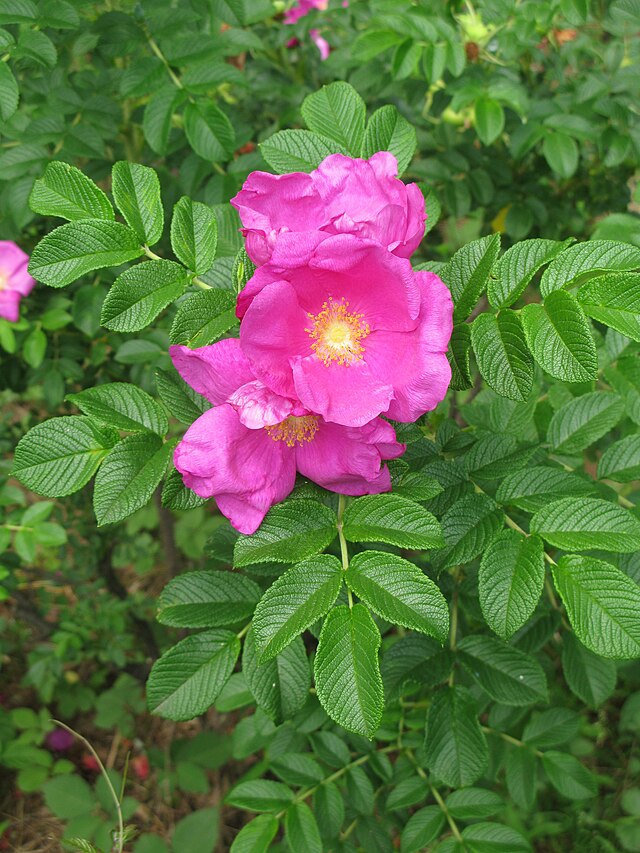
A type of rugosa rose with small white to pale pink flowers blooming in clusters. Highly resistant to black spot, powdery mildew, and botrytis blight. Overseas, it is introduced as a truly "maintenance-free rose." As a groundcover rose, it is ideal for slopes or garden edging.
Old Blush
An ancient rose (China type) native to China and one of the parent varieties of modern roses. Disease-resistant and well-suited to Japan's climate. Its exceptional vigor in continuously producing pink small-to-medium blooms throughout the seasons is unmatched. Though fragrance is somewhat weak, it is well-suited to those wanting long-term enjoyment with minimal care.
The Mechanisms of Disease Resistance and Perspective on Variety Selection
Why do some rose varieties resist disease better than others? Disease resistance operates through three main mechanisms.
- Physical barrier: Varieties with thick cuticle layers (wax layers) on leaves physically prevent spore penetration. Varieties with glossy leaf surfaces tend to have thicker cuticles, making it harder for black spot fungus to establish.
- Chemical defense: Varieties with high ability to rapidly generate phytoalexins (antimicrobial compounds) when infected can stop fungal proliferation at an early stage.
- Wild-species derived genes: Modern varieties have been improved with disease-resistance traits through crossing with wild roses that are extremely disease-resistant—such as the Hama-nasu (Rosa rugosa) native to Japan's coasts, or wild species like Rosa woodsii and Rosa foetida bicolor—which carry disease-resistance genes.
The superior disease resistance of Kordes and Radler varieties reflects these meticulous breeding programs. When selecting varieties, it is helpful to consult ADR certification (Germany) or ARS ratings (American Rose Society) scores. These are objective benchmarks based on multi-year, multi-location pesticide-free testing. For a fuller overview of variety selection, consult our rose variety selection guide.
Cultivation Management Tips for Successful Pesticide-Free Growing
Even with disease-resistant varieties, poor management will result in disease. To achieve pesticide-free (or low-pesticide) cultivation, adhere to the following points.
- Prioritize sunlight and air circulation. Aim for at least 6 hours of sunlight and at least 60 cm between plants. Dense planting raises humidity and becomes a breeding ground for black spot disease.
- Water only at the plant base. When water contacts leaves, black spot spores become mobile. Apply water gently at the base with a hose or use a drip irrigation system. Water in the morning so plants dry by evening.
- Remove fallen and infected leaves immediately. Fallen leaves on the ground retain spores that become infection sources the following year. After autumn pruning, collect and dispose of all fallen leaves (do not compost them), and either lightly replace the soil around the plant base or apply mulch with fallen leaves.
- Use organic fertilizer for slow growth. Excess nitrogen from synthetic fertilizers promotes soft new growth, making powdery mildew more likely. Using organic fertilizers based on bone meal and oil cake promotes thick, disease-resistant foliage.
As supplementary measures, baking soda spray (1 g baking soda per 1 L water) and diluted wood vinegar are effective for powdery mildew prevention and early-stage management. Since they are not pesticides, they are relatively safe to use in environments with pets or children. For more detailed pesticide-free disease management, consult organic and low-pesticide pest control for roses.
Summary: Variety Selection Determines 90% of Disease-Free Rose Growing Success
The battle against disease in rose cultivation is largely decided at the point of variety selection. However carefully you manage, disease-susceptible varieties will suffer repeated infections. Conversely, disease-resistant varieties allow you to enjoy beautiful flowers for long periods with only basic care.
Varieties like Knock Out and Schneekuppe are sometimes called "roses that convert rose-haters" overseas, because they require so little management. For households where pets and small children play in the garden, balconies in apartments where pesticides are difficult to use, and those with limited physical capacity, disease-resistant varieties are strongly recommended.
Start with a single plant of a disease-resistant variety. The joy of growing roses without pesticides is far greater than you might imagine.