Complete Guide to Growing Potted Roses | Enjoy on Balconies and in Apartments
How to grow potted roses on your balcony or apartment. Comprehensive guide covering pot size selection, potting soil composition, watering and fertilizer management, pruning tips, balcony-specific considerations, and 5 recommended rose varieties.
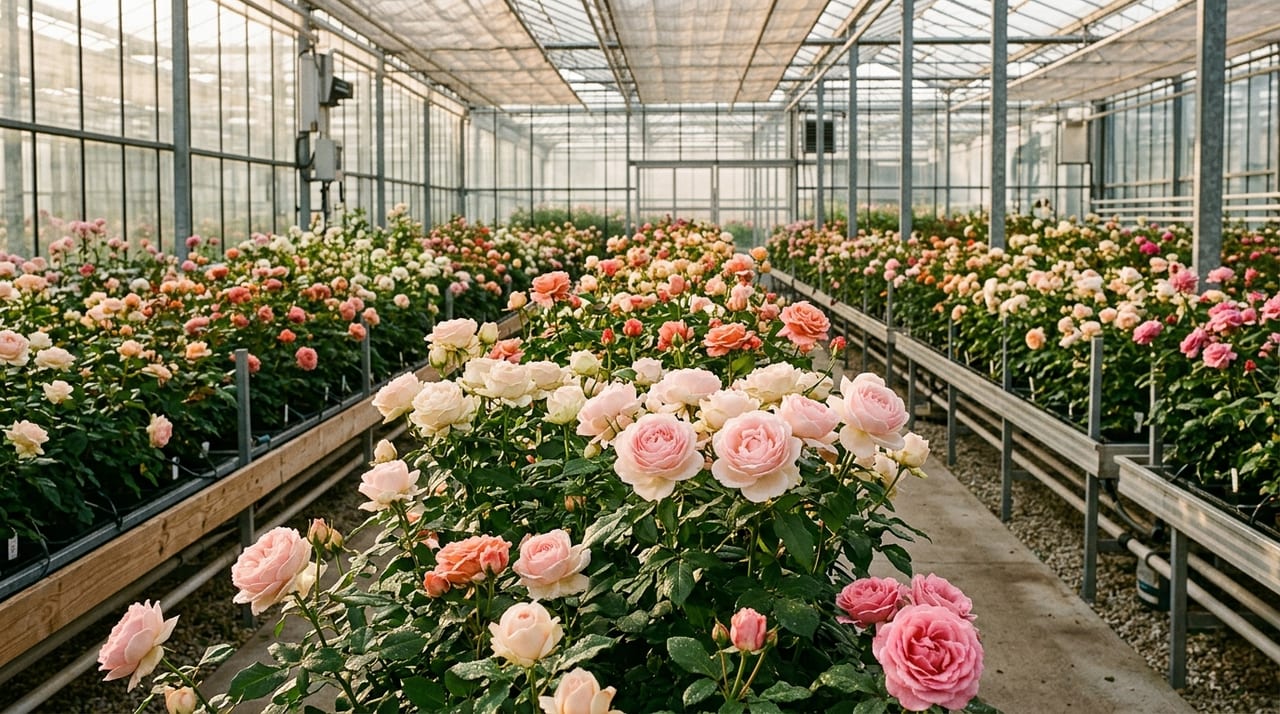
Key Takeaways
How to grow potted roses on your balcony or apartment. Comprehensive guide covering pot size selection, potting soil composition, watering and fertilizer management, pruning tips, balcony-specific considerations, and 5 recommended rose varieties.
Related Species
You can enjoy roses even without a garden. With container cultivation, you can grow beautiful rose blooms in limited spaces such as apartment balconies or entryways. In fact, container growing offers benefits not found in ground planting, such as the ability to move pots and easier soil management. This article comprehensively explains the key points for successfully growing potted roses.
Basics of Pot Selection
The choice of pot is critical to success in rose container cultivation.
- Size: For large nursery stock (2-year-old plants), an 8-pot (24 cm diameter) or larger is recommended. Climbing roses and shrub roses should ideally use a 10-pot (30 cm diameter) or larger. Pots that are too small are prone to root-bound conditions
- Material: Terracotta (unglazed clay) offers excellent drainage and root health but is heavy. Plastic pots are lightweight and easy to move, but the interior gets hot in summer. Slit pots offer superior drainage and aeration and are ideal for rose cultivation
- Depth: Roses are deep-rooted, so deeper pots are better than shallow ones. Long pots or rose-specific deep pots are recommended
- Drainage holes: Ensure the bottom has adequate drainage holes. Excessive moisture is the leading cause of root rot in roses
- Color: Black pots heat up easily in summer. Light-colored pots, such as white or terracotta, help reduce temperature increases
Place 2-3 cm of pot stones (pumice or styrofoam pieces) at the bottom of the pot to ensure proper drainage.
Soil Mix and Management
For rose container cultivation, the balance between drainage and water retention is crucial.
Basic Soil Mix Ratio
- Akadama soil (medium grain): 40%
- Leaf mold or compost: 30%
- Kanuma soil: 10%
- Perlite: 10%
- Charcoal: 10%
When using commercially available rose potting soil, adding about 10% perlite will improve drainage.
Soil Management Tips
- Container soil degrades within 1-2 years, so regular repotting is necessary
- If moss grows on the surface or water penetration worsens, it's time to repot
- Summer mulching (spreading bark chips or coconut fiber on the soil surface) prevents soil temperature increases and drying
Watering and Fertilizer Management
For container roses, watering and fertilizing are more critical than for ground-planted roses.
Watering Tips
- The basic rule is "water thoroughly when the soil surface is dry." Water until it flows from the bottom
- In summer, water twice daily, morning and evening. Avoid midday in peak summer (risk of root damage from heat)
- In winter, reduce to once every 2-3 days. However, do not let it dry out completely
- Water the base of the plant, not the leaves. Wet foliage increases the risk of black spot disease
- Always empty water that pools in the saucer. It causes root rot
Fertilizing Schedule
- Winter fertilizing (January-February): Apply organic fertilizer (such as oil cake and bone meal) along the rim of the pot. Use fermented products
- Spring budbreak fertilizing (March): Apply liquid fertilizer once weekly. Start when new buds begin to emerge
- Post-bloom fertilizing (immediately after flowering): Apply quick-acting chemical fertilizer or liquid fertilizer. Replenish energy for the next bloom
- Summer fertilizing (June-July): Reduce fertilizing during peak summer heat. Fertilizing weak roots adds stress
- Fall fertilizing (September-October): Apply supplemental fertilizer for fall roses. Higher phosphorus and potassium improve flowering
- Dormancy period (November-December): Stop fertilizing
Pruning Tips
Pruning is essential for maintaining attractive plant shape in limited space when growing container roses.
Winter pruning (January-February)
- For container plants, prune more severely than ground-planted roses. Cut at a slant 5 mm above an outward-facing bud
- Remove dead wood, thin branches, and inward-facing canes, leaving 3-5 main canes
- Cut hybrid tea roses back about half their height, and floribundas about one-third
- Apply wound sealant to cut ends to prevent pathogen entry
Post-bloom pruning (immediately after flowering)
- Cut spent flowers above a five-leaflet leaf. Early cutting promotes the formation of the next flower buds
- For repeat-flowering varieties, careful post-bloom pruning can result in 3-4 flushes of bloom per year
Fall pruning (late August to early September)
- Adjustment pruning for beautiful fall blooms. Do not cut as severely as winter pruning
- Cut back about one-third of the plant, aiming for blooms in late October to November
Apartment and Balcony-Specific Considerations
When growing roses on apartment balconies, special measures are needed to address conditions different from typical gardens.
- Wind protection: Wind increases at higher floors. Use heavy pots or group pots together to prevent them from blowing over. Installing windbreak netting is also effective
- Concrete reflection: Reflected heat and light from the balcony floor damage roses. Place slatted stands or bricks under pots to reduce heat buildup
- Drainage considerations: Be mindful of water leaking to neighboring units or floors below. Use saucers and water carefully
- Sunlight availability: Sunlight duration varies by balcony direction. Roses require a minimum of 4-5 hours of direct sunlight. South to east-facing is ideal
- Weight restrictions: Apartment balconies have weight limits. Check limits before placing multiple large pots
- Building bylaws: Some buildings restrict plant placement. Check with management before proceeding
5 Recommended Rose Varieties for Container Growing
Roses suitable for containers have compact growth habits and profuse flowering.
- Bolero: White cup-shaped blooms. Compact with high disease resistance. Fruity fragrance is also attractive. A classic container rose
- Rayon de Soleil: Bright yellow flowers. Extremely vigorous and disease-resistant. Grows well even in smaller pots
- Mini Eden Rose: A compact version of Pierre de Ronsard. Pink cup-shaped blooms that cluster profusely even in containers for an opulent display
- Green Ice: Small blooms that change from white to green. A classic miniature rose. Blooms abundantly even in small pots. Easy for beginners
- Jubile du Prince de Monaco: White with red picotee edges. A floribunda with ideal proportions for container cultivation. Long-lasting blooms
Find Potted Rose Plants Perfect for Your Space on GrowerDirect
The success of container cultivation depends greatly on plant quality and variety selection. GrowerDirect connects you directly with growers who specialize in varieties suited to container cultivation. You can also receive advice tailored to your balcony environment and growing experience. Find the perfect rose for your balcony in the Roses and Flowers category.