Complete Guide to Growing Roses in Pots | Pot Selection to Care and the Differences from Ground Planting
A complete explanation of how to grow roses in pots. Introducing practical know-how from pot size and material selection, soil composition, watering and fertilizing frequency (differences from ground planting), preventing root-bound conditions, and wind protection on balconies.
Key Takeaways
A complete explanation of how to grow roses in pots. Introducing practical know-how from pot size and material selection, soil composition, watering and fertilizing frequency (differences from ground planting), preventing root-bound conditions, and wind protection on balconies.
Related Species
The Appeal of Potted Roses and Fundamental Differences from Ground Planting
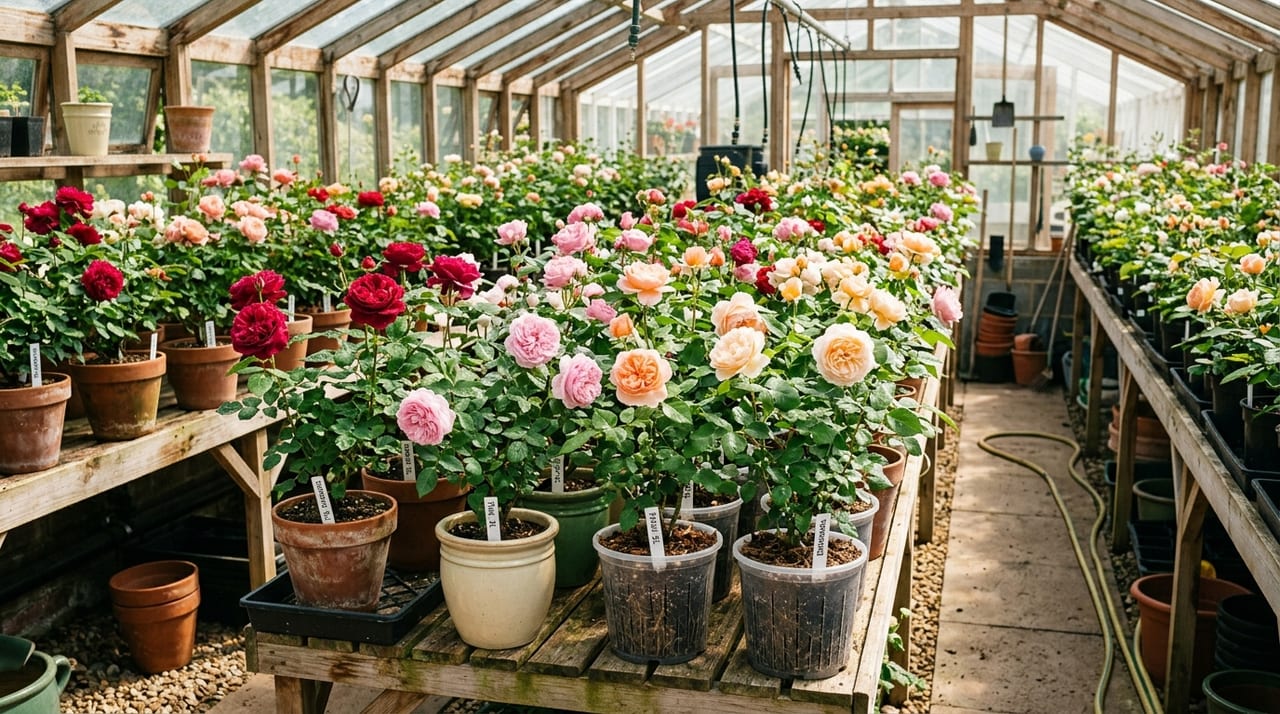
Even in apartments or condominiums without gardens, you can grow roses beautifully. Potted roses offer not only the convenience of "being able to grow them even in limited spaces," but also the major advantage of being able to freely adjust sunlight and placement location, something ground planting cannot offer. Even if you don't have the space to create a full-scale rose garden design in your garden, potted roses allow you to enjoy them fully on your front entrance or balcony.
However, the management approach for potted and ground-planted roses is fundamentally different. In ground planting, roots extend deep into the soil and can absorb water and nutrients from a wide area. In contrast, potted roses have roots confined within the pot, creating an environment with vastly limited water and nutrient reserves. Understanding this difference and building a "pot-specific management cycle" is the first step to success.
Variety selection is also important. Roses suitable for potting are miniature roses with lower plant height, floribunda types, and compact shrub types. Climbing roses (climbing varieties) exceeding 2m in height are difficult to manage in pots and their roots do not develop robustly, making them unsuitable for beginners. If you also want to enjoy fragrance, refer to the rose fragrance variety guide and choose a compact fragrant variety that suits your pot size.
Pot Selection and Soil Composition
Pot Size and Material
To grow roses in pots, a No. 8 pot (approximately 24cm in diameter) is the minimum size. Miniature roses can work in 6–8 pots, but floribunda types are best in 8–10 pots, and larger shrub varieties in 10–12 pots. If the pot is too small, root-bound conditions develop quickly and frequent dry-out occurs, becoming the primary cause of poor growth.
Select the material to match your management style.
Unglazed pots and terracotta offer excellent air circulation and drainage, with minimal risk of root rot—their greatest advantage. However, they are heavy, making them somewhat unsuitable for frequently-moved balcony setups.
Plastic pots are lightweight, easy to handle, and cost-effective. While air circulation is lower, well-draining potting soil can adequately compensate.
Slit pots have slit-shaped holes on the bottom and sides, preventing root "circling" (where roots spiral around the pot). If you prioritize healthy root development, they are one of the best options available.
Potting Soil Composition
For beginners, commercial rose-specific potting soil is the simplest and most reliable choice. Fertilizer, pH, and drainage are pre-optimized.
If making your own, a basic formula is red soil (medium grain) 6 : leaf mold 3 : perlite 1. Using bark compost instead of leaf mold further improves drainage. Roses prefer slightly acidic conditions of pH 6.0–6.5; excessive alkalinity can inhibit iron and manganese absorption, causing leaves to yellow.
Watering and Fertilizing Management Cycle
Seasonal Watering Frequency
Watering management for potted roses is clearly more labor-intensive than for ground-planted roses. Frequency adjustment according to season and temperature is essential.
- Spring and autumn (growing season): Water when the soil surface dries. Frequency: approximately once every 1–2 days
- Summer (high temperature period): Once daily, morning or evening. Midday watering heats the soil and damages roots
- Winter (dormant period): Approximately once every 2–3 days. Excess moisture causes root rot
The correct watering amount is when water flows vigorously from the pot's drainage holes. If you water in small amounts, roots extend only in the upper layer, creating a drought-sensitive root system. Make it a habit to discard water that collects in the saucer within 30 minutes.
Fertilizing Strategy Specific to Potted Roses
Compared to ground planting, potted roses lose nutrients with each watering, making increased fertilizing frequency important.
Slow-release fertilizer (granular fertilizer) should be replenished once every 3–6 weeks during the growing seasons of spring (March) and autumn (September). Placing rose-specific slow-release fertilizer along the pot's edge ensures efficient absorption.
Liquid fertilizer is applied once every 10–14 days during the growing season, combined with watering. During blooming, choose a formula with a high phosphorus (P) and potassium (K) ratio to enhance flower color. Excessive nitrogen (N) promotes weak growth and increases pest and disease risk, so use sparingly in midsummer and during blooming. If you want to enjoy cut flowers indoors, refer to cut flower longevity techniques to keep cut roses beautiful longer.
Prevention and Treatment of Pests and Diseases
The most common problems with potted roses are black spot (including powdery mildew) and spider mites and aphids. In enclosed spaces (such as balconies), air circulation tends to be poor and humidity control is difficult, requiring special attention.
The key to preventing black spot is avoiding water on the foliage. Water the soil directly and prevent leaves from staying wet for extended periods. During the rainy season, applying fungicide preventively approximately once every two weeks can reduce damage. If you prefer not to deal with disease at all, selecting disease-resistant rose varieties can significantly reduce management effort.
Spider mites proliferate in hot, dry conditions. Simply spraying water on the leaf undersides can remove a significant number. For severe infestations, use acaricides (miticides), but rotate different products to prevent mite resistance from developing with repeated use of the same agent.
Maintaining Healthy Roots with Annual Repotting
Potted roses require annual repotting. When roots fill the entire pot and become "root-bound," drainage deteriorates sharply and growth significantly declines. The ideal time to repot is during dormancy, December to February.
The basic repotting procedure follows these steps.
- Remove the plant from its pot and shake off about half of the old soil
- Remove damaged roots (darkened or thinning) using pruning shears
- Trim the tips of long, thick roots slightly to encourage new root development
- Repot in a pot one size larger, or the same pot, using fresh potting soil
- After repotting, keep in a bright location away from direct sun for 1–2 weeks; once roots are established, return to normal location
When trimming roots, sterilize your pruning shears with alcohol or heat beforehand to prevent pathogen entry through the cut surfaces.
Summary: Keys to Successful Potted Rose Growing
Managing potted roses relies on four pillars: "proper pot size, regular watering, planned fertilizing, and annual repotting." While this requires more attentive care than ground planting, it also has the advantage of making changes in condition more noticeable and easier to address early.
Summer water shortage and winter root-bound conditions are the primary causes of failure. Creating a management cycle mindful of these issues allows you to enjoy beautiful roses every year on a balcony or windowsill. Start with one pot of an easy-to-grow or disease-resistant variety and develop your sense for rose cultivation in 2026. As you gain experience, you can also try creating a small garden design by grouping multiple pots together.