How to Grow Fragrant Roses | Drawing Out Aromatic Compounds Through Light Management, Fertilization, and Moisture Control
"It was fragrant when I bought it, but the fragrance weakens when I grow it" is not a matter of variety selection, but a problem of cultivation environment. We explain light management, fertilization strategy, moisture management and root vitality, and seasonal management techniques that influence the accumulation of aromatic compounds.
Key Takeaways
"It was fragrant when I bought it, but the fragrance weakens when I grow it" is not a matter of variety selection, but a problem of cultivation environment. We explain light management, fertilization strategy, moisture management and root vitality, and seasonal management techniques that influence the accumulation of aromatic compounds.
Related Species
The Relationship Between Rose Aromatic Compounds and Environmental Conditions
Rose fragrance is an important element that brings out the charm of gardens and flower arrangements. However, many enthusiasts face a problem: "The fragrance was strong when I purchased it, but it becomes weaker when I grow it myself." This phenomenon is not simply a matter of variety selection, but is greatly influenced by cultivation environment and management methods. The aromatic compounds in roses are related to multiple environmental factors such as air temperature, hours of sunlight, soil nutrient balance, and humidity, and by optimizing these factors, the intensity of fragrance can be significantly enhanced.
The aromatic compounds contained in roses are mainly volatile organic compounds such as geraniol, citronellol, and phenethyl alcohol. These substances are generated as the plant actively carries out photosynthesis and metabolic activities. Therefore, creating an environment where photosynthesis occurs actively is the first step in drawing out fragrance intensity. At the same time, roses are sensitive to temperature, and research has shown that the temperature difference between day and night (diurnal temperature range) particularly promotes the synthesis of aromatic compounds. From spring to early summer, an ideal temperature environment is around 20°C to 25°C during the day and around 15°C at night. In such a temperature-varying environment, roses devote much of their energy to accumulating aromatic compounds.
Light Management and Accumulation of Aromatic Compounds
Sunlight has a direct impact on the intensity of fragrance. When growing roses, a minimum of 6 hours, preferably 8 hours or more of direct sunlight is needed daily. Especially when aiming for rose varieties with strong fragrance, morning sunlight is extremely important. By receiving morning light, the rose leaves efficiently initiate photosynthesis, and the total amount of photosynthesis throughout the day increases significantly. Aromatic compounds are synthesized mainly during the day and absorbed and concentrated at night, so the more sunlight during the day, the stronger the fragrance becomes.
On the other hand, intense summer sunlight creates a different problem. In environments where daytime temperatures exceed 30°C, roses prioritize water transpiration and lowering body temperature over synthesizing aromatic compounds. Therefore, during the height of summer, measures must be taken to avoid direct afternoon sunlight. For example, by using shade cloth to provide approximately 30% shading, appropriate light conditions can be maintained even in midsummer. Through such management, roses can secure the energy needed to synthesize aromatic compounds year-round.
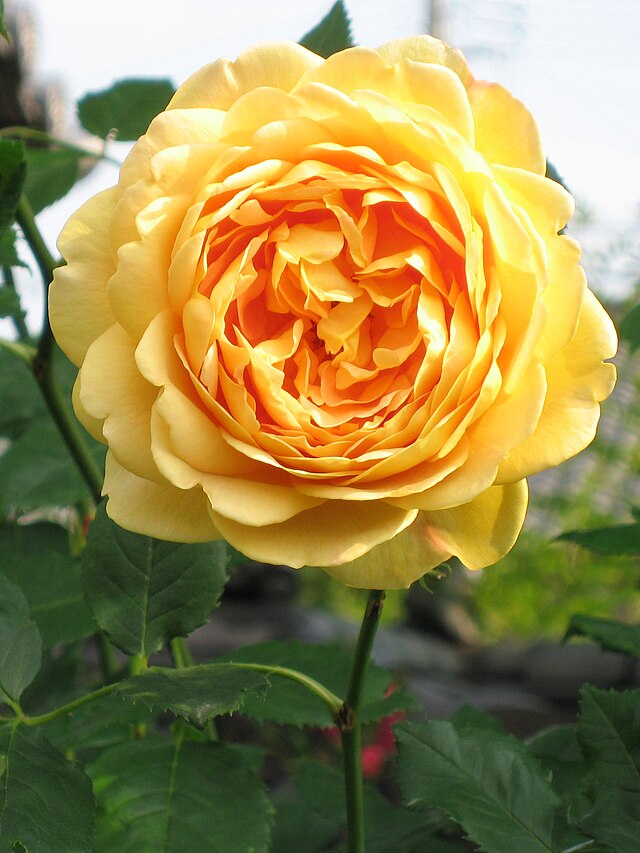
Golden Celebration, which is known for its strong fragrance, is an English rose that produces deep orange flowers. This variety is known for high photosynthesis efficiency and relatively high light dependence. When growing Golden Celebration, it is particularly important to secure sufficient light conditions. Similarly, Damask roses are a group of varieties known for their strong fragrance, but these varieties also tend to have high light requirements. Among Damask varieties, old roses in particular with especially strong fragrance have a strong preference for direct sunlight, making site selection in the garden crucial.
Fertilization Strategy and Aromatic Compound Production
Proper nutrient management is essential for rose aromatic compound production. The particularly important nutrients are the three major elements of nitrogen, phosphorus, and potassium, as well as trace elements such as magnesium and iron. The roles and management points of each are as follows.
| Nutrient | Role | Management Point |
|---|---|---|
| Nitrogen | An essential element for photosynthesis that promotes the growth of rose stems and leaves. Excess nitrogen leads to excessive stem and leaf growth, reducing the energy devoted to aromatic compound synthesis | Appropriately limit nitrogen while emphasizing the balance of phosphorus and potassium |
| Phosphorus | A nutrient directly involved in flower bud formation and aromatic compound synthesis. Much phosphorus is consumed as roses differentiate flower buds and bloom | From spring (March to April) and early summer (May to June), apply fertilizer with high phosphorus content every 2 to 3 weeks |
| Potassium | Activates root activity and promotes absorption of water and nutrients. When potassium is deficient, roses become more susceptible to physiological stress, and aromatic compound synthesis decreases | Be conscious of potassium supply year-round, and from autumn to winter support rose preparation with fertilizers containing more potassium |
| Magnesium | An element that occupies the center of chlorophyll (leaf pigment) and directly influences the efficiency of photosynthesis. When deficient, it causes "interveinal chlorosis" where leaf veins remain green but the leaf blade turns yellow, bringing aromatic compound synthesis close to a halt | From spring through autumn, apply magnesium sulfate (Epsom salt) approximately once per month |
Seasonal Management Points
Rose management varies in its focus depending on the season. The characteristics and management points of each season are as follows.
| Season | Characteristics | Management Points |
|---|---|---|
| Spring | The most important season for bringing out fragrance to the fullest. The nutrients accumulated during winter combined with the energy of newly emerging new shoots result in the most abundant production of aromatic compounds | Increase fertilization somewhat while paying attention to moisture management. Keep soil consistently moist but avoid stagnant moisture; provide thorough watering in the morning to suppress daytime drying while allowing soil to dry appropriately at night |
| Early Summer | The season when roses' fragrance is most pronounced. Flowers that bloom during this period are characterized by their strongest fragrance | The balance of light and temperature is most important. Maintain appropriate moisture while ensuring ventilation to prevent disease |
| Midsummer | The most stressful season for roses. When temperatures exceed 30°C continuously, roses switch to survival mode, and aromatic compound production becomes minimal | Avoid excessive fertilization; focus on shade cloth and water supply; prepare for autumn flowering |
| Autumn | A season when roses again activate aromatic compound production. As temperatures decline, roses enter bloom mode again | From around the autumnal equinox, begin applying fertilizer with high phosphorus content again in preparation for autumn flowering. Fertilization during this period is of secondary importance only to spring |
| Winter | While appearing to be in dormancy, the cold winter environment actually determines the fragrance intensity of the following spring. Winter's low temperatures increase the sugar content inside rose cells and form the foundation for aromatic compounds in spring flowers | Keep fertilization modest while maintaining minimal moisture management to prevent roots from stopping their activity |
Moisture Management and Root Vitality
Rose aromatic compound synthesis completely depends on healthy water and nutrient absorption by roots. When roots are damaged by water deficiency or excessive moisture, the rose's physiological functions decline and aromatic compound production decreases rapidly. Rose watering should follow the basic principle of thoroughly watering until water flows out of the pot bottom when the soil surface has dried. This method allows water to reach the entire root system while simultaneously avoiding excessive moisture that damages roots.
For garden-planted roses, soil water-holding capacity is also important. A soil mixture of akadama soil and leaf mold possesses appropriate water retention and drainage properties, promoting healthy root growth in roses. By adding bark compost as a soil amendment, root vitality is further enhanced and aromatic compound production increases.
An Integrated Approach to Maximizing Aromatic Compound Output
Growing highly fragrant roses requires integrated management of multiple environmental factors, not simply optimizing a single factor. Light, temperature, fertilization, and moisture management are all interrelated, and only when each is optimized does the dense production of aromatic compounds become possible. Even when growing Golden Celebration or Damask roses, by grasping these fundamental principles, you can draw out fragrance intensity comparable to when purchased. Through your relationship with roses, the accumulation of small refinements each season and each month gradually becomes a major difference in fragrance intensity.