Rose Garden Design Basics — Variety Placement and Four-Season Color Planning
Rose garden design fundamentals: variety placement planning, color combinations, using climbing and shrub roses together, and creating year-round garden beauty.
Key Takeaways
Rose garden design fundamentals: variety placement planning, color combinations, using climbing and shrub roses together, and creating year-round garden beauty.
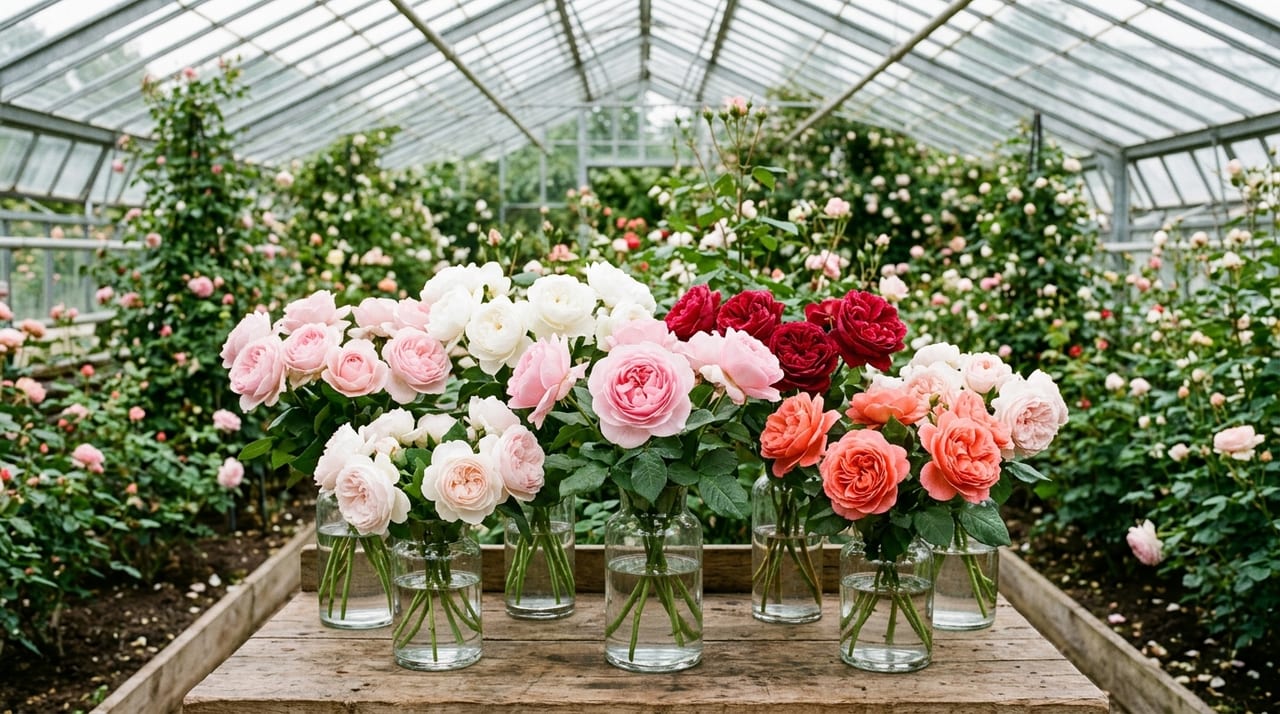
Roses are excellent materials for adding color to a garden, but planting them haphazardly tends to result in a scattered impression with uncoordinated colors and forms. By understanding the characteristics of different varieties and placing them strategically, you can create a beautiful garden that resembles an English garden. Here we explain the basic concepts of rose garden design.
Basic Components of Garden Design
When planning a rose garden, it is important to first decide on the overall composition of the garden.
- First decide on the placement of structural elements (arches, pergolas, fences, obelisks) that form the backbone of the garden
- Path widths should be at least 80cm considering the spread of rose branches, ideally 1m or more
- Place tall climbing roses and shrub roses at the back of the garden, and plant shorter standard roses in the front
- Place arches or standard-form roses at focal points (where the eye is drawn)
- Choose either a formal design with symmetrical left-right balance or an informal design with natural curves
- Select pathway materials (brick, gravel, stone) to match the atmosphere of the roses
There is no need to aim for perfection from the start. The enjoyment lies in first creating the framework and then gradually adding varieties each year to cultivate the garden.
Color Combinations and Color Scheme Considerations
It is no exaggeration to say that the beauty of a rose garden is determined by color planning.
- Keep colors in the same family: Unifying with varying shades of pink creates a cohesive and gentle impression
- Use complementary colors: Placing opposite colors like yellow and lavender blue, or orange and purple next to each other makes each stand out
- Insert white flowers: Placing white-flowering varieties between roses of different colors softens color clashes
- Pastel-colored roses show up well from a distance, so they can also be used at the back of the garden
- Deep crimson and dark purple roses placed where they can be viewed up close emphasize their color depth
- Not only flower color but also leaf color (bright green, dark green, bronze foliage) affects the overall impression
If you're unsure about color schemes, it's effective to collect photos of rose gardens you like for reference.
Using Climbing Roses, Shrub Roses, and Standard Roses Appropriately
Roses come in different forms, and each type has appropriate uses.
- Climbing roses: Train them on arches, pergolas, and walls to create three-dimensional spaces. They add height and depth to the garden
- Shrub roses: Large self-supporting roses. Suitable for hedges at boundaries and the back of borders
- Standard roses (bush): Compact and tidy, they are planted at the front of borders or in the center of flower beds
- Standard form: Grafted onto rootstock to create a taller form. Effective as an accent
- Miniature roses and patio roses: Used in containers and as border edging. Effective even in small spaces
By combining different types, you can create a three-dimensional garden surrounded by roses from ground level to overhead.
Tips for Creating a Beautiful Garden Throughout the Seasons
While roses are at their peak from May to June, let's design the garden so you can enjoy it in other seasons as well.
- Incorporating many repeat-flowering varieties allows you to enjoy magnificent blooms in autumn as well
- Plant perennials like lavender, calamint, and nepeta at the base of roses to provide lush underplanting
- Plan companion plants like clematis in spring, agapanthus or echinacea in summer, and Japanese anemone in autumn
- In winter, when the branch structure of roses is visible, maintain greenery with evergreen shrubs like boxwood or rosemary
- By interplanting bulbs (tulips, allium, daffodils), there are flowers in spring before the roses bloom
- By planting varieties that produce rose hips in autumn, you can enjoy them long after the flowers fade
By relying not only on roses but combining diverse plants, you can create a beautiful garden year-round.
Finding Rose Plants on GrowerDirect
On GrowerDirect, you can directly purchase a diverse selection of rose plants suitable for garden design from specialist producers. The great advantage is that you can consult with growers for variety recommendations tailored to your garden size, sunlight, and desired design. Take the first step toward realizing your ideal rose garden with GrowerDirect.