Rose Grafting Techniques | From Rootstock Selection to Union Care
A detailed explanation of rose grafting methods (bud grafting, cleft grafting), how to select rootstocks, the appropriate grafting season, and tips to improve the grafting success rate.

Key Takeaways
A detailed explanation of rose grafting methods (bud grafting, cleft grafting), how to select rootstocks, the appropriate grafting season, and tips to improve the grafting success rate.
Related Species
Rose grafting is an important technique for efficiently propagating superior varieties. Compared to own-root cuttings, grafted seedlings have the advantages of vigorous early growth and superior disease and cold resistance. It is a technique that professional rose growers routinely employ, but amateurs can achieve success if they follow the correct procedures.
Basic Principles of Grafting
Grafting is a technique in which the buds or shoots (scion) of a beautiful-flowered variety are joined to the roots of a hardy variety (rootstock) to become one unified plant. The greatest advantage is being able to combine the strong root system of the rootstock with the superior flowers of the scion.
Rose grafting succeeds because the cambium layers (the growth layer between the bark and wood of the trunk) of the rootstock and scion come into close contact, and the cells fuse to create pathways for nutrients and water. The precise alignment of the cambium layers is the most critical point for union success, and the grafting technique can be said to hinge on this single point.
There are several grafting methods, but the two primarily used for roses are "bud grafting (T-budding)" and "cleft grafting." Bud grafting is performed in summer, while cleft grafting is done in winter to early spring. For beginners, cleft grafting is more visually intuitive and easier to approach.
Selecting and Preparing Rootstocks
The choice of rootstock significantly influences the success or failure of grafting.
| Rootstock | Characteristics |
|---|---|
| Multiflora Rose (Rosa multiflora) | The most commonly used rootstock in Japan. Well-adapted to the Japanese climate, with vigorous root growth and high compatibility with most ornamental varieties |
| Rosa canina (Rosa canina) | Widely used rootstock in Europe and America. Extremely cold-hardy and said to have good compatibility with hybrid teas, but has some weakness to Japan's hot, humid summers |
Multiflora rootstock is either grown from seed or obtained from seedlings of wild multiflora roses. Seeds are harvested from red fruit in autumn, the fruit pulp is removed, and after 2–3 months of cold stratification (vernalization) in the refrigerator, they are sown around March. They grow to graftable size (5mm diameter or larger) in one year.
Before grafting, thoroughly water the rootstock the day before. When actively absorbing water, the cambium is more active and the grafting success rate improves.
Cleft Grafting: Step-by-Step Procedure
Cleft grafting is performed during the dormant period from January to February. The scion should be taken from fully mature wood from the previous year, cut to a length of 7–10cm containing 2–3 buds. The scion can be collected in advance, wrapped in dampened newspaper and a plastic bag, and stored in the refrigerator.
The procedure is as follows:
- Cut the rootstock at ground level and make a vertical cut 2–3cm deep at the center of the cut surface with a knife.
- Shave the lower end of the scion into a wedge shape. At this point, shave one side slightly thicker and the other slightly thinner to make alignment of the cambium layers easier.
- Insert the scion wedge into the rootstock cut, and adjust the position so that the cambium layers on at least one side align perfectly. Even if complete alignment is not achieved, if one side matches, there is a good chance of union success.
- Wrap the graft union securely with grafting tape. It is important to seal tightly so no air enters. Apply grafting wax or wood-working glue to the cut surface at the upper end of the scion to prevent drying.
Bud Grafting: Step-by-Step Procedure
Bud grafting is performed during the growing season from July to September. This is the period when the rootstock is growing actively and the bark is easily peeled.
The buds used as scion material are taken from fully mature wood of shoots that have grown this year. Remove the leaves while leaving the leaf petiole, and cut the bark around the bud into a shield shape (shield). Thinly shave the wood on the back of the shield, but take care not to damage the vascular bundle at the base of the bud.
Make a T-shaped cut with a knife near the base of the rootstock (5–10cm from ground level). Make a cut approximately 1.5cm horizontal and 2cm vertical, peeling back the bark to expose the cambium layer inside.
Insert the shield into the T-shaped cut and wrap it above and below with grafting tape, leaving the bud portion exposed. After 2–3 weeks, you can determine whether union has occurred—if the bud remains green, it is successful. In spring of the following year, cut back the rootstock above the bud, and the grafted bud will begin to grow.
Tips for Improving Grafting Success Rate
Key points for achieving high grafting success rates are summarized below.
- Sharp knife blades are the most important factor. Use a dedicated grafting knife or razor blade, ensuring the cut surface is smooth. Crushed tissue prevents cambium fusion. Do not forget to sterilize the knife with alcohol before work.
- Work quickly. The longer the cut surface is exposed to air, the more it dries, and the grafting success rate decreases. If unfamiliar, keeping the scion in water during work is reassuring.
- Aftercare is also important. In cleft grafting, cover the union with soil or place a transparent plastic bag over it to maintain moisture. After 2–3 weeks, the bud will begin to swell, indicating union success. Gradually make holes in the plastic bag to acclimate to outside air, and remove it once the new growth has sufficiently extended.
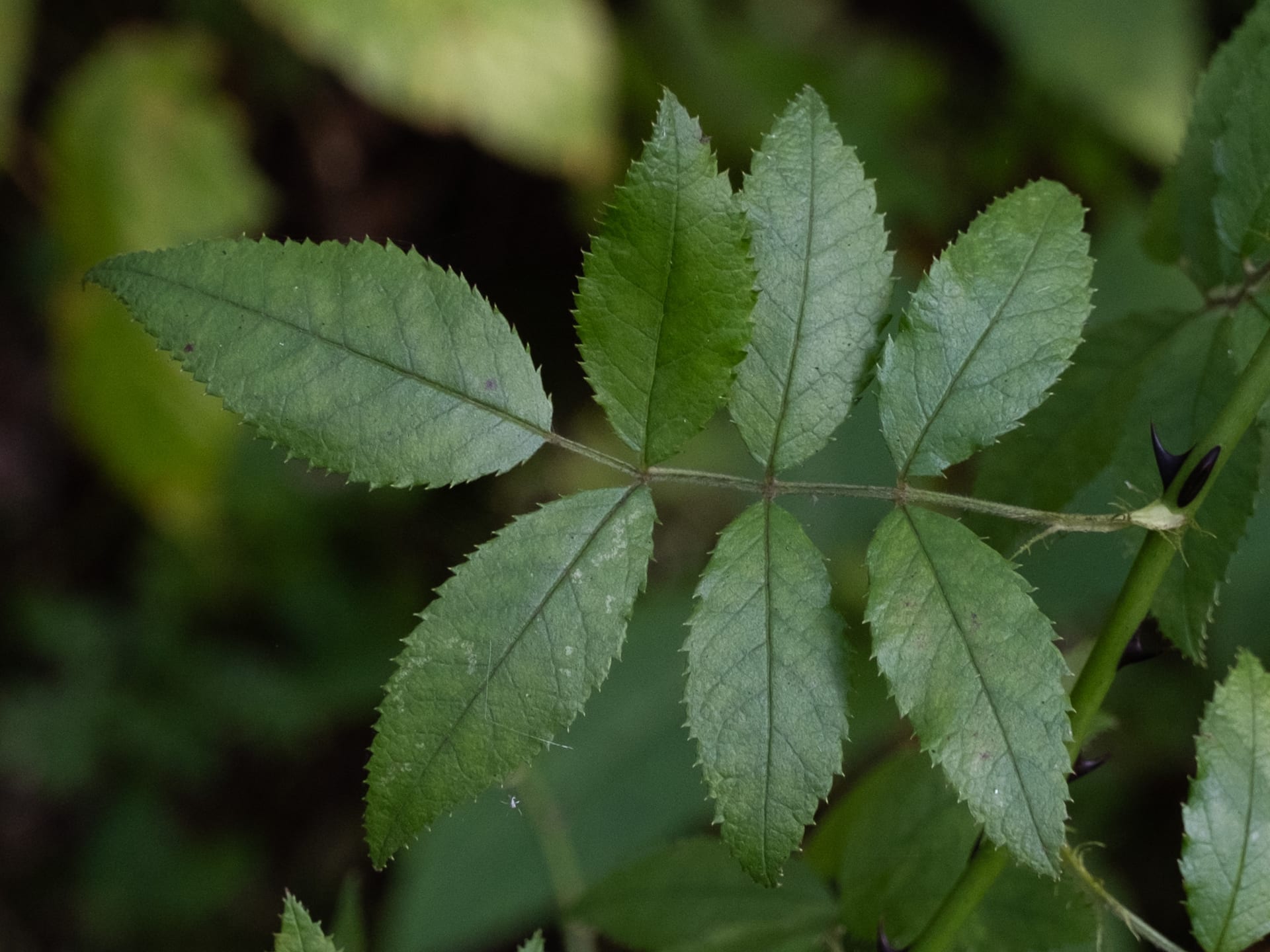
- Promptly remove any "rootstock shoots" that emerge from the rootstock. If left unchecked, the rootstock takes up nutrients and inhibits the growth of the grafted scion. In the case of multiflora, rootstock shoots are identified by their seven-leaflet compound leaves.
Grafted Rose Seedlings at GrowerDirect
At GrowerDirect, you can purchase high-quality rose seedlings carefully grafted by specialist growers directly. Seedlings that prioritize rootstock quality and scion selection have a different character than mass-produced stock from garden centers. Why not learn grafting tips from growers and try it yourself?