The Charm and Care of Old Roses | The Elegant World of Historic Roses
Explains the history of old roses created before 1867, their representative classes, and key cultivation points. Introduces the charm of Gallica, Damask, Bourbon, and other varieties.
Key Takeaways
Explains the history of old roses created before 1867, their representative classes, and key cultivation points. Introduces the charm of Gallica, Damask, Bourbon, and other varieties.
Old roses generally refer to rose varieties that existed before 1867, when the first Hybrid Tea rose, "La France," was created. Compared to modern roses, they are characterized by delicate flower forms and varieties with rich fragrance. Though they faded in popularity, overshadowed by the superior repeat-blooming nature of modern roses, in recent years their natural growth habit, abundant fragrance, and disease resistance have been reappraised, and their popularity is rising again.
The Main Classes and Characteristics of Old Roses
| Class | Characteristics |
|---|---|
| Gallica | The oldest and most historic class of old roses, said to have been cultivated since ancient times. Flower colors range from deep crimson to pink and purple, with densely overlapping petals in a luxurious form. Blooms once per season but has extremely strong fragrance and is used as a source for potpourri. Plants are compact, growing to about 1–1.5 m, with few thorns |
| Damask | A class said to originate from Damascus in Syria. The most important class as a source material for rose fragrance; "Damask fragrance" serves as the standard for all rose scents. Divided into Summer Damask, which blooms in summer, and Autumn Damask, which reblooms in autumn. Branches have open spreading growth and a graceful form |
| Alba | A pristine class bearing white to pale pink flowers. Has extremely strong cold hardiness and can be cultivated even in Northern Europe. Disease resistant and hardy enough to grow in partial shade, sometimes called "the easiest old rose to grow." The beautiful gray-green foliage also has ornamental value |
| Centifolia (Cabbage Rose) | A class named for its luxurious form with over 100 overlapping petals. Heavy flowers droop at the branch tips in a picturesque, graceful manner. Blooms once per season with strong fragrance; many roses depicted in Dutch still-life paintings belong to this class |
| Bourbon | A class that arose from natural crossing of once-blooming old roses with repeat-blooming China roses, with many varieties having repeat-bloom characteristics. Flowers are large and typically cup-shaped, with strong fragrance. Some varieties have a climbing habit, suitable for training on arches and pergolas |
Planting Old Roses and Suitable Conditions
Old roses shine best when planted in open ground. Since many varieties have deep and spreading roots, prepare planting holes at least 50 cm in both diameter and depth, mixing in plenty of compost and leaf mold. The ideal planting season is during the dormant period from December to February.
Ideally, provide at least 6 hours of direct sunlight daily, though Alba and Damask classes will bloom adequately in partial shade. Selecting a well-ventilated location reduces disease incidence. When planting near walls or hedges, maintain at least 30 cm distance from the wall to ensure air circulation.
Container cultivation is also possible, but since old roses develop vigorous roots, use pots at least size 10 or larger. Commercial rose potting mix is convenient. For container-grown plants, repotting every 2 years is recommended.
Pruning and Training Tips
- Once-blooming old roses (Gallica, Alba, Centifolia): Light pruning after flowering is sufficient. Heavy winter pruning is not suitable for these classes; simply renew old wood. Severe pruning removes flower buds and drastically reduces next year's bloom count.
- Repeat-blooming Bourbon or Damask Perpetual classes: Somewhat stronger winter pruning is acceptable. Cut back about one-third of the plant overall, removing inward-growing and weak branches.
- Climbing old roses: Train in winter. Directing branches horizontally to slightly angled encourages flower bud production at each node. Old rose canes are generally more pliable than modern roses, making training relatively easy.
Disease and Pest Management
Old roses generally show greater disease resistance than modern roses, but are not immune. Black spot can affect any class, particularly during the rainy season. Prevention involves regular fungicide application and removal of infected fallen leaves.
Powdery mildew tends to appear in spring and autumn, causing new growth and young leaves to appear dusted with white powder. Maintain good air circulation and avoid excessive nitrogen fertilization to prevent outbreaks. Treat promptly with fungicide if symptoms appear.
Main insect pests include aphids, sawflies, and longhorn beetles. Particularly, longhorn beetle larvae (wood borers) tunnel inside canes, causing branch dieback. If sawdust appears near the base of the plant, it signals infestation; remove the pest by inserting wire into the hole or inject specialized pesticide.
Enjoying Old Roses in the Garden
Old roses suit cottage gardens and English gardens best. Combining them with herbs and perennials like lavender, chamomile, and geranium creates a picturesque garden.
Growing them over arches and pergolas is another classic approach. The climbing Bourbon variety 'Zéphirine Drouhin' is renowned for its thornless canes and ease of training. With strong Damask fragrance, training it over a pathway arch creates a sweet-scented tunnel during blooming season.
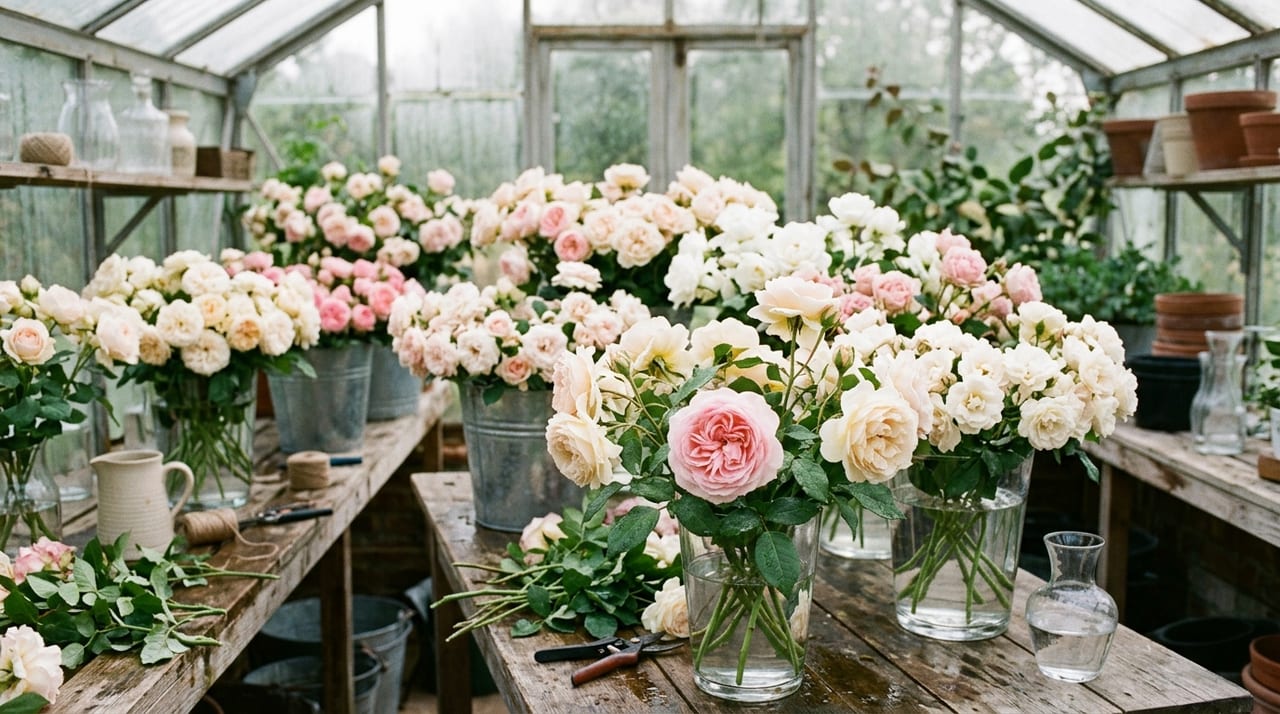
They also excel as cut flowers, with large blooms from Centifolia and Damask classes serving as focal points in arrangements. Though vase life is shorter than modern roses, their ephemeral beauty is distinctive; even a single stem in a vase transforms a room's atmosphere.
Discover Old Roses on GrowerDirect
On GrowerDirect, you can purchase rare old rose seedlings directly from specialist growers with deep expertise in the class. You can also consult directly with growers about selecting varieties suited to your garden's conditions and the characteristics of each class. Discover the world of old roses, enriched by history and fragrance, on GrowerDirect.