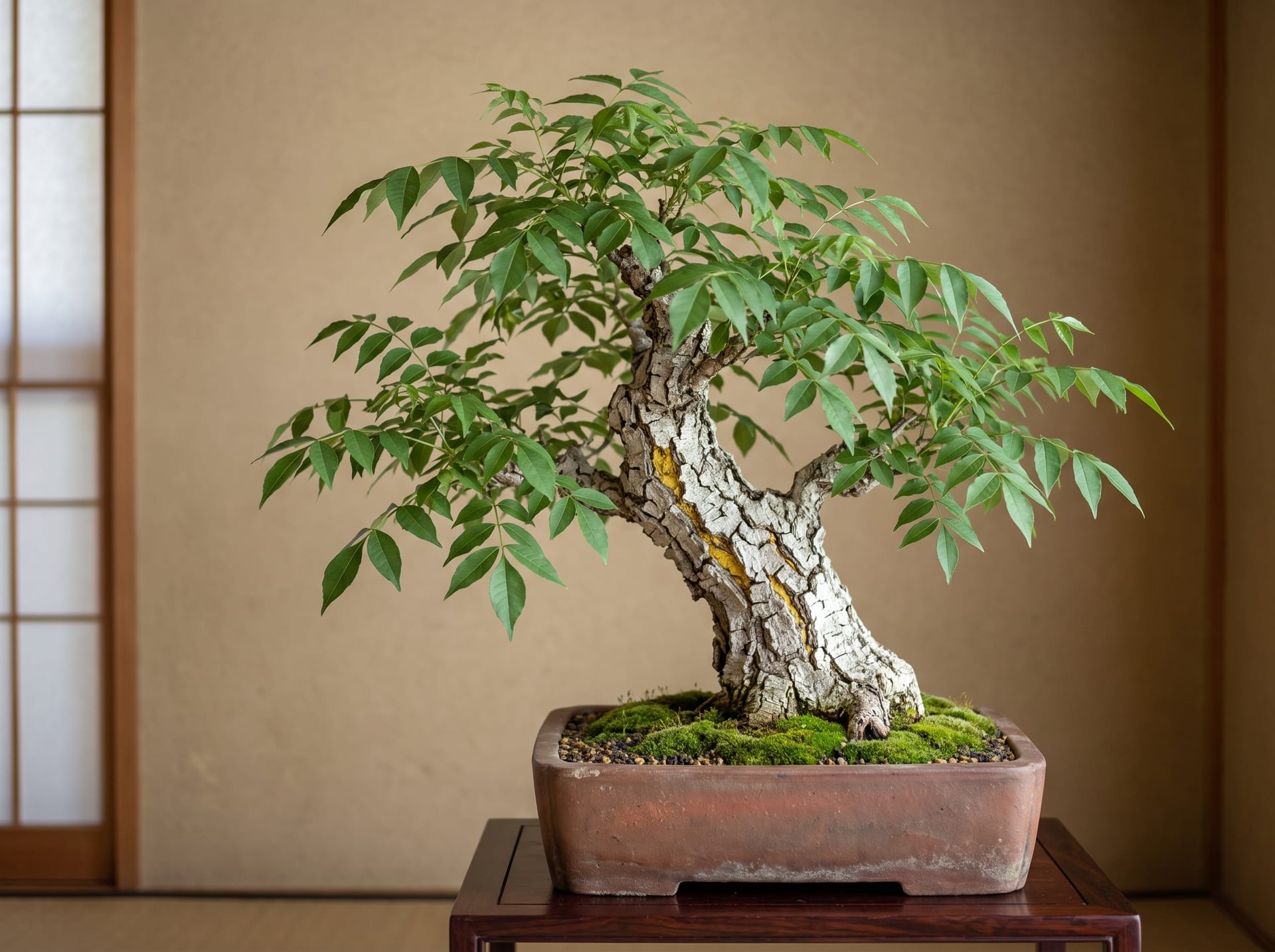
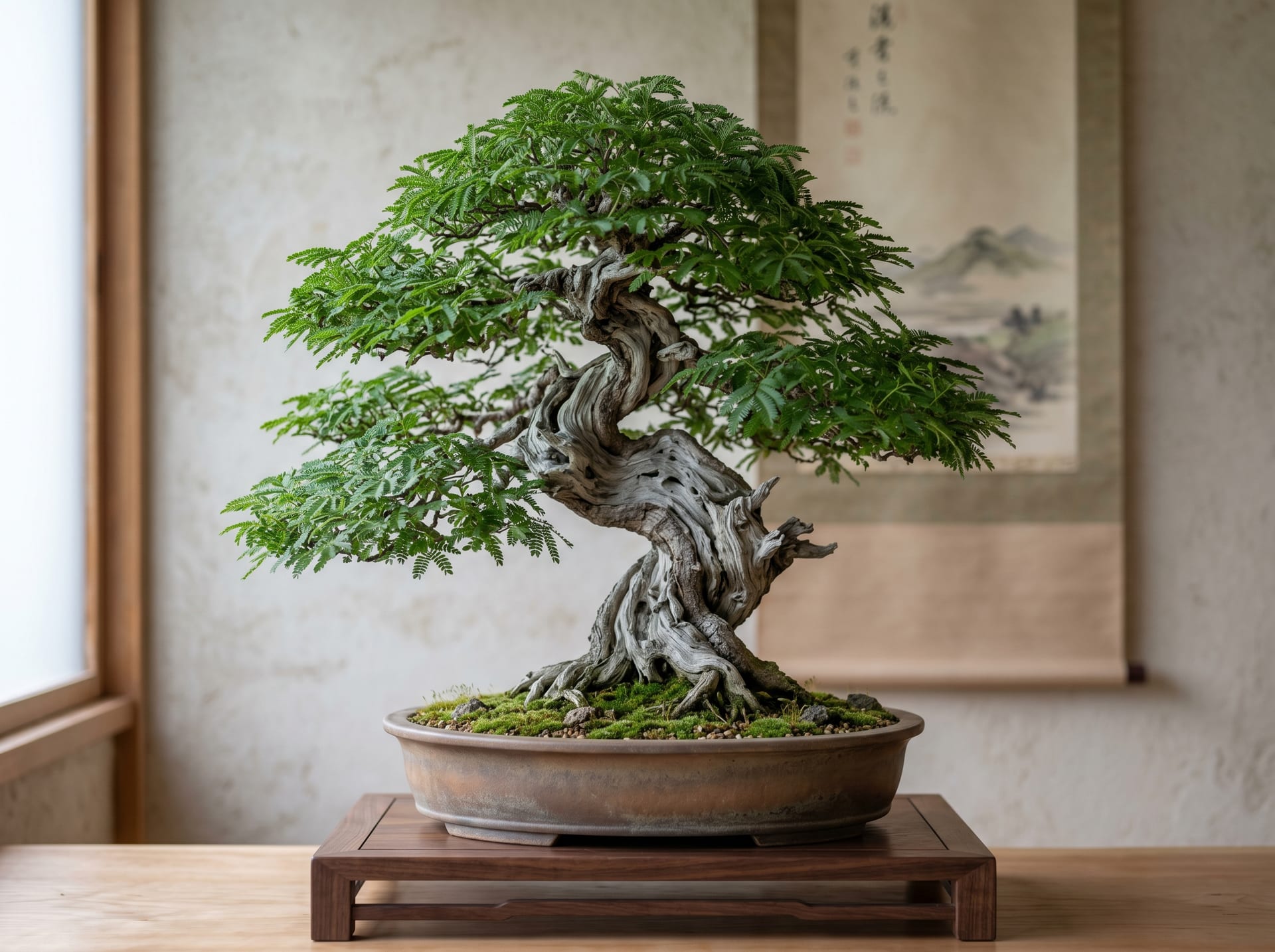
AI-generated image
Amur Cork Tree
IntermediatePhellodendron amurense
Deciduous tree with vivid yellow inner bark. In bonsai, contrast between yellow bark and autumn color is beautiful. Known in traditional medicine with distinctive bitter taste.
Overview
Phellodendron amurense, the Amur cork tree (kihada in Japanese), is a deciduous tree in the family Rutaceae native to Japan, Korea, northern China and the Amur region. Its defining feature is the vivid yellow inner bark that lies beneath the grey, corky outer bark; this yellow layer gives the tree its Japanese name and yields the traditional medicine obaku, valued for its intense bitterness. In bonsai it is prized for the rugged corky bark that fissures deeply with age and for the clear yellow autumn colour of its pinnate leaves. Grow outdoors in full sun with good air movement, watering thoroughly once the surface of the soil dries. It back-buds well and tolerates pruning, but large cuts heal slowly, so the structural branches are best set while the tree is young. Repot every two to three years before the spring buds break.
Lifespan of the Amur Cork Tree
The Amur Cork Tree lives 100+ years.
Size of the Amur Cork Tree
The Amur Cork Tree grows to 20-60cm (bonsai size).
Temperature & humidity for the Amur Cork Tree
The Amur Cork Tree tolerates temperatures of ≥-20℃.
Basic Info
Origin
China, Japan, and the Korean Peninsula
Lifespan
100+ years
Size
20-60cm (bonsai size)
Temperature
≥-20℃
Watering & Fertilizer
Fertilizer (regular)
Growing Tips
Placement
Full sun outdoors. Cold hardy
Watering
Loves water. Water more during growing season
Styling
Shape to display yellow bark. Informal upright suits well
Notes
Yellow sap appears when trunk is wounded. Gloves recommended
Amur Cork Tree FAQ
QWhat is the growing difficulty level for Amur Cork Tree?
Intermediate. A variety suitable for intermediate growers. Requires some cultivation experience and knowledge of environment management. Pay careful attention to temperature and humidity control.
QWhat temperatures can Amur Cork Tree tolerate?
Amur Cork Tree tolerates temperatures of ≥-20℃. This is the tolerated range, not the ideal growing temperature. Keep conditions well inside it and avoid sudden temperature changes.
QWhat is the lifespan of Amur Cork Tree?
The average lifespan of Amur Cork Tree is 100+ years. With proper cultivation environment and nutrient management, you can keep it healthy for a long time.
QHow large does Amur Cork Tree get?
The mature size of Amur Cork Tree is 20-60cm (bonsai size). This may vary slightly depending on cultivation environment and individual differences.
QHow should I water and fertilize Amur Cork Tree?
Amur Cork Tree: watering & fertilizer — Fertilizer (regular). Aim for appropriate frequency and amount.
QWhat is the typical price for Amur Cork Tree?
The price of Amur Cork Tree varies significantly by variety, characteristics, size, and lineage. Please check GrowerDirect's price guide for the latest market information.
Last updated: October 2, 2026
References & Sources
Edited & verified by: GrowerDirect Editorial Team
The classifications, regulations, and growing data on this page are created and verified based on the primary information database below.
Primary sources
Taxonomy & Authority
Accepted name: Phellodendron amurense Rupr.
Synonyms: Phellodendron insulare Nakai, Phellodendron kodamanum Makino, Phellodendron molle Nakai
Authority databases: GBIF
Nomenclature follows global taxonomic authority databases.
Regulations & Conservation Status
Sources: CITES Checklist of CITES Species
Regulations may change. Always verify the latest information with the relevant authorities.
Related Species
Find listings for this species
Related Articles
10 Recommended Bonsai Species for Beginners | A Beginner's Guide: Choosing by Ease of Care and Appeal
A guide for beginners looking to start bonsai, introducing 10 carefully selected, easy-to-grow and attractive species. We explain in detail the characteristics, difficulty level of care, seasonal highlights, and price range for each species, helping you choose the right first tree for you.
Guide to Growing Fruit-Bearing Bonsai | Enjoying the Fruit of Hime Apple, Rouyakaki, and Pyracantha
A comprehensive guide to growing fruit-bearing bonsai. Introduces how to select representative tree species such as hime apple, rouyakaki, and pyracantha, pruning and fertilization techniques for fruit bearing, pollination tips, and points for appreciation.
Complete Guide to Growing Pachira | Characteristics of Braided Specimens, Watering, Repotting, and Propagation
This guide explains in detail the characteristics of Pachira's native habitat (also called Money Tree), including placement, watering, overwintering, repotting, propagation by cuttings, and common problems.
Miniature Rose Pruning Timing and Shape Training | Seasonal Cutting Methods and Shrub/Climbing Rose Management
A comprehensive guide to pruning timing, cutting methods, and shape-specific (shrub/climbing) management techniques to ensure your miniature roses bloom beautifully every season.
🩺 Common diseases
Can't find the plant you're looking for?
Post your wishes for free and growers with matching plants will contact you with introductions.