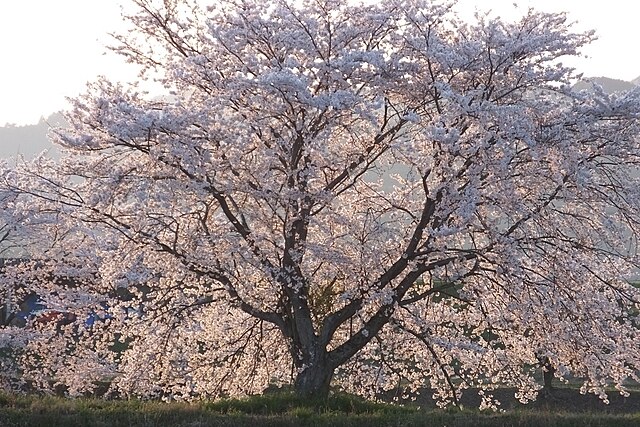
Source: Wikimedia Commons
Flowering Cherry
IntermediateJapans iconic flowering tree. Spring blooms are spectacularly beautiful even as bonsai. Compact varieties like Fuji-zakura suit bonsai. Post-bloom care determines next years flowering.
Overview
Prunus species, collectively known as flowering cherries (Sakura in Japanese), are among the most beloved flowering trees in Japan, where the annual spring bloom is a cultural event of national importance. In bonsai, compact species such as Prunus incisa (Fuji cherry) and Prunus subhirtella (Higan cherry) are most commonly used, as their naturally smaller stature and flowers are better suited to the bonsai scale. Spring blooms range from white to deep pink. Care demands vigilance against pests and diseases, particularly scale insects and powdery mildew. Cut surfaces must be sealed with wound sealant immediately to prevent fungal infection. Repotting is best done immediately after flowering.
Lifespan of the Flowering Cherry
The Flowering Cherry lives 100+ years.
Size of the Flowering Cherry
The Flowering Cherry grows to 15-50cm (bonsai size).
Temperature & humidity for the Flowering Cherry
The Flowering Cherry tolerates temperatures of ≥-20℃.
Basic Info
Origin
Japan, Korean Peninsula, China, and Taiwan
Lifespan
100+ years
Size
15-50cm (bonsai size)
Temperature
≥-20℃
Growing Tips
Placement
Full sun outdoors. Winter cold needed for flower buds
Watering
Very water-loving. Twice daily in summer
Styling
Avoid heavy pruning as the saying goes
Notes
Cuts are disease-prone. Seal with fungicide
Flowering Cherry FAQ
QWhat is the growing difficulty level for Flowering Cherry?
Intermediate. A variety suitable for intermediate growers. Requires some cultivation experience and knowledge of environment management. Pay careful attention to temperature and humidity control.
QWhat temperatures can Flowering Cherry tolerate?
Flowering Cherry tolerates temperatures of ≥-20℃. This is the tolerated range, not the ideal growing temperature. Keep conditions well inside it and avoid sudden temperature changes.
QWhat is the lifespan of Flowering Cherry?
The average lifespan of Flowering Cherry is 100+ years. With proper cultivation environment and nutrient management, you can keep it healthy for a long time.
QHow large does Flowering Cherry get?
The mature size of Flowering Cherry is 15-50cm (bonsai size). This may vary slightly depending on cultivation environment and individual differences.
QWhat is the typical price for Flowering Cherry?
The price of Flowering Cherry varies significantly by variety, characteristics, size, and lineage. Please check GrowerDirect's price guide for the latest market information.
Last updated: October 2, 2026
References & Sources
Edited & verified by: GrowerDirect Editorial Team
The classifications, regulations, and growing data on this page are created and verified based on the primary information database below.
Primary sources
Regulations & Conservation Status
Sources: CITES Checklist of CITES Species
Regulations may change. Always verify the latest information with the relevant authorities.
Related Species
Find listings for this species
Related Articles
Caudex Plants' Flowering Season and Seasonal Signs | Complete Guide to Management Timing for Full Bloom
Explains flowering season, seasonal signs, and management methods to promote blooming for caudex plants such as Pachypodium and Adenium. A comprehensive guide to maximizing enjoyment of their beautiful flowers.
Carnivorous Plant Flowers and Pollination Techniques | Complete Guide from Blooming Mechanisms to Seed Harvesting
Detailed explanation of why carnivorous plants extend long flower stems, blooming characteristics by major genus, artificial pollination techniques, seed harvesting and storage methods. Also introduces basic knowledge of variety improvement through cross-breeding.
Fundamentals of Agave Flowering and Monocarpy (Monocarpic)|What to Do When Flower Buds Appear?
Agave is a monocarpic plant that flowers only once in its lifetime and then dies. This article provides detailed explanations of what to do when flower buds (flower stems) begin to emerge, how to secure offshoots, the flowering process, and the final fate of the plant.
Orchid Temperature Management and Blooming Induction Guide | Complete Explanation of Flower Bud Formation Conditions by Species
Explains the temperature conditions needed for orchids to bloom by variety. Introduces the flower bud formation mechanisms of major orchids such as phalaenopsis, cymbidium, and dendrobium, as well as methods for low-temperature treatment that can be practiced in Japanese homes.
🩺 Common diseases
Can't find the plant you're looking for?
Post your wishes for free and growers with matching plants will contact you with introductions.