Carnivorous Plant Flowers and Pollination Techniques | Complete Guide from Blooming Mechanisms to Seed Harvesting
Detailed explanation of why carnivorous plants extend long flower stems, blooming characteristics by major genus, artificial pollination techniques, seed harvesting and storage methods. Also introduces basic knowledge of variety improvement through cross-breeding.
Key Takeaways
Detailed explanation of why carnivorous plants extend long flower stems, blooming characteristics by major genus, artificial pollination techniques, seed harvesting and storage methods. Also introduces basic knowledge of variety improvement through cross-breeding.
Related Species
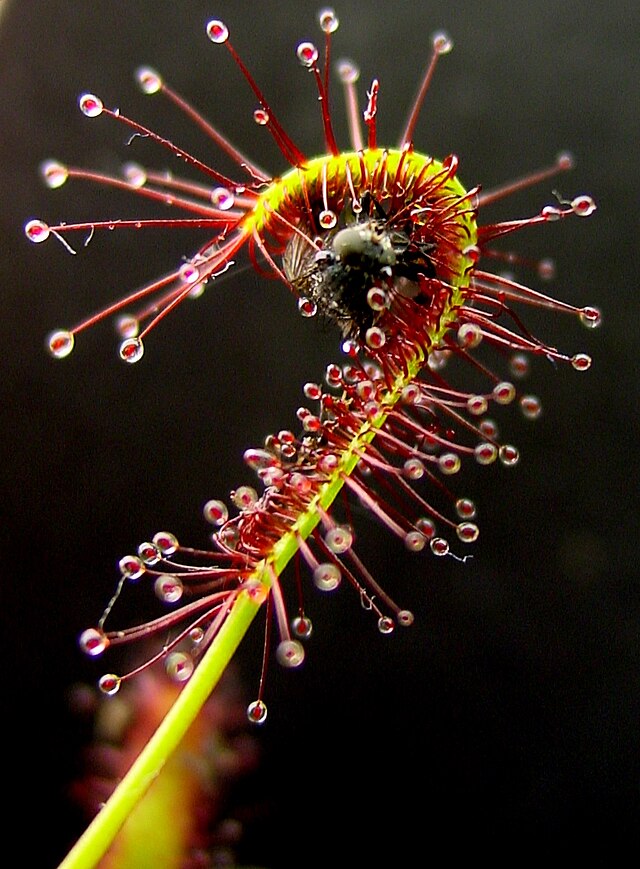
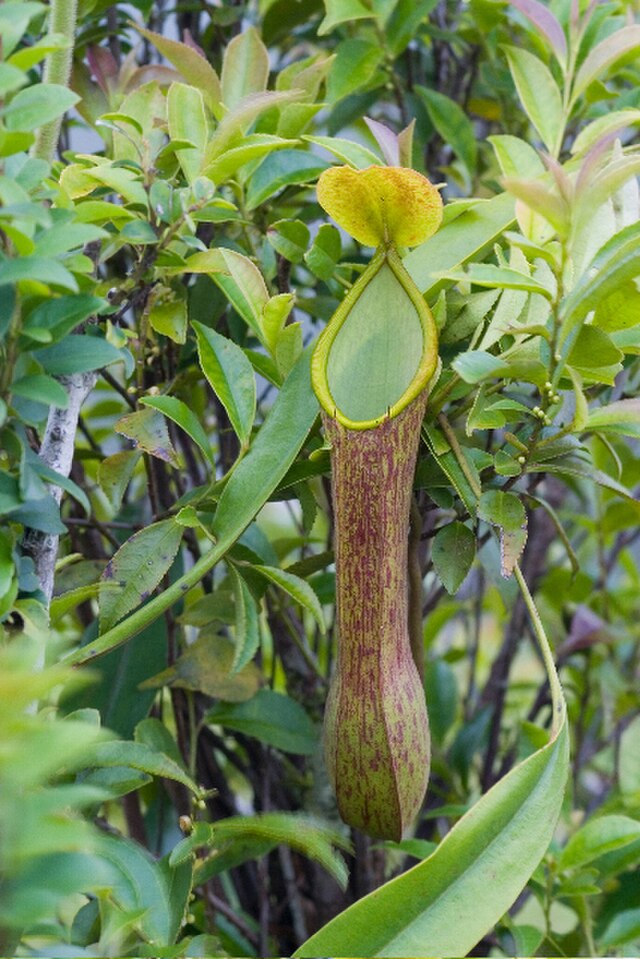
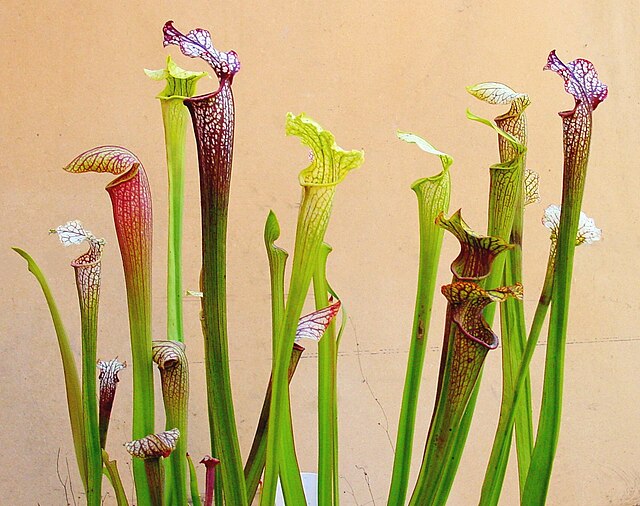
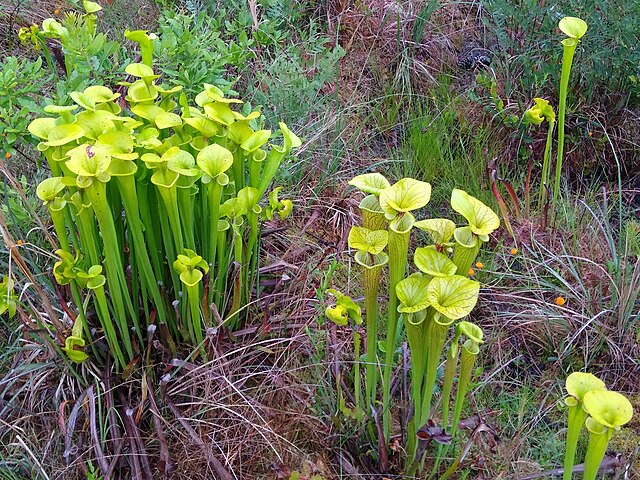
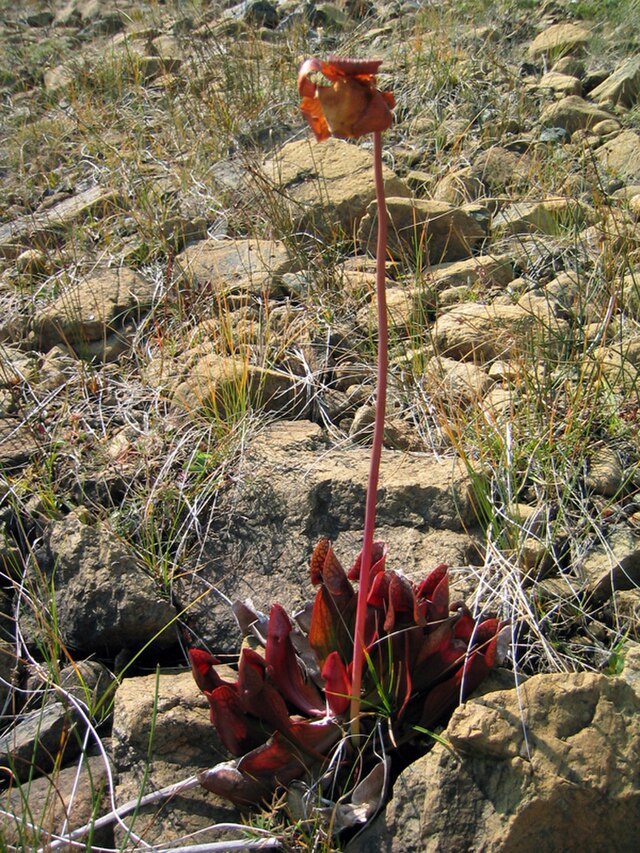
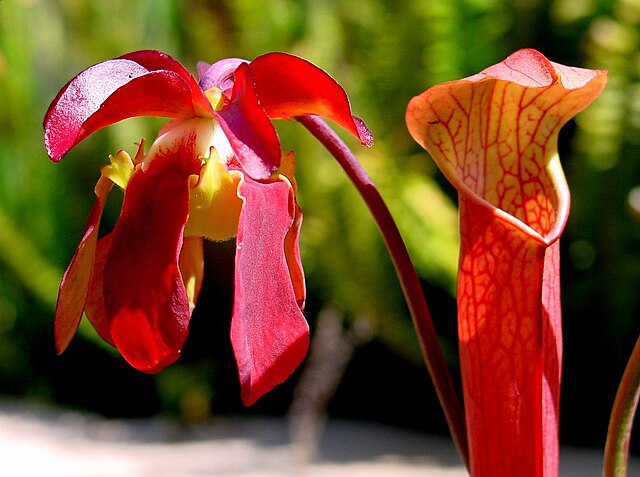
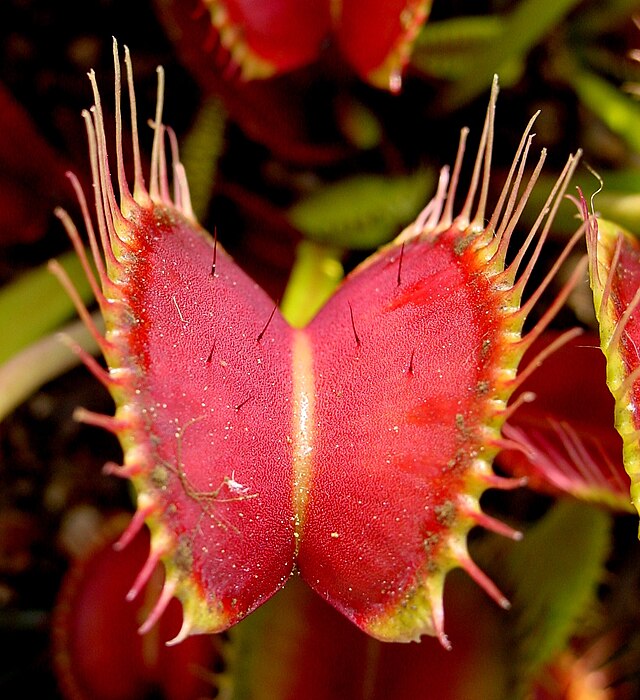
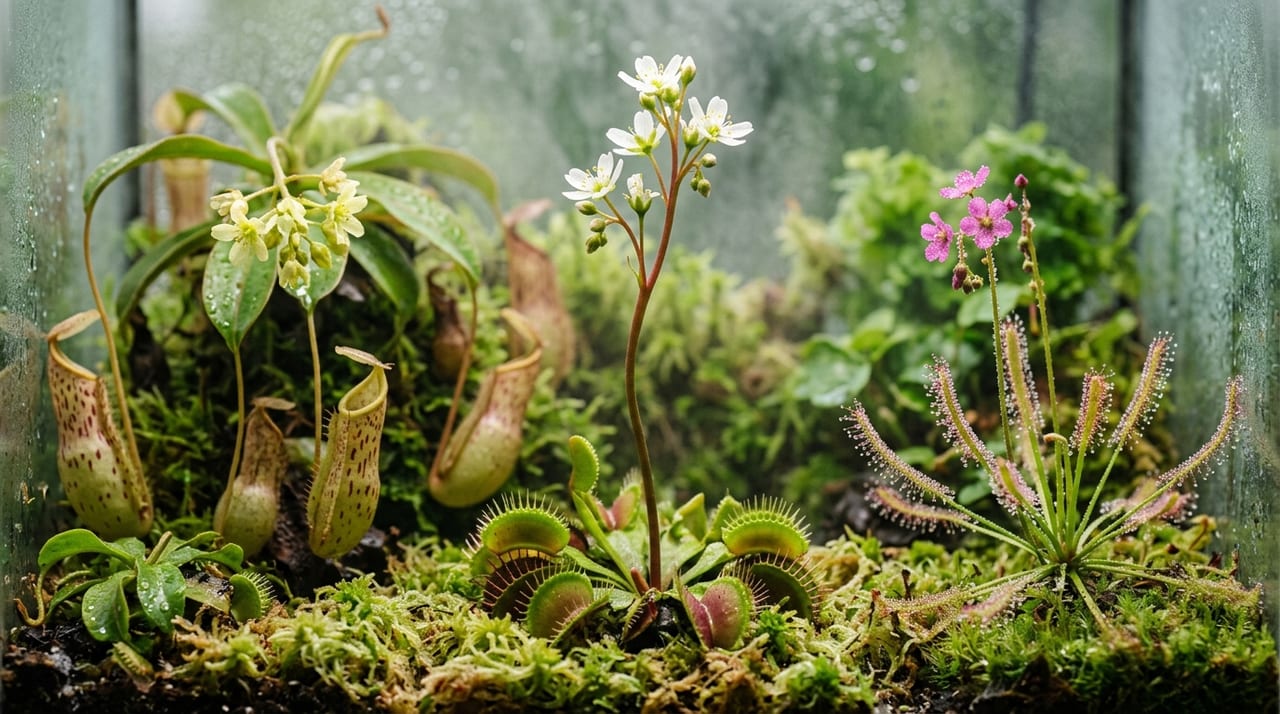
When we think of carnivorous plants, attention tends to focus on traps and insectivorous leaves, but their flowers are actually quite unique and beautiful. The delicate white flowers of the Venus flytrap, the large geometric blooms of Sarracenia, the modest yet distinctive flower clusters of Nepenthes—all display specialized structures adapted to a carnivorous lifestyle.
This article provides detailed explanations of carnivorous plant flower mechanisms, blooming characteristics by major genus, practical artificial pollination techniques, seed harvesting and storage methods, and the fundamentals of cross-breeding.
Why Are Carnivorous Plant Flowers Special?
The Pollinator Predation Problem
Carnivorous plants face a fundamental contradiction when flowering. A plant that captures insects for nutrition needs those same insects to carry pollen for reproduction. If the plant's trap captures pollinating insects, pollination efficiency plummets dramatically.
To resolve this contradiction, many carnivorous plants have evolved ingenious strategies.
Spatial Separation: Long Flower Stems
The most common solution is to distance the flower as far as possible from the trap. The Venus flytrap produces remarkably long flower stems (20–30 cm) extending far beyond what the rosette at the plant base would suggest, creating substantial distance between trap and flower. Sundews similarly position their flowers high up, away from their sticky leaves.
Sarracenia flower stems reach 50 cm to over 1 meter in height, positioning flowers even higher than the pitcher tops. This physical separation ensures insects falling into the pitchers remain separate from those visiting the flowers.
Temporal Separation
Some carnivorous plants employ a strategy of blooming when trap activity is minimal. For example, certain temperate sundews flower in early spring when their traps have not yet fully developed.
Using Different Insect Species
Research suggests that insects caught in carnivorous plant traps differ from those visiting the flowers as pollinators. Venus flytrap traps capture crawling beetles and spiders, while their flowers attract flying pollinators such as bees and hover flies.
Blooming Characteristics by Major Genus
Venus Flytrap (Dionaea muscipula)
Blooming Period: Spring (April–May in native habitats, Northern Hemisphere; around May–June in Japanese cultivation)
Flower Characteristics:
- Pure white, five-petaled flowers about 15–20 mm in diameter
- Flower stem reaches 20–30 cm, remarkably long for the plant's size
- One stem produces 5–10 flowers arranged in a raceme
- Flowers face upward with pistils at center surrounded by numerous stamens
Cultivation Notes: Blooming places significant stress on Venus flytrap plants. Young or weakened specimens especially risk depletion from stem formation. If seed collection isn't intended, removing the flower stem at around 5 cm height is recommended. Cut stems inserted into moist sphagnum moss may develop roots and sprouts like leaf cuttings.
Sarracenia
Blooming Period: Spring (before or concurrent with new pitcher emergence)
Flower Characteristics:
- Among the most spectacular carnivorous plant flowers
- Large blooms 5–10 cm in diameter with five petals hanging distinctly downward
- Central pistil expands umbrella-like with stigmas on its underside
- Colors vary by species—yellow (Sarracenia flava), reddish-purple (Sarracenia purpurea), red (Sarracenia rubra)
- Flower stems are thick and sturdy, reaching 50 cm to 1 meter in height
Flower Structure and Pollination Mechanism: Sarracenia flowers display extraordinarily unique architecture. The stigmas are positioned on the underside of the umbrella-shaped pistil. When a pollen-bearing insect enters the flower, it passes through the umbrella's edge, contacts the stigma, and while exiting, picks up fresh pollen to carry to the next flower—creating a one-directional pathway. This structure prevents self-pollination while promoting cross-pollination through clever design.
Sundew (Drosera)
Blooming Period: Varies by species, but most bloom spring through summer
Flower Characteristics:
- Delicate small flowers, roughly 5–15 mm in diameter
- Colors vary by species—white, pink, red, orange
- Thin, long flower stems featuring a distinctive scorpioid cyme, where the flower cluster curves at the tip
- Flowers open in sunlight, closing in cloud or evening (many are one-day flowers)
Self-Pollination Tendency: Most sundew species exhibit high self-fertility and many practice cleistogamy (self-pollination within closed flowers). The robust, beginner-friendly Drosera capensis strongly exhibits this trait, often producing seeds without artificial pollination. However, for genetic diversity, cross-pollination between different individuals is necessary.
Nepenthes
Blooming Period: Varies by species and cultivation environment. Mature plants receiving sufficient light may flower
Flower Characteristics:
- Dioecious: male and female flowers bloom on separate plants
- Small, inconspicuous flowers arranged in panicles or racemes
- Colors range from pale green to reddish-brown
- Many species emit strong fermented odors and use flies and hover flies as pollinators
- Pollen has short viability (several days to weeks)
Cross-Breeding Difficulty: Nepenthes cross-breeding is challenging because dioecious plants require simultaneous blooming of male and female individuals. Even beginner-friendly Nepenthes alata has this limitation, compounded by short pollen viability—if blooming times don't align, pollen storage in refrigeration becomes necessary.
Butterwort (Pinguicula)
Blooming Period: Spring to early summer (temperate species); some tropical species flower year-round when conditions permit
Flower Characteristics:
- Beautiful flowers resembling violets—a major attraction. Colors include purple, pink, white, yellow
- Distinctive spurs extending backward from the flower
- Flower stems 5–15 cm tall, positioned away from sticky leaves
- Multiple stems per plant create high ornamental value
Butterworts are popular as "carnivorous plants where you can enjoy the flowers" because their insectivorous leaves pair with highly ornamental blooms.
Practical Artificial Pollination Techniques
Necessary Tools
- Fine brush or cotton swab: Used to collect and transfer pollen
- Tweezers: Gently open petals or extract stamens
- Magnifying glass or loupe: Helpful for examining small flower structures
- Labels and record paper: Essential for recording cross-combinations
- Small sealed containers: For temporary pollen storage
Basic Procedure
1. Determine Flowering Timing
The optimal pollination period is when the flower fully opens and the anther splits, exposing pollen. For most carnivorous plants, 1–3 days after blooming yields the best pollen condition.
2. Collect Pollen
Gently touch the brush tip to the anther of the stamen, loading it with pollen. Confirm that powdery pollen adheres to the brush. For Nepenthes, gently shaking the entire male flower cluster also collects pollen effectively.
3. Apply Pollen to Stigma
Carefully brush the collected pollen onto the pistil's stigma. The stigma typically has a moist, sticky tip that readily accepts pollen.
For Sarracenia, since the stigma lies beneath the umbrella-shaped pistil, approach from below and carefully insert the brush.
4. Keep Records
Always record the pollination date, pollen parent (father) and seed parent (mother) species names, and individual numbers. In breeding work, record accuracy is paramount.
Pollen Storage Methods
When blooming times don't align or pollen arrives from distant enthusiasts, storage becomes necessary.
- Short-term storage (1–2 weeks): Place in sealed container with silica gel, refrigerate around 4°C
- Medium-term storage (several months): Dry pollen thoroughly, wrap in parchment paper, store in sealed container with desiccant at -20°C freezer
- Long-term storage (1+ year): Thoroughly dry pollen, store in ultra-low freezer at -80°C (research-level facility)
Standard hobbyists can manage with refrigerated to frozen storage. During thawing, avoid sudden temperature changes—gradually return to room temperature before use.
Seed Harvesting and Storage
Confirming Fruit Set
Successful pollination causes the ovary to swell after petals drop. Time to seed maturity varies by genus.
- Venus Flytrap: Seeds mature 4–6 weeks post-pollination. Harvest when the fruit turns brown and naturally begins splitting
- Sarracenia: Fruit matures 4–5 months post-pollination. Harvest in autumn when fruit dries and splits
- Sundew: Seeds mature 2–4 weeks post-pollination. Harvest when the seed pod browns and dries
- Nepenthes: Fruit matures 3–6 months post-pollination. Harvest when fruit turns brown and splits
- Butterwort: Seeds mature 3–6 weeks post-pollination. Harvest when the pod browns and dries
Seed Collection Method
The optimal harvest window is just before to just after the fruit begins splitting. To prevent seed dispersal from advanced splitting, cover the fruit with a paper bag or tissue when it first turns brown.
After collecting, remove debris and seed coat material, then store in dry conditions.
Seed Storage Methods
Carnivorous plant seed storage tolerance varies significantly by genus.
Short-lived seeds (should be sown promptly):
- Nepenthes: Viability drops rapidly; sow within 1–2 weeks of collection
- Some tropical Drosera species: Fresh seeds show highest germination rates
Seeds with longer storage viability:
- Venus Flytrap: Refrigerated storage maintains viability 6 months to 1 year
- Sarracenia: Dry, refrigerated storage maintains viability 1–2 years (cold stratification required for germination)
- Temperate Drosera: Many species maintain viability over 1 year in dry, cold storage
Standard storage uses sealed containers with silica gel in a refrigerator at 4–5°C.
Fundamentals of Cross-Breeding
Same-Genus Cross-Breeding
Most carnivorous plant genera achieve fairly easy interspecific hybridization.
- Sarracenia genus: All species can cross-breed. Natural hybrids are common in the wild, and most horticultural varieties are created through interspecific crosses
- Nepenthes genus: Most species successfully cross-breed. Hybrids tend to be easy-to-grow and comprise most beginner-oriented retail varieties
- Drosera genus: Success varies by species. Species sharing chromosome numbers cross more readily
Breeding Objectives and Direction
Common goals in carnivorous plant breeding include:
- Color enhancement: Creating more vivid red or striking colored traps and insectivorous leaves
- Size improvement: Larger traps, taller pitcher leaves
- Cold-hardiness enhancement: For Nepenthes, combining highland species beauty with lowland species ease of cultivation
- Unusual morphologies: Selecting for distinctive trap or pitcher shapes
Important Considerations
Seedlings from cross-breeding require years from germination to flowering and maturity. Venus Flytrap takes 3–5 years, Sarracenia 4–6 years, and Nepenthes often exceeds 5 years. Long-term cultivation management and patience are essential, but creating a one-of-a-kind variety offers incomparable satisfaction.
Should You Cut or Leave the Flower Stem?
Among cultivators, whether to cut or leave flower stems generates frequent debate. The answer is: judge based on plant condition and your goals.
When to Remove Flower Stems
- Plant is young (within 1–2 years of purchase)
- Weakened after winter dormancy
- Recently divided with depleted vigor
- No seed collection planned
When to Keep Flower Stems
- Plant is mature with good vigor
- Seed collection intended
- Planning cross-breeding
- Enjoying flower ornamental value (especially Sarracenia and Butterwort)
Earlier stem removal reduces plant stress. Removing at 5 cm height proves more effective than waiting for full development.
Summary
Carnivorous plant flowers represent a world of beauty distinct from traps. The elegant evolutionary solutions to the pollinator predation paradox, uniquely diverse flower structures across genera, and the depth of artificial pollination, seed collection, and cross-breeding—expanding interest to flowers greatly enriches carnivorous plant cultivation.
Start by carefully observing your plant's flower structure when it blooms. You'll surely discover new wonder in its precise mechanisms. For reviewing daily basics like watering and dormancy management, consult the Complete Guide to Watering Carnivorous Plants.