Orchid Temperature Management and Blooming Induction Guide | Complete Explanation of Flower Bud Formation Conditions by Species
Explains the temperature conditions needed for orchids to bloom by variety. Introduces the flower bud formation mechanisms of major orchids such as phalaenopsis, cymbidium, and dendrobium, as well as methods for low-temperature treatment that can be practiced in Japanese homes.
Key Takeaways
Explains the temperature conditions needed for orchids to bloom by variety. Introduces the flower bud formation mechanisms of major orchids such as phalaenopsis, cymbidium, and dendrobium, as well as methods for low-temperature treatment that can be practiced in Japanese homes.
Related Species
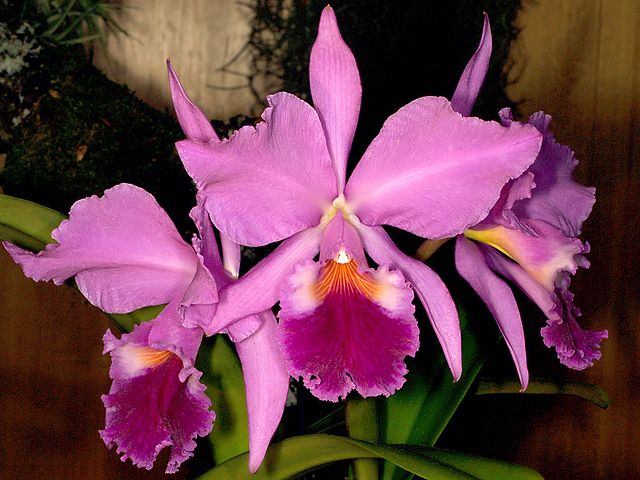
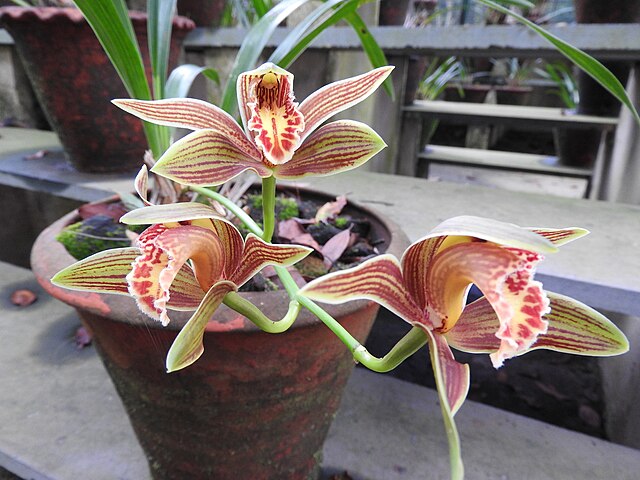
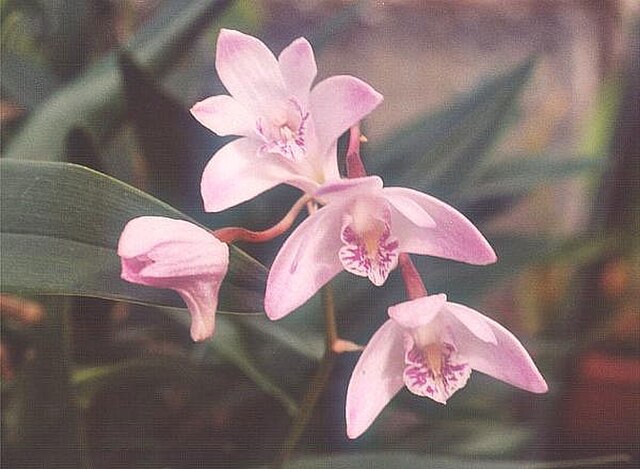
The most common reason for the problem "I'm growing orchids but they won't bloom" is temperature management. Different orchid types require completely different temperature conditions to form flower buds. Phalaenopsis requires a "low-temperature period at night," cymbidium requires "temperature difference between day and night," and dendrobium nobile types require a "low-temperature period accompanied by drying."
Conversely, by intentionally creating the temperature conditions each type of orchid requires, you can reliably form flower buds. This article explains the mechanisms of flower bud formation for major orchid types and methods for temperature management that can be practiced in actual home environments.
Why is orchid blooming affected by temperature?
Most orchids use "seasonal changes" as a signal in their natural habitat to determine the timing of blooming. This phenomenon, called "flowering induction" in plants, begins when temperature changes, day-length changes, or drying trigger flower bud formation.
Even tropical orchids that grow in high-altitude regions bloom by sensing the shift between dry and rainy seasons or the cooling at night. Without this signal in cultivation, the plant judges "it is not yet the blooming season" and continues vegetative growth (leaf, root, and bulb development), so no flower buds appear.
Phalaenopsis temperature management
Conditions for flower bud formation
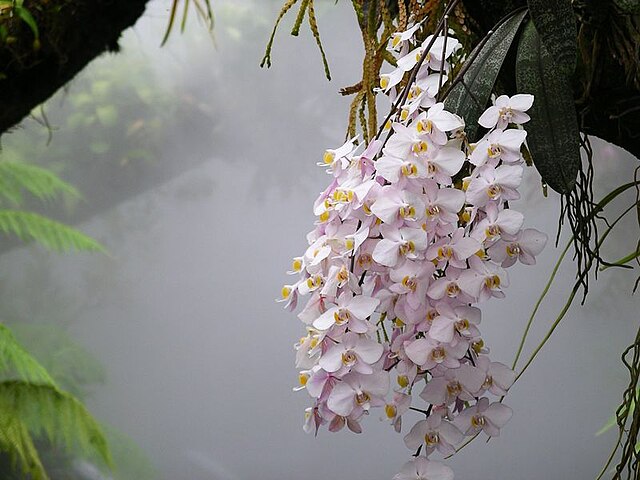
Phalaenopsis forms flower buds by sensing an environment where the nighttime minimum temperature drops to 18℃ or below (flower buds are not induced at a night temperature of 23℃). In its natural habitat of Southeast Asia, the Philippines, and Taiwan, the nighttime temperature drops to 25℃ or below in autumn, which triggers blooming.
In Japanese cultivation environments, placing them in relatively cool locations such as windowsills or entryways in autumn can naturally promote flower bud formation.
Recommended temperature management:
- Night: 18–23℃ (ideal for 4–6 weeks in this range)
- Day: 25–28℃
- Minimum temperature: Maintain above 15℃ (too cold prevents bud formation or causes damage)
Practical methods
From October to November, move them to a location where day-night temperature differences naturally occur. Entryways, corridors, and windowsills (but avoid direct cold drafts) are suitable. In warm rooms above 25℃ at night, flower buds are difficult to form, so avoid placing them continuously in the center of a room with heating from an air conditioner.
Once flower buds (flower stems) are visible (approximately 3–5 cm in length), move them to a warm room to promote blooming. It takes 2–3 months from when the flower stem begins to extend until blooming.
Precautions
If the temperature is too low (15℃ or below), "blasting" (the premature dropping of flower buds) may occur, stopping bud development. Additionally, sudden temperature changes or moving the plant before and after flower bud formation can also cause bud drop. Once flower buds are visible, manage them in the same location as much as possible.
Dendrobium nobile temperature management
Conditions for flower bud formation
Dendrobium nobile hybrids are triggered to form flower buds by the combination of low temperature (10–15℃) and drying. As temperatures drop from autumn through winter and watering is reduced, flower buds form.
If you continue watering while exposing them to low temperature, "keiki" (aerial shoots) may appear instead of flower buds. While keiki can be used as new plants, if you want to enjoy the original flowers, it is important to gradually reduce watering in autumn.
Recommended temperature management:
- Autumn–winter: 5–15℃ (avoid frost)
- Low-temperature period: 2–3 months
- Watering during this time: Minimal (once or twice per month, water only when leaves begin to wilt)
Practical methods
From mid-October, gradually reduce watering while exposing them to low temperature in a sunny outdoor location. Before frost falls (late November to early December), move them to an eave or cool indoor location (5–15℃). Around February, when the flower buds begin to swell, move them to a warm indoor location and resume watering.
Cymbidium temperature management
Conditions for flower bud formation
Cymbidium forms flower buds through day-night temperature difference (approximately 10℃) and low autumn temperatures. Flower buds form when an environment of 20–25℃ during the day and 8–15℃ at night continues from September through November.
Recommended temperature management:
- Autumn daytime: 20–25℃
- Autumn nighttime: 8–15℃
- Low-temperature treatment period: Late September through mid-November
Practical methods
From September through November, the basic approach is to keep them outdoors in a sunny location. The natural day-night temperature difference during this period provides the most effective low-temperature treatment. Before frost falls (early December), bring them inside to a cool windowsill and wait for blooming.
Cattleya temperature management
Conditions for flower bud formation
Cattleya receives its blooming signal from drying and temperature changes. After a new bulb matures, providing a rest period (a time of managing them slightly dry) promotes flower bud formation. Temperature requirements vary greatly depending on the variety (species, hybrid, large-type, or miniature-type).
General guidelines:
- Minimum temperature: 10–15℃ (varies by variety)
- Optimal temperature: 18–28℃
- Drying period after bulb maturation: 3–4 weeks, reduce watering
Practical tips
In many cattleya varieties, when a new bulb develops a sheath, it signals that blooming is imminent. Once flower buds are visible inside the sheath, return to normal care and monitor until blooming.
Vanda temperature management
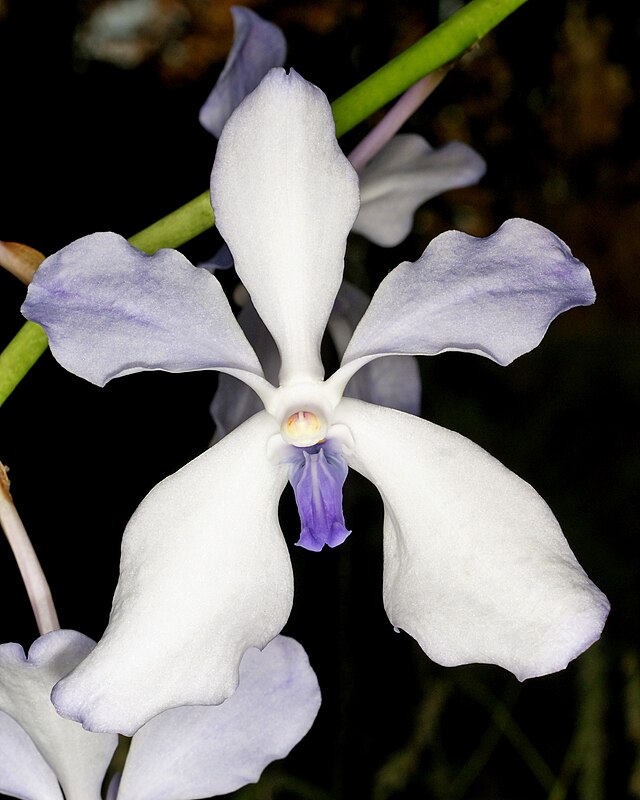
Vanda is a tropical epiphytic orchid that prefers high temperature (20℃ or above) and high humidity year-round. If seasonal blooming induction is necessary, adjusting watering frequency (reproducing a dry season) is effective, but low-temperature treatment is not required. It is important to maintain a minimum temperature of 15℃ or above; below 10℃ leads to leaf drop and plant weakening.
Oncidium temperature management
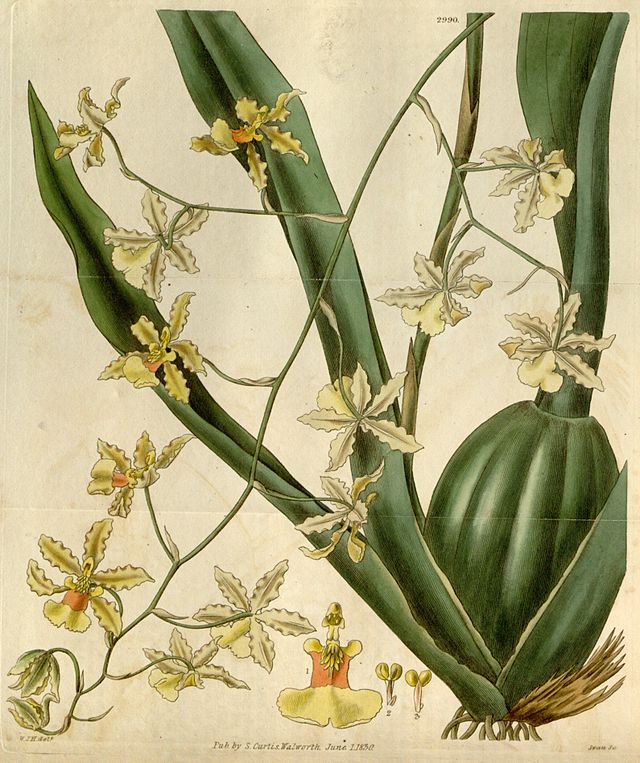
Oncidium is a relatively easy-to-grow orchid with high temperature adaptability. Generally, flower bud formation is promoted by exposing new mature bulbs to slightly low temperature (15–18℃ at night) for several weeks. Managing them at a windowsill in autumn is the easiest method.
Tools useful for temperature management
Thermohygrometer: A thermohygrometer with the ability to record minimum and maximum temperatures is convenient. Place it near the pot of the orchid you are managing to understand the actual temperature fluctuations.
Insulation and greenhouse: Simple greenhouses and plant covers are useful for winter management in cold regions. On the other hand, for low-temperature treatment in overly warm environments, using cool locations such as entryways or north-facing rooms is practical.
Temperature management summary table
| Orchid Type | Flower Bud Formation Conditions | Low-Temperature Treatment Period | Minimum Temperature to Maintain |
|---|---|---|---|
| Phalaenopsis | 18–23℃ at night × 4–6 weeks | Autumn (October–November) | 15℃ |
| Dendrobium nobile | Low temperature (5–15℃) + drying | Autumn–winter (October–February) | 5℃ |
| Cymbidium | Day-night temperature difference 10℃, night 8–15℃ | Autumn (September–November) | 3℃ |
| Cattleya | Drying + temperature change | After bulb maturation | 10–15℃ |
| Vanda | High-temperature maintenance (low-temperature treatment not required) | — | 15℃ |
| Oncidium | 15–18℃ at night × several weeks | Autumn | 10℃ |
Choosing the right variety with GrowerDirect
When purchasing orchids, choosing varieties that bloom easily with temperature management suited to Japanese home environments is the first step to enjoying them long-term. GrowerDirect features many listings where growers provide detailed information about cultivation environment, temperature management methods, and blooming periods.
Another major advantage of GrowerDirect is the ability to ask growers questions directly before purchase to select varieties suited to your home environment (heating, window direction, climate). With proper temperature management, experience the joy of reliably making your orchids bloom every year.