Complete Guide to Orchid Fertilizers | Fertilization Schedules by Type and How to Choose Liquid Fertilizers
Explains orchid fertilizer types and application timing by category. Covers how to use different fertilizers during growth and dormant periods, what N-P-K ratios mean, the differences between organic and synthetic liquid fertilizers, and dilution tips to prevent fertilizer burn.
Key Takeaways
Explains orchid fertilizer types and application timing by category. Covers how to use different fertilizers during growth and dormant periods, what N-P-K ratios mean, the differences between organic and synthetic liquid fertilizers, and dilution tips to prevent fertilizer burn.
Related Species
Why Orchids Need Fertilizer and Basic Fertilization Principles
In nature, orchids grow as epiphytes on tree bark and rock surfaces, surviving on rainwater and minimal nutrients from the air. Therefore, while orchids require less fertilizer than other plants, proper fertilization is key to producing beautiful flowers in a cultivation environment.
The three primary nutrients in fertilizer are nitrogen (N), phosphoric acid (P), and potassium (K).
- Nitrogen (N): Promotes growth of leaves and stems
- Phosphoric Acid (P): Directly linked to flower bud formation and blooming
- Potassium (K): Strengthens roots and stems, improving disease resistance
Adjusting the balance of these nutrients according to the orchid's growth stage is the first step to successful fertilization.
During the growth period (spring to summer), apply nitrogen generously to build up the plant, and from early autumn when flower bud differentiation begins, switch to a formula that emphasizes phosphoric acid and potassium. Conversely, if you enter autumn with excess nitrogen, the plant will develop excessive foliage and flowering will be difficult.
Types of Fertilizer and Their Characteristics
Liquid Fertilizer
The major advantage is its quick-acting nature and ease of concentration adjustment due to dilution before application. Commercially available products like "Hyponex Orchid Formula" and "Flower Factory," which have N-P-K ratios specifically adjusted for orchids, are easy to use.
There are three key points to consider when selecting liquid fertilizer.
- Choose a product specifically formulated for orchids or tropical orchids. While general-purpose fertilizers can be used, orchids are prone to fertilizer burn, so it's safer to use them at 1/2 to 1/3 of the recommended concentration.
- Products with chelated iron and trace elements will improve leaf color and stabilize growth.
- Products with ammonia-based and nitrate-based nitrogen rather than urea nitrogen are recommended as they place less stress on roots.
Solid and Slow-Release Fertilizers
Products like Magamp K and organic solid fertilizers (oil cake-based) are easy to manage as they dissolve slowly and provide nutrients over a long period. Apply them as top-dressing at a distance from the base of the plant. However, be careful not to embed them directly in the pot, as this can create overly high concentrations and damage roots. In particular, organic fertilizers can be a source of fungus gnats, so chemical slow-release fertilizers are better suited for maintaining cleanliness.
Foliar Feeding
This method involves diluting liquid fertilizer to 1000-2000 times its concentration and spraying it directly on both sides of the leaves with a mister. It's effective for recovering plants with weakened roots and as a supplement during winter when root absorption is difficult. However, if liquid fertilizer contacts orchid petals, it will cause staining, so be careful to spray only the leaves during flowering. For those who want to better understand root condition, please also refer to orchid root management techniques.
Fertilization Schedule by Major Orchid Type
| Type | Recommended Fertilization Period | Recommended Rest/Reduction Period |
|---|---|---|
| Phalaenopsis (Moth Orchid) | April-September: Liquid fertilizer diluted 1000x once every two weeks | October-March: Approximately once per month, phosphoric acid-rich formula |
| Cymbidium | March-August: High-nitrogen liquid fertilizer once every 10 days | No fertilization during flowering period (November-February), resume in March |
| Dendrobium (Spring-blooming) | April when new shoots begin to grow until September before blooming | No fertilization from October-February |
| Dendrobium (Autumn-blooming) | Spring to summer | Stop fertilization during blooming period (September-October) |
| Cattleya | May-September: Half the recommended concentration once every two weeks | October-April: Once per month or less |
Phalaenopsis (Moth Orchid)
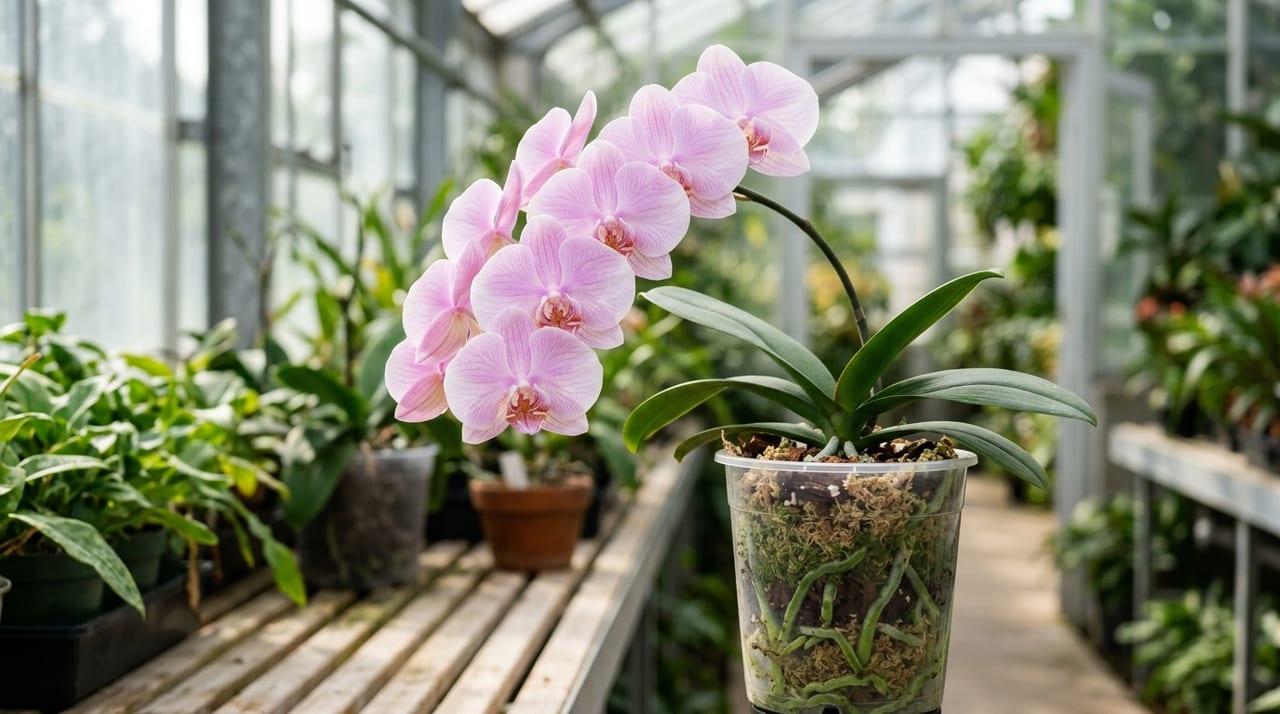
Indoor cultivation is the mainstream, and these orchids are kept in relatively stable environments year-round, so seasonal fertilizer variation is minimal. During the growth period from April to September, apply liquid fertilizer diluted 1000x once every two weeks in place of watering. From October to March, reduce applications to approximately once per month and use a formula with reduced nitrogen and increased phosphoric acid to encourage flower bud formation. Since this variety doesn't have a clear dormancy period, you don't need to eliminate fertilizer entirely, but it's basic practice to reduce the amount in winter. Basic cultivation methods are explained in detail in complete guide to growing moth orchids.
Cymbidium
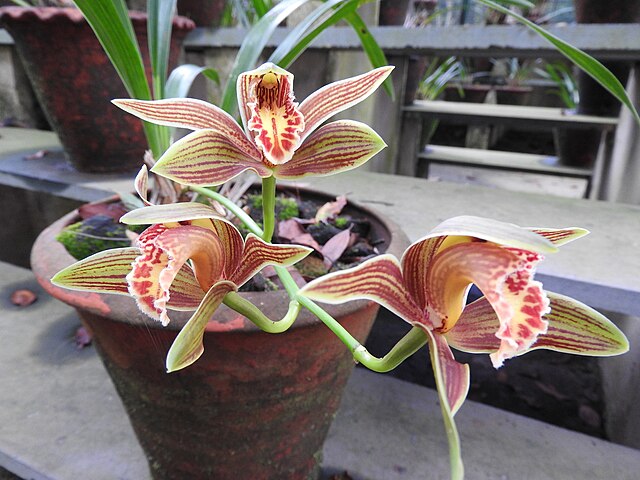
Since cymbidiums bloom in autumn and winter, plant development during spring and summer is crucial. From March to August, apply liquid fertilizer (high-nitrogen N-P-K ratio) once every 10 days. From September onward, reduce nitrogen and switch to a formula emphasizing phosphoric acid and potassium to promote flower bud formation. Rest from fertilization during the blooming period (November-February) and resume in March after flowering. Even applying solid slow-release fertilizer as top-dressing twice—in spring and early summer—will ensure basic nutrition.
Dendrobium
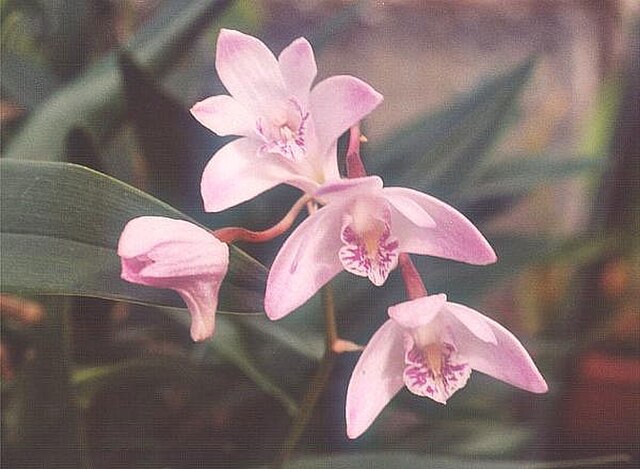
Fertilization rhythm differs between spring-blooming and autumn-blooming types. Spring-blooming types are fertilized from April when new shoots begin to grow until September before blooming, and from autumn onward, fertilization is stopped to allow the plant to rest, promoting flower bud formation the following spring. Since this "autumn stop in fertilization" is an important trigger for blooming, no fertilizer is applied from October to February. Autumn-blooming types are fertilized from spring to summer to develop a robust plant by summer, and fertilization stops during the blooming period (September-October).
Cattleya
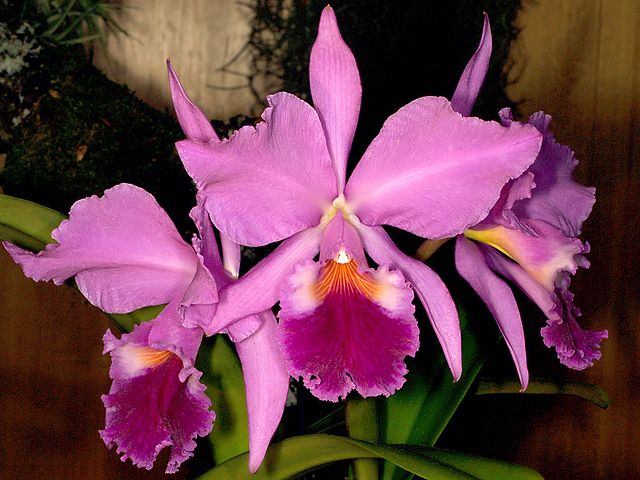
Apply fertilizer intensively during the growth period (May-September) when pseudobulbs develop. The basic approach is to apply liquid fertilizer at half the recommended concentration once every two weeks. From October to April when growth stops, reduce fertilizer application significantly to once per month or less. Since cattleya roots are particularly susceptible to fertilizer burn, remember that slightly more dilute than needed is about right.
Signs of Fertilizer Burn and Quick Reference for Dilution Ratios
"Fertilizer burn" occurs when fertilizer concentration around the roots becomes too high, preventing the roots from absorbing water, causing fine roots to wither. Since orchid roots are exposed to air and sensitive to concentration changes, this trouble occurs more easily than with other plants.
Signs of Fertilizer Burn
- Root tips (growth points that are green to white) turn brown and stop, with no new roots appearing for a while
- Leaves turn yellow to brown starting from the leaf tips. More likely to appear on new leaves than old ones
- Leaves wilt after fertilization and don't recover even with watering
- White crystals (fertilizer salts) accumulate on bark or pot edges
If signs appear, stop fertilizing and flush the inside of the pot thoroughly 2-3 times with plenty of water. Recovery can only wait for new roots to emerge, and the plant should be managed without fertilizer for 1-2 months.
Quick Reference for Dilution Ratios
| Situation | Liquid Fertilizer Dilution | Recommended Frequency |
|---|---|---|
| Normal fertilization during growth period | Dilute to 2x the recommended ratio on the product label (if 1000x, then 2000x) | Once every two weeks |
| Weakened roots or just after repotting | Dilute to 3-4x the recommended ratio | Once per month until roots start to grow |
| Mid-summer (over 30℃) and winter low-temperature period | Dilute to 2-3x the recommended ratio | Reduce frequency by half |
| Foliar spray | 1000-2000x dilution | On leaves only. Do not spray flowers |
| Top-dressing (slow-release) | Half the amount shown on product label | Replace twice, in spring and summer |
"Weak fertilizer applied frequently" is the golden rule for orchids. If in doubt about the dilution ratio, always choose the more dilute option. It's hard to recover from fertilizer that's too concentrated, but you can always add more next time if it's too weak.
Tips for Fertilizing and Avoiding Common Mistakes
- Never apply fertilizer to a dry pot is the golden rule. If you fertilize while the medium is dry, roots will be suddenly exposed to a high-concentration solution and fine roots will die. Before applying liquid fertilizer, always moisten the roots with water first to ensure even penetration, then fertilize. Refer to orchid watering guide for the basics of watering itself.
- Further diluting the fertilizer during hot summer periods is also important. When temperatures exceed 30℃, plant metabolism slows and fertilizer absorption efficiency decreases. Aim for concentrations at half or less than normal, and also reduce frequency while observing the results.
- Water thoroughly until it drains from the bottom to prevent accumulation of fertilizer salts inside the pot. On the other hand, always discard any liquid that accumulates in the saucer. Water that sits for extended periods can cause root rot and salt accumulation.
- Avoid leaving solid fertilizer in place for extended periods. In addition to mold and pest issues, there's a risk of unexpectedly high fertilizer concentrations flowing in all at once. The clean and effective approach is to replace with fresh fertilizer twice—in spring and summer.
Creating an Environment That Maximizes Fertilizer Effectiveness
No matter how appropriate the fertilizer, it won't be absorbed if the root environment is poor. Orchids prefer highly porous media (bark, pumice, sphagnum moss, etc.). When media ages and breaks down into fine particles, aeration is lost, root rot occurs, and fertilizer absorption ability decreases significantly. Refer to timing and media selection for tropical orchid repotting and update the media through repotting once every 2-3 years as a prerequisite for maintaining fertilizer effectiveness.
Also, by developing the habit of observing leaf color, you can tell if fertilization is excessive or insufficient. If leaves turn dark yellow-green to yellow, it indicates nitrogen deficiency, while if leaves are too dark green and flowers don't bloom, it's a sign of excess nitrogen. Healthy leaves have a glossy, bright green color, and finding the fertilizer amount that maintains this is part of the joy of orchid cultivation.
The basic approach to orchid fertilizer management is "less, more dilute, and frequent." By reading the signals from the plant and fine-tuning the fertilizer amount, you can reliably enjoy beautiful blooms every year. When plants are weakened by pests or disease, fertilization alone may not lead to recovery, so for peace of mind, also check orchid pest and disease prevention calendar when you notice any abnormalities.