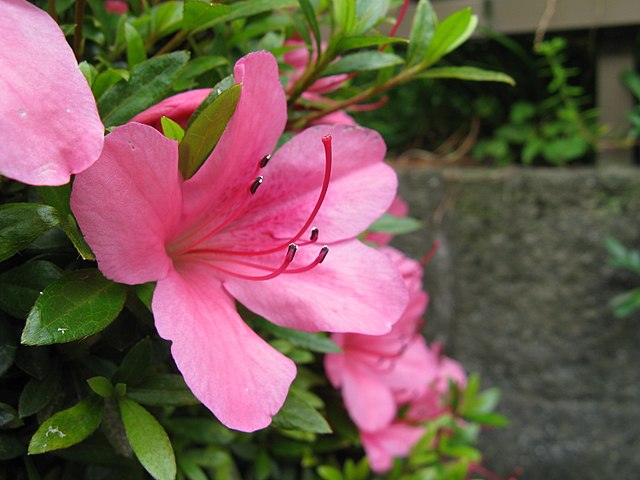
Source: Wikimedia Commons
Satsuki Azalea
BeginnerRhododendron indicum
The iconic flowering bonsai of Japanese culture. Blooms in May-June with thousands of cultivars. Huge variety in flower color and form. Star of exhibitions.
About
Satsuki azalea is a cultivar group of the genus Rhododendron, a type of azalea extensively cultivated and hybridized by the Japanese. It is native to the mountains of Japan.
Source: Wikipedia (CC BY-SA 4.0)
Lifespan of the Satsuki Azalea
The Satsuki Azalea lives 100+ years.
Size of the Satsuki Azalea
The Satsuki Azalea grows to 10-60cm (bonsai size).
Basic Info
Origin
Japan (mountainous stream banks and rocky areas)
Lifespan
100+ years
Size
10-60cm (bonsai size)
Temperature
-5〜35℃
Growing Tips
Placement
Partial shade to full sun. Avoid afternoon sun in summer
Watering
Acidic soft water ideal. Never let it dry out
Styling
Trim right after bloom. Critical for next years flower buds
Notes
Plant in acidic soil (Kanuma). Sensitive to alkaline conditions
Satsuki Azalea FAQ
QWhat is the growing difficulty level for Satsuki Azalea?
Beginner. A variety suitable for beginners. No special equipment or experience is required—you can grow it without problems by setting up a basic cultivation environment.
QWhat is the lifespan of Satsuki Azalea?
The average lifespan of Satsuki Azalea is 100+ years. With proper cultivation environment and nutrient management, you can keep it healthy for a long time.
QHow large does Satsuki Azalea get?
The mature size of Satsuki Azalea is 10-60cm (bonsai size). This may vary slightly depending on cultivation environment and individual differences.
QWhat is the typical price for Satsuki Azalea?
The price of Satsuki Azalea varies significantly by variety, characteristics, size, and lineage. Please check GrowerDirect's price guide for the latest market information.
Last updated: September 25, 2026
Growing Specifications
- USDA Zone
- 6–9
Sources: garden.org / UAEX: Rhododendron indicum (Satsuki azalea)
References & Sources
Edited & verified by: GrowerDirect Editorial Team
The classifications, regulations, and growing data on this page are created and verified based on the primary information database below.
Taxonomy & Authority
Accepted name: Rhododendron indicum (L.) Sweet
Synonyms: Rhododendron balsaminiflorum (Carrière) T.Moore, Azalea indica L., Azalea ramentacea Lindl., Azalea macrantha Bunge, Rhododendron hispidum D.Don, Azalea balsaminiflora Carrière
Authority databases: GBIF · POWO
Nomenclature follows global taxonomic authority databases.
Regulations & Conservation Status
Sources: CITES Checklist of CITES Species
Regulations may change. Always verify the latest information with the relevant authorities.
Related Species
Find listings for this species
Related Articles
How to Grow Satsuki Bonsai | Pruning and Fertilizing Tips for Blooming Flowers
We explain Satsuki's charm, variety selection, post-bloom pruning, repotting with Kanuma soil, and the conditions for flower bud formation.
Rhododendron & Azalea Care Guide | Variety Selection, Acidic Soil Management & Pruning Tips
A comprehensive guide to growing Rhododendrons & Azaleas (Rhododendron). Learn about Japanese Rhododendrons, Western Rhododendrons, Hirado Azaleas, and Satsuki varieties, managing semi-shaded conditions and acidic soil (pH 4.5–6.0), securing next year's blooms with post-flower pruning, and controlling mildew and chlorosis—a practical guide covering all essentials.
Complete Bonsai Tree Selection & Development Roadmap for Beginners | Phase-by-Phase Management Strategy from Year 1 to Year 5
Bonsai success for beginners depends on choosing the right tree species. This guide details the process of selecting beginner-friendly species like five-needle pine and common juniper, and developing them into refined bonsai through phased management over five years. We provide a five-year roadmap that advances through tree form foundation building, adjustment, and completion.
Bonsai Aged Wood Techniques | Creating Branch Aging Expression and Tree Age Aesthetics
Explains techniques for creating bonsai that appear aged from young stock. Introduces practical methods for expressing tree age aesthetics, from bark texture and branch structure to root development expression and changes over time.
🩺 Common diseases
Can't find the plant you're looking for?
Post your wishes for free and growers with matching plants will contact you with introductions.