Source: Wikimedia Commons
Cephalotus Eden Black
AdvancedCephalotus follicularis 'Eden Black'
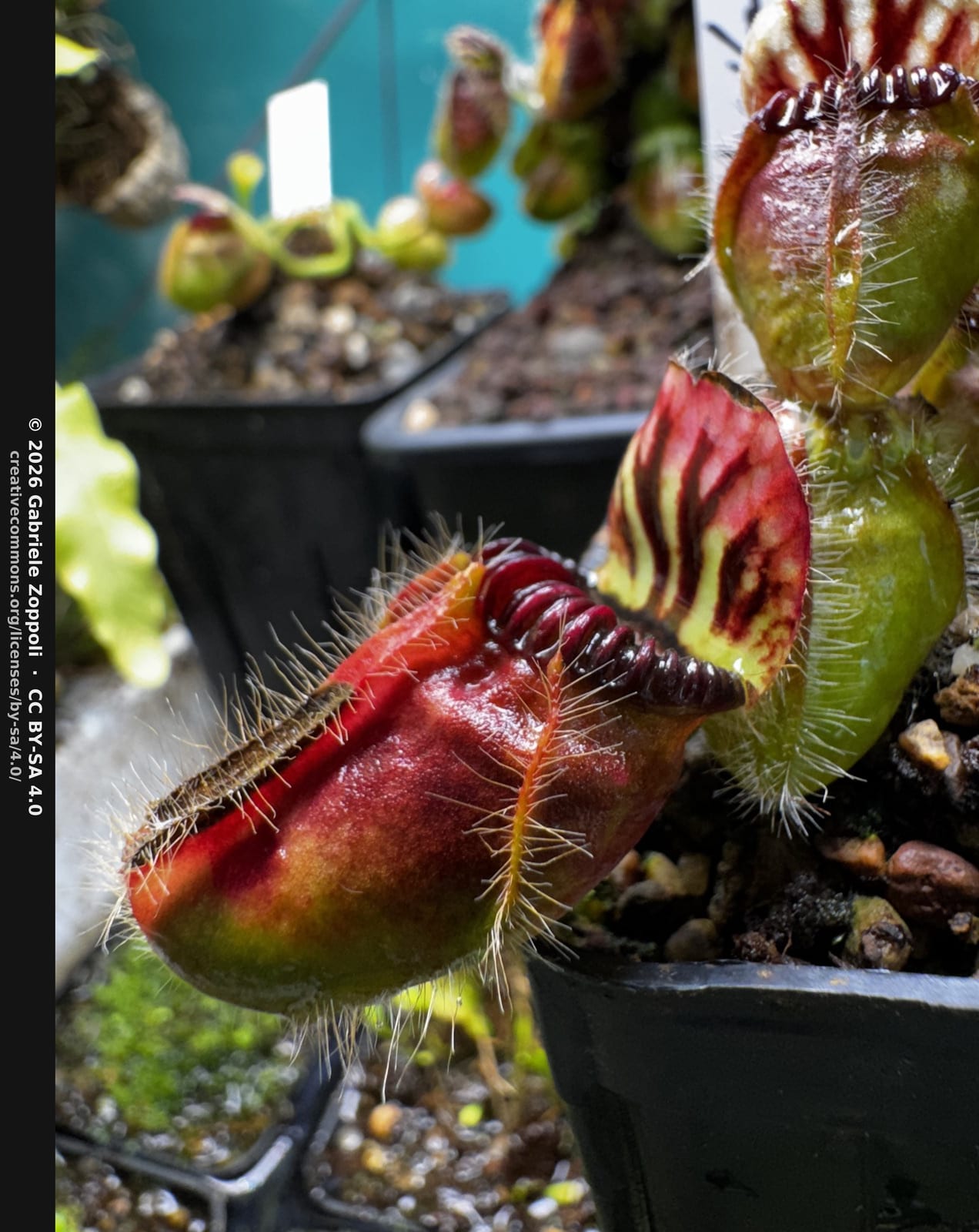
A selected clone of the Albany pitcher plant. In strong light the rim, then the whole pitcher and even the lid darken to a near-black purple. Selected by a British grower in the late 1980s and registered with the ICPS in 2007.
About
'Eden Black' is a cultivar of Cephalotus follicularis, the Albany pitcher plant, the only species in its family, native to wetlands at the far south-west tip of Australia. The plant forms small pitcher leaves about 5 cm long and flat ordinary leaves in turn through the seasons. The clone was selected by the British grower S. Morley in Yorkshire in the late 1980s and registered with the International Carnivorous Plant Society (ICPS) in 2007; the name combines the originator's house name and the pitcher colour. According to the registration, the peristome darkens first in full sun and the rest of the pitcher then follows until it is almost the same colour as the rim, with the colour spreading over both faces of the lid. Typical clones keep pitchers a shade lighter than the peristome, so the difference shows when plants are side by side. Other dark clones such as 'OG Black' are also sold, and unlabelled plants cannot reliably be told apart by eye. The cultivar can only be propagated vegetatively (division, leaf or rhizome cuttings); seedlings are not 'Eden Black'. In Japan it appears with the cultivar name at specialist nurseries and online auctions. Care is the same as for the species: match pot depth to soil drainage and give strong light to bring out the colour.
Source: Wikipedia (CC BY-SA 4.0)
Size of the Cephalotus Eden Black
The Cephalotus Eden Black grows to Rosette up to about 10 cm tall; pitchers up to 5 cm long.
Basic Info
Origin
Horticultural cultivar selected in the UK (species native to wetlands of south-western Australia)
Lifespan
Perennial (can be kept for many years by division)
Size
Rosette up to about 10 cm tall; pitchers up to 5 cm long
Temperature
10〜30℃
Humidity
60〜80%
Watering & Fertilizer
Little or no fertilizer needed (catches ants and other small insects)
Growing Tips
Light & Placement
Strong light turns the pitchers black-purple. Grow on a south-facing sill or under bright LED lights; in low light they stay greenish.
Watering
A fen plant that dislikes stagnant water. Either stand a tall pot in about 1 cm of water or water from above daily without a tray, depending on the mix. Use pure or rain water.
Soil & Repotting
A mix of about 20% peat or chopped sphagnum to 80% sand in a tall pot works well; 1 cm of pure sand on top keeps moss down. Flush water through the pot now and then to remove salts.
Pests & Cautions
Highly susceptible to powdery mildew, which has wiped out whole collections. Keep air moving and treat promptly with a fungicide if white mould appears.
Propagation
Keep the cultivar true by division, rhizome cuttings or leaf pullings. Stems die back after flowering; this is normal and new shoots follow.
Cephalotus Eden Black FAQ
QWhat is the growing difficulty level for Cephalotus Eden Black?
Advanced. A variety suitable for advanced growers. Requires advanced cultivation techniques and specialized equipment, with careful environmental adjustments needed.
QHow large does Cephalotus Eden Black get?
The mature size of Cephalotus Eden Black is Rosette up to about 10 cm tall; pitchers up to 5 cm long. This may vary slightly depending on cultivation environment and individual differences.
QHow should I water and fertilize Cephalotus Eden Black?
Cephalotus Eden Black: watering & fertilizer — Little or no fertilizer needed (catches ants and other small insects). Aim for appropriate frequency and amount.
QWhat is the typical price for Cephalotus Eden Black?
The price of Cephalotus Eden Black varies significantly by variety, characteristics, size, and lineage. Please check GrowerDirect's price guide for the latest market information.
Last updated: September 23, 2026
References & Sources
Edited & verified by: GrowerDirect Editorial Team
The classifications, regulations, and growing data on this page are created and verified based on the primary information database below.
Taxonomy & Authority
Accepted name: Cephalotus follicularis 'Eden Black' Labill.
Originator: S. Morley
Authority databases: GBIF · GBIF Cephalotus follicularis Labill. · ICPS 登録栽培品種 Cephalotus 'Eden Black'(2007年登録)
Nomenclature follows global taxonomic authority databases.
Regulations & Conservation Status
Cephalotus follicularis was formerly listed in CITES Appendix II but has been deleted and is no longer covered. The cultivar is not registered under Japan's Plant Variety Protection law.
Sources: Species+ (CITES) Cephalotus follicularis / MAFF Plant Variety Protection database
Regulations may change. Always verify the latest information with the relevant authorities.
Related Species
Find listings for this species
Related Articles
Complete Guide to Growing Cephalotus | Cultivating Beautiful Pitcher Traps
Explains the basics of growing Cephalotus (fringed water violet), temperature and humidity management, soil and watering, and tips for cultivating large pitchers.
How to Identify Trustworthy Growers | What "Verified" Means and 14 Items to Check Before Purchasing
GrowerDirect's "Verified" badge means the operator has confirmed the grower's cultivation and propagation track record and cultivation environment, but does not guarantee the condition of individual plants or variety accuracy. This article explains what GrowerDirect's "Verified" badge means, then outlines 14 items you should confirm with the grower before purchasing—focused on plant-specific points—including variety name and provenance, parent plant, rooting status, photo dates, pests and diseases, warranty conditions, and payment timing.
Black Pine Bud Pinching and Annual Canopy Management | Timing of Bud Pinching, Style-Specific Management (Formal Upright, Slanting, Cascade), and Tree Age & Cultivation Years
An explanation of the timing and technique for black pine bonsai bud pinching (green pinching), style-specific management for formal upright, slanting, and cascade forms, and cultivation principles according to tree age, all presented with an annual management schedule.
Blackwater Aquarium Setup Guide | Aquatic Plants and Fauna from Southeast Asia and South America
How to set up a blackwater aquarium (low pH, low hardness, brownish water). This guide explains water parameter adjustment using peat moss, driftwood, and almond leaves, plus tips on combining aquatic plants and fauna from the Amazon and Southeast Asia with maintenance best practices.
Can't find the plant you're looking for?
Post your wishes for free and growers with matching plants will contact you with introductions.