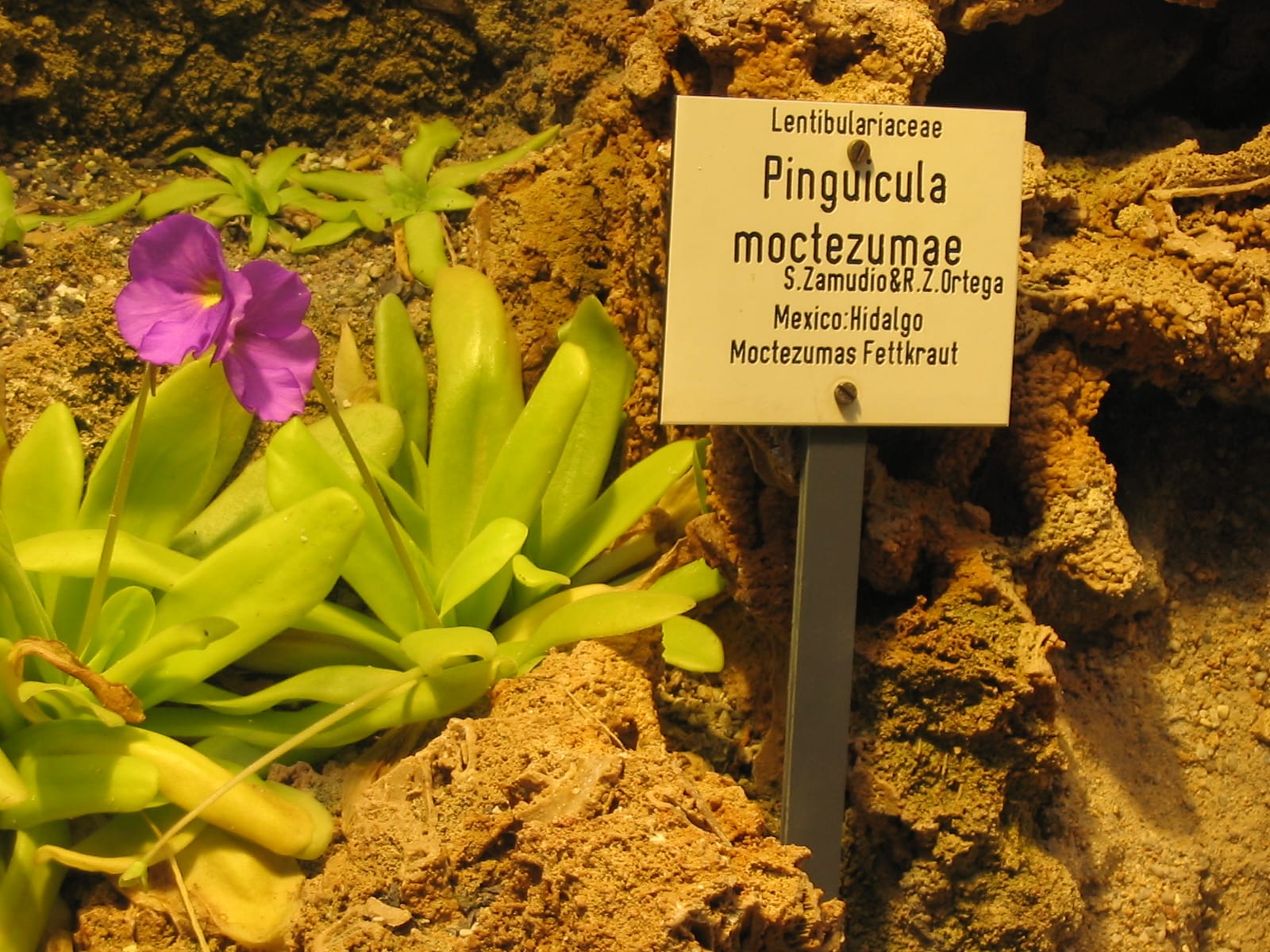
Source: Wikimedia Commons
Pinguicula moctezumae
BeginnerPinguicula moctezumae
A butterwort found only in the canyon of the Río Moctezuma in Mexico. It raises long, narrow leaves about 10 cm long and bears large deep-pink flowers with a long spur. It is also known as a parent of the cultivar 'Aphrodite'.
About
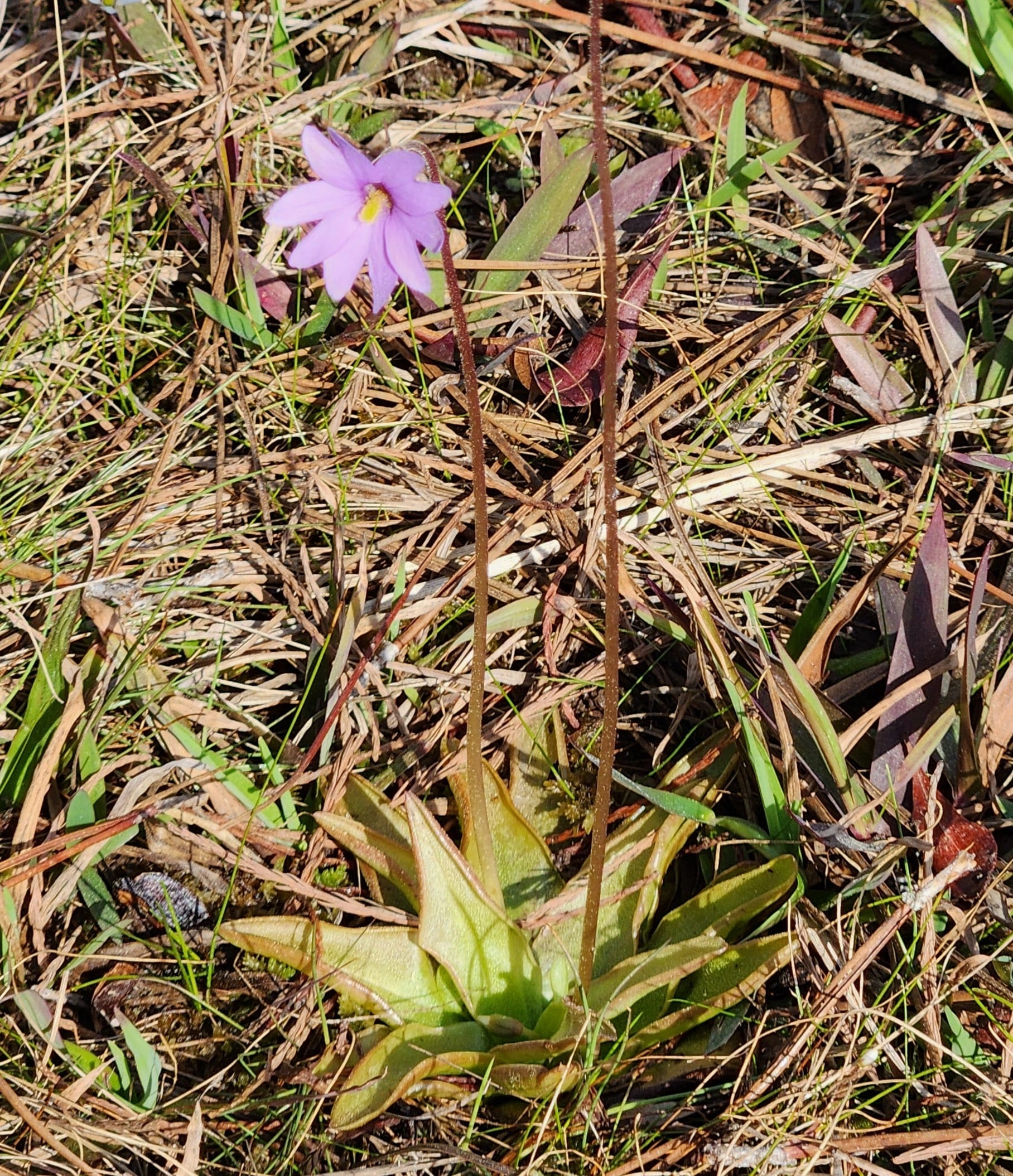
Pinguicula moctezumae is a butterwort species found only in the canyon of the Río Moctezuma, which forms the border between the Mexican states of Hidalgo and Querétaro, and is named after the river. It was described by Sergio Zamudio and Ricardo Zirahuén Ortega in 1994. It grows on seepage-wet limestone cliffs at 900-1,100 m and belongs to section Orcheosanthus. The carnivorous summer leaves form a rosette of up to about 15 lanceolate leaves up to 10 cm long and 1 cm wide, long and narrow for a Mexican species. It can form a winter rosette but seldom does, as it has only a short rest or none; slightly drier surroundings seem to trigger it. The flowers are deep pink, about 3-3.5 cm across, with the long spur typical of its section. A ripe capsule holds more than 100 elongated seeds about 1 mm long. In 1998 it was crossed with P. agnata in the Czech Republic to produce the cultivar 'Aphrodite', which inherits its narrow leaves. In Japan it is sold at online auctions and by mail order. Since it barely rests in winter, do not let it dry out excessively then.
Source: Wikipedia (CC BY-SA 4.0)
Size of the Pinguicula moctezumae
The Pinguicula moctezumae grows to Leaves up to 10 cm long and 1 cm wide; flowers 3-3.5 cm across.
Basic Info
Origin
Mexico (Río Moctezuma canyon on the Hidalgo-Querétaro border, 900-1,100 m)
Lifespan
Perennial
Size
Leaves up to 10 cm long and 1 cm wide; flowers 3-3.5 cm across
Temperature
10〜30℃
Humidity
60〜90%
Watering & Fertilizer
Little or no fertilizer needed (catches small insects on sticky leaves)
Growing Tips
Temperature & Overwintering
Its winter rest is short or absent. Keep it in a bright, frost-free room in winter and do not let it dry out excessively.
Light & Placement
Grow on a bright windowsill or under lights. Many grow on cliffs with little direct sun in the wild, so avoid harsh midsummer sun.
Watering
In the growing season the pot can stand in up to 2 cm of water. It barely rests in winter, so water before the mix dries out completely.
Soil & Repotting
It is not a bog plant; a mix of equal parts peat, coarse sand and perlite with dolomitic lime added to make it alkaline suits it.
Pests & Cautions
Do not use fungicides on Pinguicula; they can kill the plants. Fungus gnat larvae eat the leaves, so a thin layer of coarse sand on the soil surface helps.
Pinguicula moctezumae FAQ
QWhat is the growing difficulty level for Pinguicula moctezumae?
Beginner. A variety suitable for beginners. No special equipment or experience is required—you can grow it without problems by setting up a basic cultivation environment.
QHow large does Pinguicula moctezumae get?
The mature size of Pinguicula moctezumae is Leaves up to 10 cm long and 1 cm wide; flowers 3-3.5 cm across. This may vary slightly depending on cultivation environment and individual differences.
QHow should I water and fertilize Pinguicula moctezumae?
Pinguicula moctezumae: watering & fertilizer — Little or no fertilizer needed (catches small insects on sticky leaves). Aim for appropriate frequency and amount.
QWhat is the typical price for Pinguicula moctezumae?
The price of Pinguicula moctezumae varies significantly by variety, characteristics, size, and lineage. Please check GrowerDirect's price guide for the latest market information.
Last updated: September 23, 2026
References & Sources
Edited & verified by: GrowerDirect Editorial Team
The classifications, regulations, and growing data on this page are created and verified based on the primary information database below.
Taxonomy & Authority
Accepted name: Pinguicula moctezumae Zamudio & R.Z.Ortega
Authority databases: GBIF · GBIF Pinguicula moctezumae Zamudio & R.Z.Ortega
Nomenclature follows global taxonomic authority databases.
Regulations & Conservation Status
Not listed under CITES; no paperwork is needed to buy or grow it in Japan.
Sources: Species+ (CITES) search: Pinguicula moctezumae (no listing)
Regulations may change. Always verify the latest information with the relevant authorities.
Related Species
Find listings for this species
Related Articles
How to Grow Butterwort (Pinguicula) | Beautiful Flowers and the Charm of Sticky Traps
A beginner's guide to growing Butterwort (Pinguicula). Discover cute violet-like flowers, the sticky leaf insect-catching mechanism, differences in cultivation between Mexican and temperate species, and propagation methods.
Why Carnivorous Plant Traps Fail and How to Fix Them | Optimizing Humidity, Nutrition, and Prey-Capture Systems
Investigate why carnivorous plant traps fail to capture insects. From humidity management to nutrient balance, gland secretion function, and dormancy, a detailed scientific approach to restoring trap function.
A Guide to Giving Carnivorous Plants as Gifts | How to Choose Unique Presents and Tips for Long-Term Enjoyment
A guide to selecting carnivorous plants as gifts. Covers how to choose varieties based on the recipient's type, and important care tips to communicate before gifting, such as water quality and dormancy periods.
Developing Nepenthes Pitcher Traps Completely: Cultivation Secrets Through Environmental Management and Physiological Approaches
The carnivorous leaves of Nepenthes represent the masterpiece of an insect-trapping mechanism evolved over 200 million years. This article explains how to mature the carnivorous leaves completely and develop healthy plants with actual predatory function through humidity, light, and nutrient management.
Can't find the plant you're looking for?
Post your wishes for free and growers with matching plants will contact you with introductions.