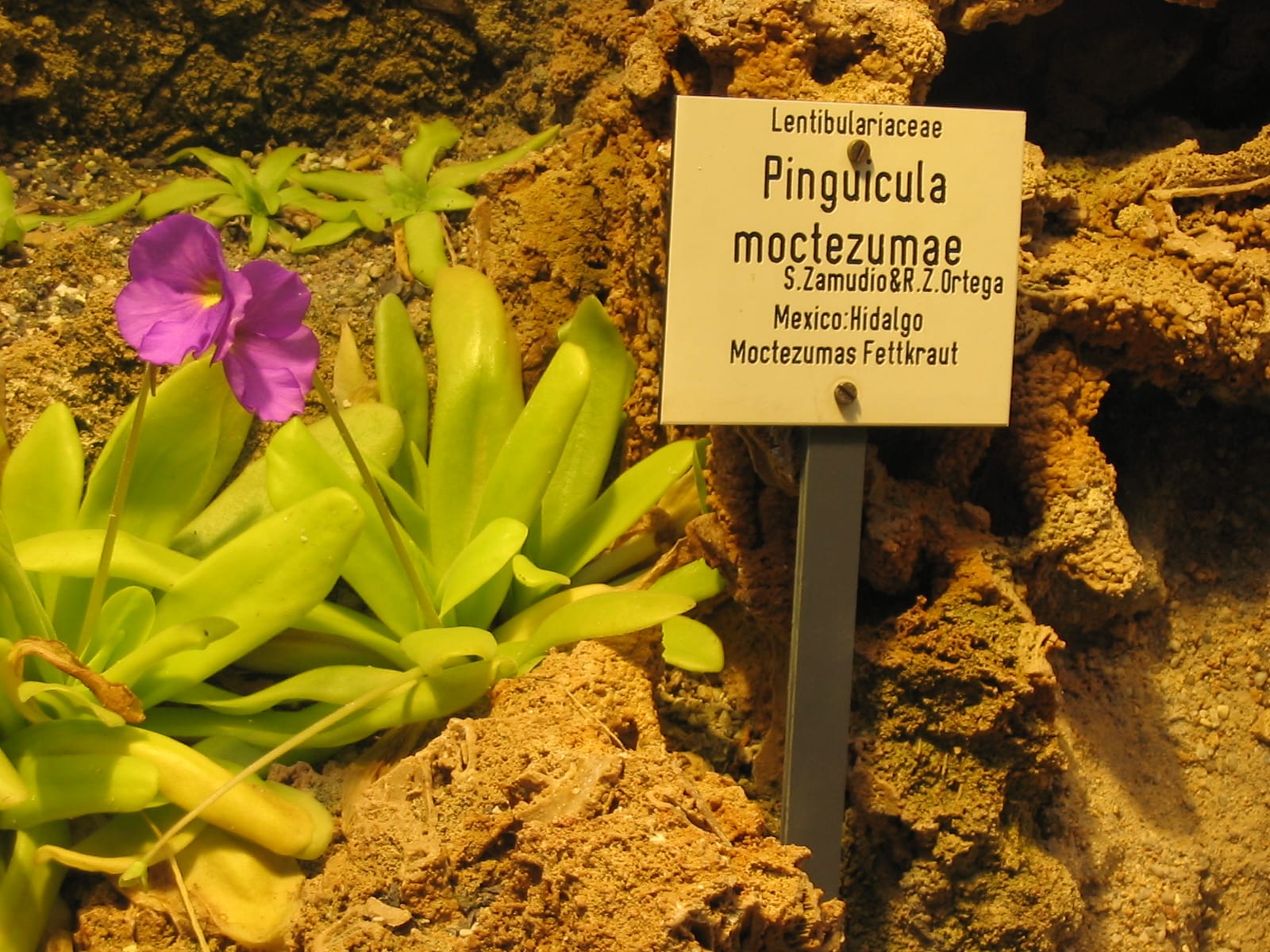
 © Christian Hummert (Ixitixel) / CC BY-SA 3.0
Pinguicula moctezumae
Pinguicula moctezumae is a butterwort found only in the canyons carved by Mexico's Moctezuma River. It sends up narrow leaves about 10cm long, coated with sticky mucilage that traps small insects. Its real draw is the flower: a large, deep pink bloom 3 to 3.5cm across with a long spur, striking against the plant's modest foliage. It's also known as a parent of the cultivar 'Aphrodite'. As a perennial rated beginner-friendly, it makes a great starting point for anyone new to growing Pinguicula.
View Pinguicula moctezumae encyclopedia →0% commission on your first sales!Register by September 30, 2026 and your first 2 plants are commission-free!
Grower Wanted!
List your plants on GrowerDirect and sell directly to customers nationwide!
6 Transparency Commitments from GrowerDirect
Every Grower listing discloses variety, origin, light requirements, and difficulty level for Carnivorous Plants. Complete transparency, guaranteed.
- Variety Disclosed
- Real Photos
- Color Information
- Origin Disclosed
- Light Requirements
- Difficulty Level
Browse all 145 varieties
Light Requirements
Difficulty Level
Verified growers wanted for Carnivorous Plants
Growers are signing up now ahead of launch. Subscribe to be notified when new listings go live.
Getting alerts is free with a member account. When new listings match your saved search, we'll notify you by email and in-app.
Browse other categories
Are you growing carnivorous plants?
Register as a grower and connect with buyers directly.
Apply as a growerPinguicula moctezumae key facts
- Growing Difficulty
- Beginner-friendly
- Lifespan
- Perennial
- Size
- Leaves up to 10 cm long and 1 cm wide; flowers 3-3.5 cm across
- Watering
- Little or no fertilizer needed (catches small insects on sticky leaves)
- Temperature & Overwintering
- Its winter rest is short or absent. Keep it in a bright, frost-free room in winter and do not let it dry out excessively.
- Light & Placement
- Grow on a bright windowsill or under lights. Many grow on cliffs with little direct sun in the wild, so avoid harsh midsummer sun.
- Watering
- In the growing season the pot can stand in up to 2 cm of water. It barely rests in winter, so water before the mix dries out completely.
- Soil & Repotting
- It is not a bog plant; a mix of equal parts peat, coarse sand and perlite with dolomitic lime added to make it alkaline suits it.
- Pests & Cautions
- Do not use fungicides on Pinguicula; they can kill the plants. Fungus gnat larvae eat the leaves, so a thin layer of coarse sand on the soil surface helps.
About Pinguicula moctezumae
Pinguicula moctezumae is a Mexican butterwort with narrow leaves and large, deep pink flowers. Beginner-friendly and perennial, it's known as a parent of the cultivar 'Aphrodite'.
7 things to know before growing Pinguicula moctezumae
1Light & Placement
Pinguicula moctezumae prefers bright, indirect light, similar to what you'd get behind a sheer curtain. Direct summer sun can scorch the leaves, so filtered light or partial shade is safer. Good air circulation also helps keep the plant healthy.
2Watering
During the growing season, you can keep up to about 2cm of water in the saucer. P. moctezumae often has only a short winter rest or none at all, so don't let it dry out severely in winter; water before the mix dries out completely.
3Soil
It isn't a bog plant; in the wild it grows on seeping limestone cliffs. An equal mix of peat, coarse sand, and perlite with dolomite lime added to make it slightly alkaline suits it well.
4Repotting
Root growth isn't especially vigorous, but repotting roughly every one to two years helps prevent the soil from breaking down and keeps the plant in good condition. Early spring, just as growth resumes, is the best time to repot. Handle the fine roots carefully during the process.
5Seasonal Care
It grows actively in the warmer months, extending leaves that trap insects. It sometimes forms a winter rosette, but the rest period is usually short or absent, so keep it in a bright, frost-free spot indoors in winter and don't let it dry out severely.
6Enjoying the Flowers
The large, deep pink flowers with their long spurs are this species' standout feature, measuring about 3 to 3.5cm across. A well-established plant will send up a sturdy flower stalk to bloom. Keeping the plant healthy with adequate light and proper watering is the foundation for good flowering.
7Choosing a Healthy Plant
Look for a plant with thick, plump, glossy leaves. Avoid ones with blackened leaf tips or a wobbly base. Whether it's holding up leaves around 10cm long is also a good indicator of its condition.
Frequently asked questions about Pinguicula moctezumae
- Q.Is it hard to grow? Is it suitable for beginners?
- A.Pinguicula moctezumae is rated as beginner-friendly in terms of cultivation difficulty. If you get the basics of placement and watering right, it's an enjoyable species even for first-time carnivorous plant growers.
- Q.How large does it grow?
- A.The leaves grow up to about 10cm long and 1cm wide. The flowers are large, around 3 to 3.5cm across, deep pink with a long spur.
- Q.What do the flowers look like?
- A.It produces large, deep pink flowers with a long spur. At about 3 to 3.5cm across, the blooms are especially showy for a carnivorous plant.
- Q.What kind of location suits it best?
- A.It prefers bright, indirect light, similar to what you'd get behind a sheer curtain. Direct summer sun can scorch the leaves, so filtered light or partial shade is recommended.
- Q.How does it differ from the cultivar 'Aphrodite'?
- A.'Aphrodite' is a cultivar bred using Pinguicula moctezumae as a parent. Moctezumae is the original species behind that cross, retaining strong characteristics from its native habitat in the canyons of Mexico's Moctezuma River.
Handy Growing Tools for Pinguicula moctezumae
Learn more about Pinguicula moctezumae in the encyclopedia
View Pinguicula moctezumae encyclopedia entry →
Care difficulty, size, origin and light needs — all basics covered.
More in this category
Can't find the plant you're looking for?
Post your wishes for free and growers with matching plants will contact you with introductions.