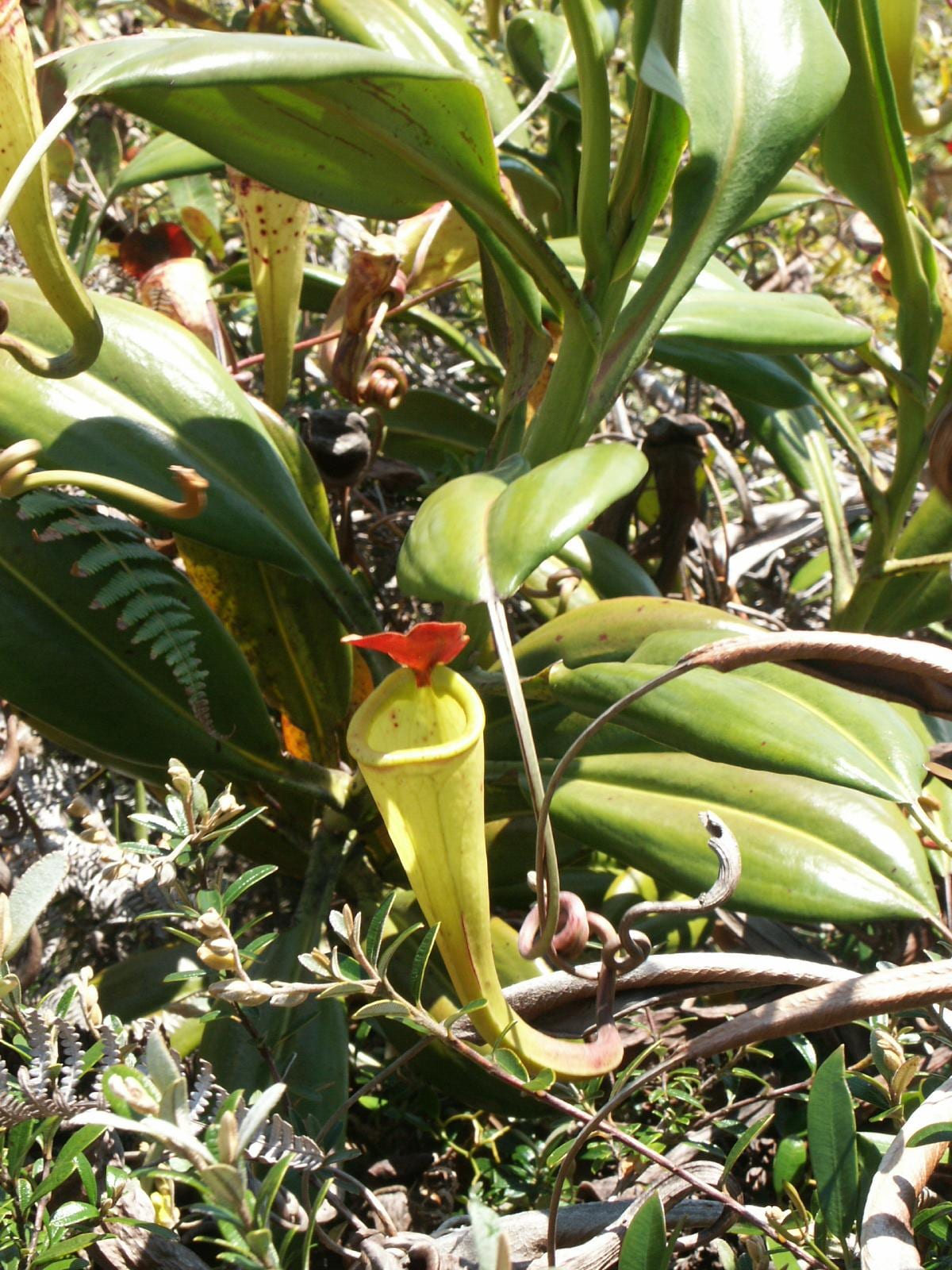
 © Scott Zona / CC BY 2.0
Nepenthes madagascariensis
Nepenthes madagascariensis is a pitcher plant from the lowland wetlands of eastern Madagascar. Its upper pitchers are slender and funnel-shaped, often yellow, and you can recognize it by the broad peristome and the almost round lid. It was recorded in the 17th century and was the first Nepenthes species known to science. This perennial, semi-shrubby plant grows up to 2 m tall, with upper pitchers about 26 cm high. Its difficulty is rated intermediate, and a warm, humid setup that reflects its lowland wetland origins is the key to growing it well.
View Nepenthes madagascariensis encyclopedia →0% commission on your first sales!Register by September 30, 2026 and your first 2 plants are commission-free!
Grower Wanted!
List your plants on GrowerDirect and sell directly to customers nationwide!
6 Transparency Commitments from GrowerDirect
Every Grower listing discloses variety, origin, light requirements, and difficulty level for Carnivorous Plants. Complete transparency, guaranteed.
- Variety Disclosed
- Real Photos
- Color Information
- Origin Disclosed
- Light Requirements
- Difficulty Level
Browse all 145 varieties
Light Requirements
Difficulty Level
Verified growers wanted for Carnivorous Plants
Growers are signing up now ahead of launch. Subscribe to be notified when new listings go live.
Getting alerts is free with a member account. When new listings match your saved search, we'll notify you by email and in-app.
Browse other categories
Are you growing carnivorous plants?
Register as a grower and connect with buyers directly.
Apply as a growerNepenthes madagascariensis key facts
- Growing Difficulty
- Intermediate
- Lifespan
- Perennial (shrubby)
- Size
- Up to 2 m tall; upper pitchers about 26 cm tall
- Watering
- Very dilute fertilizer at most (catches mainly ants)
- Temperature & Overwintering
- A lowland species that wants warmth and humidity all year. It is cold-sensitive, so keep it in a warm room or heated greenhouse from autumn to spring.
- Light & Placement
- Likes bright light. Grow it in a bright window or greenhouse spot, avoiding only harsh midsummer sun.
- Watering
- Use rain water or water low in dissolved minerals and water before the mix dries out. Do not leave the pot standing in water.
- Soil & Repotting
- Plant in a free-draining, airy mix; pure sphagnum or orchid mix with sphagnum or perlite are common choices.
- Fertilizer
- If using chemical fertilizer, use it at very low strength; an occasional insect dropped into a pitcher is enough.
- Propagation
- Plants are either male or female, so a single plant cannot set seed. Cutting-grown plants are sold, and you can propagate it yourself from stem cuttings.
About Nepenthes madagascariensis
Nepenthes madagascariensis is a perennial pitcher plant from the lowland wetlands of eastern Madagascar, known for its slender, often yellow upper pitchers. It grows up to 2 m tall and suits intermediate growers. Traits, care tips and FAQ.
7 things to know before growing Nepenthes madagascariensis
1Light, warmth, humidity
This lowland species likes warmth and bright light. A window with sunlight filtered through a sheer curtain, or a spot under a plant light, works well, but harsh direct sun can scorch the leaves. Since it comes from wetlands, keep the air humid with a humidifier or an enclosed case, while still allowing gentle air movement so the plant does not stay stuffy.
2Watering and water quality
Because it grows in wetlands, avoid letting the medium dry out completely. Rainwater or purified water low in minerals is gentler on the roots than hard tap water. Keeping a shallow layer of water in the saucer is a common approach, but check that the roots are not left sitting in stagnant water.
3Choosing a potting mix
Look for a lean, acidic mix that holds moisture yet still drains and breathes. Sphagnum moss blended with perlite is a widely used combination. Avoid rich, fertilized soils, which can damage the roots.
4Repotting with care
Repot during the warm season, when the plant is actively growing. The roots are delicate, so do not strip off all the old medium; simply move the plant into a pot one size larger. Afterward, soften the light and keep humidity up while it settles in.
5Seasonal care
In spring and summer, provide plenty of light and humidity to support new leaves and pitchers. As a lowland native it dislikes the cold, so move it to a warm room for autumn and winter and use supplemental light to make up for shorter days. Do not let the medium dry out in winter either.
6Choosing a healthy plant
Choose a plant with active new growth and few dark or damaged spots on the leaves. Use the listing details and photos to check that the base is firm and the roots look healthy. It also helps to read the description of size and condition, since a young plant and one with a long stem will develop differently from here.
7Managing long stems
This semi-shrubby plant can reach up to 2 m in height. When the stem gets long, support it with a stake and trim it back when needed to keep the plant tidy. Upper pitchers form on the extended stem, so how the stem grows affects how the pitchers appear.
Frequently asked questions about Nepenthes madagascariensis
- Q.Can a beginner grow it?
- A.Its difficulty is rated intermediate. It needs warmth, humidity and bright light together, so some experience with Nepenthes makes things easier. If you are new to them, set up the growing environment first and bring the plant home afterward.
- Q.Do I need to feed it insects?
- A.It is not required. The pitchers are part of the leaves, and the plant also grows through photosynthesis. If you do feed it, keep the amount small and do not overfill the pitchers.
- Q.How large does it get?
- A.It grows up to 2 m tall, and the upper pitchers are about 26 cm high. It is a perennial with a semi-shrubby habit and a lengthening stem, so a stake or other support helps. Choose its spot with the mature size in mind.
- Q.Why is my plant not forming pitchers?
- A.Common causes are too little light, low humidity, or a sudden change in conditions. Start by reviewing the brightness and how dry the air is, then check the water quality and the condition of the medium. It also helps to give the plant some time to adjust to a new environment.
- Q.How can I tell it from other Nepenthes?
- A.Look for the slender, funnel-shaped upper pitchers that are often yellow, the broad peristome and the almost round lid. Pitcher color and shape can vary with growth stage and conditions, so it is reassuring to also check the label and listing details.
Handy Growing Tools for Nepenthes madagascariensis
Learn more about Nepenthes madagascariensis in the encyclopedia
View Nepenthes madagascariensis encyclopedia entry →
Care difficulty, size, origin and light needs — all basics covered.
More in this category
Can't find the plant you're looking for?
Post your wishes for free and growers with matching plants will contact you with introductions.