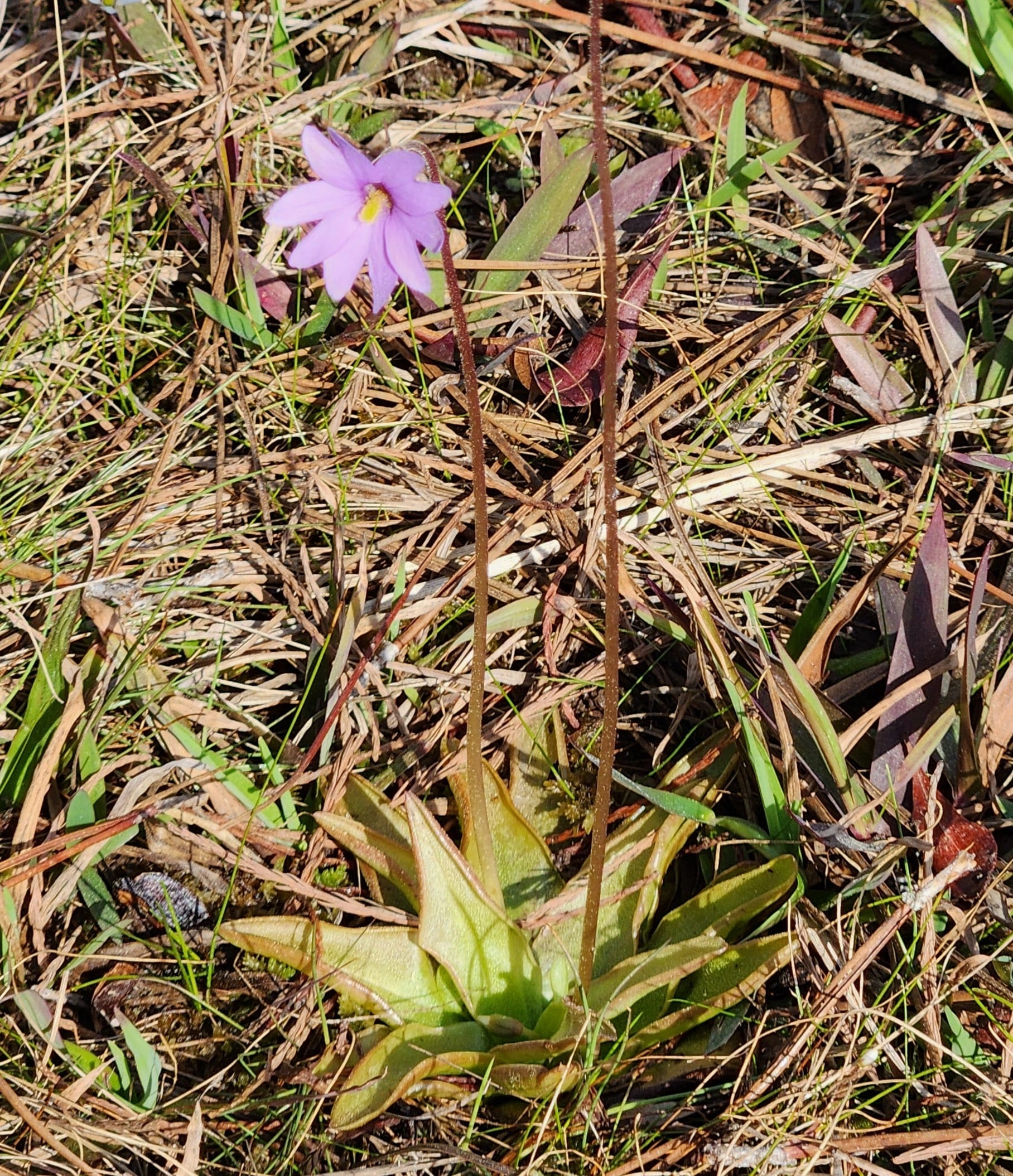
 © KyleGorczynski / CC0
Chapman's butterwort
Pinguicula planifolia, commonly known as Chapman's butterwort, is a carnivorous plant native to wetland habitats along the Gulf Coast of the United States. Its flat, thin leaves spread close to the ground and turn a deep reddish-purple when grown in bright light, giving the rosette a striking color. In bloom, it sends up purple flowers with petals cut nearly halfway to their base, adding a delicate contrast to the bold foliage. As a true wetland species, it tolerates being submerged in water and even thrives that way, which sets its care apart from many other carnivorous plants and makes it a variety best suited to growers with some prior experience.
View Chapman's butterwort encyclopedia →0% commission on your first sales!Register by September 30, 2026 and your first 2 plants are commission-free!
Grower Wanted!
List your plants on GrowerDirect and sell directly to customers nationwide!
6 Transparency Commitments from GrowerDirect
Every Grower listing discloses variety, origin, light requirements, and difficulty level for Carnivorous Plants. Complete transparency, guaranteed.
- Variety Disclosed
- Real Photos
- Color Information
- Origin Disclosed
- Light Requirements
- Difficulty Level
Browse all 145 varieties
Light Requirements
Difficulty Level
Verified growers wanted for Carnivorous Plants
Growers are signing up now ahead of launch. Subscribe to be notified when new listings go live.
Getting alerts is free with a member account. When new listings match your saved search, we'll notify you by email and in-app.
Browse other categories
Are you growing carnivorous plants?
Register as a grower and connect with buyers directly.
Apply as a growerChapman's butterwort key facts
- Growing Difficulty
- Advanced
- Lifespan
- Short-lived perennial
- Size
- Little published size data
- Watering
- Little or no fertilizer needed (catches small insects on sticky leaves)
- Light & Placement
- Plenty of sun turns the leaves deep red-purple; grow it in a bright spot or under lights.
- Watering
- A wetland plant; keep the mix constantly damp. It is even submerged at times in the wild, so never let it dry out.
- Temperature & Overwintering
- A warm temperate species with no adaptations to freezing; keep it frost-free in winter.
- Soil & Repotting
- Grow in 3 parts peat, 1 part silica sand and 1 part perlite, or in pure peat. Replant into fresh mix if moss or cyanobacteria start to cover it.
- Propagation
- A short-lived perennial, so collecting seed is essential to keep it long term. It needs hand pollination with a small brush. Seed germinates in 2-4 weeks at above 15°C.
About Chapman's butterwort
A carnivorous plant from Gulf Coast wetlands, its leaves turn deep reddish-purple in sun and it bears purple flowers. This wetland species tolerates submersion and suits experienced growers.
7 things to know before growing Chapman's butterwort
1Give It Plenty of Light
Bright light is essential for the leaves to develop their deep reddish-purple color. In partial shade the leaves tend to stay a pale green, so place the plant near a bright window with filtered sunlight.
2Keep It Standing in Water
Matching its native wetland habitat, the standard care method is to keep the pot sitting in a shallow tray of water at all times. Never let the growing medium dry out, as this species is especially sensitive to drought.
3Use a Well-Draining, Moisture-Retentive Mix
A blend of peat moss and river sand (or perlite) works well for this species. Using a clean mix low in organic matter helps reduce the risk of root rot and disease.
4Repot When Needed
When the surface of the mix becomes covered with moss or blue-green algae, repot into fresh mix. A blend of three parts peat, one part silica sand, and one part perlite, or pure peat, is commonly used.
5Same Leaves Year-Round
This warm-temperate species keeps the same leaves all year and has no dormant period. Plenty of sun turns the leaves a deep reddish purple. It has no way to withstand freezing, so keep it somewhere frost-free in winter.
6Check Leaf Color and Rosette Condition
When choosing a plant, look for one with deep reddish-purple leaves and firm leaf tips, signs it has been grown in adequate light. Also check the base of the rosette for any buildup of dead leaves.
7Renew Plants from Seed
Because Pinguicula planifolia is a short-lived perennial, collecting seed is essential for keeping it long term. It doesn't self-pollinate easily, so transfer pollen with a small brush. Seeds germinate in about two to four weeks at 15°C or above.
Frequently asked questions about Chapman's butterwort
- Q.Is this a good plant for beginners?
- A.Pinguicula planifolia is generally considered an advanced-level plant. It requires care quite different from other carnivorous plants, such as keeping the medium constantly moist, so it's best attempted after you've gained some carnivorous plant experience.
- Q.How often should I water it?
- A.As a wetland species, it doesn't tolerate drying out, so the standard method is to keep the pot standing in a shallow water tray. Top up the water before the growing medium dries out, keeping it consistently moist.
- Q.Why aren't my leaves turning reddish-purple?
- A.Insufficient light is the most likely cause. The leaves develop their deep reddish-purple color under strong light, so try moving the plant to a brighter spot, such as a window with filtered sunlight.
- Q.How long can I expect to keep this plant?
- A.It's a short-lived perennial, so keeping the same plant going indefinitely isn't realistic. Hand-pollinate with a brush, collect the seed, and raise new plants to carry the line forward.
- Q.What do the flowers look like?
- A.It produces purple flowers with petals that are deeply cut about halfway to their base. This delicate flower form offers a nice contrast to the plant's vivid reddish-purple foliage.
Handy Growing Tools for Chapman's butterwort
Learn more about Chapman's butterwort in the encyclopedia
View Chapman's butterwort encyclopedia entry →
Care difficulty, size, origin and light needs — all basics covered.
More in this category
Can't find the plant you're looking for?
Post your wishes for free and growers with matching plants will contact you with introductions.