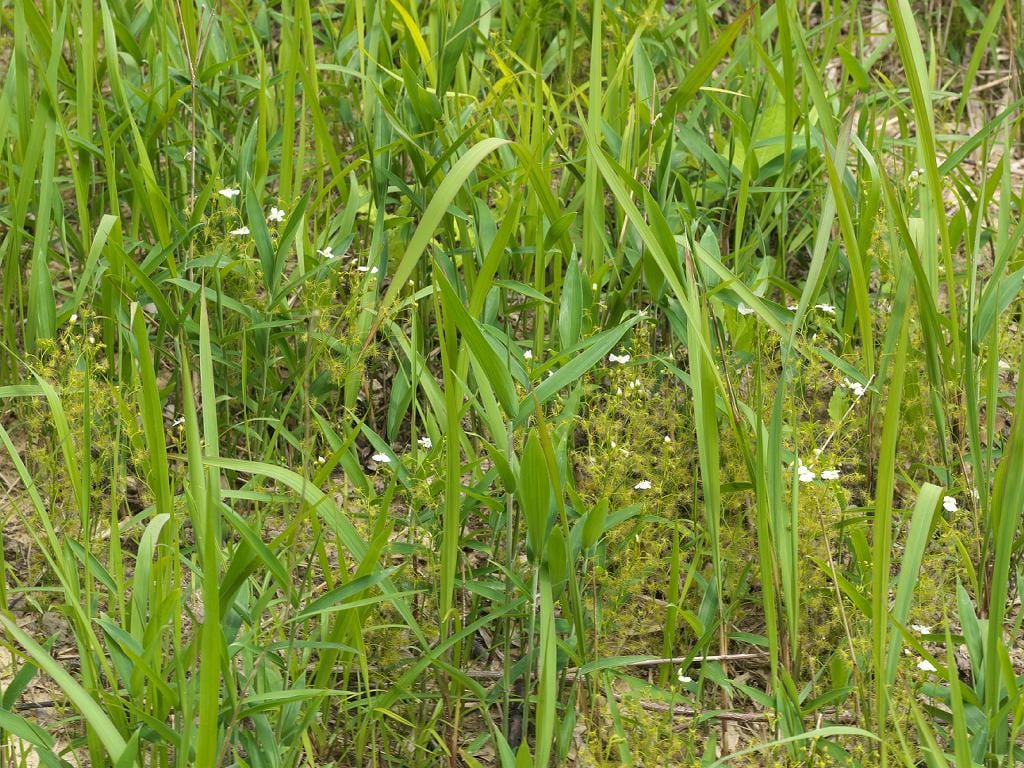
 © Keisotyo / CC BY-SA 4.0
Shield sundew
Ishimochisou (Drosera peltata), known in English as the shield sundew, is a native Japanese carnivorous plant related to the classic sundews. Its crescent-shaped leaves are lined with sticky glandular hairs strong enough to trap insects, and, according to its Japanese name, even lift tiny pebbles. Each spring, a slender stem rises from a small underground tuber, unfurling leaves in an alternating pattern, and by early summer the plant produces delicate white flowers. Once flowering ends, the foliage dies back completely, and the plant spends summer resting as a dormant tuber underground, a dramatic seasonal cycle that sets it apart from many other sundews. Because this cycle calls for careful, season-by-season care, it is generally considered a plant for experienced growers, but that challenge is part of its appeal.
View Shield sundew encyclopedia →0% commission on your first sales!Register by September 30, 2026 and your first 2 plants are commission-free!
Grower Wanted!
List your plants on GrowerDirect and sell directly to customers nationwide!
6 Transparency Commitments from GrowerDirect
Every Grower listing discloses variety, origin, light requirements, and difficulty level for Carnivorous Plants. Complete transparency, guaranteed.
- Variety Disclosed
- Real Photos
- Color Information
- Origin Disclosed
- Light Requirements
- Difficulty Level
Browse all 145 varieties
Light Requirements
Difficulty Level
Verified growers wanted for Carnivorous Plants
Growers are signing up now ahead of launch. Subscribe to be notified when new listings go live.
Getting alerts is free with a member account. When new listings match your saved search, we'll notify you by email and in-app.
Browse other categories
Are you growing carnivorous plants?
Register as a grower and connect with buyers directly.
Apply as a growerShield sundew key facts
- Growing Difficulty
- Advanced
- Lifespan
- Perennial (rests as a tuber in summer)
- Size
- 10-30 cm tall (Japanese plants)
- Watering
- No fertilizer (catches small insects)
- Light & Placement
- Grow in a bright, cool spot. Tuberous sundews are tough when cool and bright, but sustained heat above 25°C makes the top growth die back early.
- Watering
- Keep moist on a shallow water tray while growing. After the top dies back following flowering, cut back water and keep the soil just barely damp so the tuber does not rot.
- Soil & Repotting
- Roots are long and fragile, so use a deep pot and a mix of about 1 part peat to 2 parts sand. Avoid repotting while growing; do it during dormancy.
- Dormancy Care
- It rests as a tuber over summer; do not throw it out when the top dies. The resting tuber is hard to monitor, so long-term cultivation takes care.
- Fertilizer
- No fertilizer in the soil; small insects it catches supply nutrients.
- Pests & Cautions
- It is threatened in the wild in Japan; never collect wild plants and buy only nursery-propagated stock.
About Shield sundew
Ishimochisou (shield sundew) is a Japanese native carnivorous plant with crescent-shaped sticky leaves, spring growth from a tuber, early-summer white flowers, and summer dormancy, a rewarding challenge for experienced growers.
7 things to know before growing Shield sundew
1Sun and Cool Conditions
During the growing season, keep it in a cool, sunny spot. Tuberous sundews are tough when kept bright and cool, but extended heat above 25°C makes the foliage die back early. Once the top growth dies down for dormancy in summer, take care not to let the tuber rot.
2Tray Watering
During active growth the soil must stay consistently moist, so standing the pot in a shallow saucer of water, known as tray watering, is the standard method. Cut back sharply once summer dormancy begins, keeping the soil only slightly damp. Switching between these two modes with the seasons matters, since the plant tolerates neither drought nor waterlogging well.
3Soil Mix
The roots are long and easily damaged, so use a deep pot and a mix of about one part peat to two parts sand. Keep fertilizer out of the soil and water with rainwater or purified water. Avoid repotting during growth; do it while the plant is dormant.
4Repot During Dormancy
Repot only during summer dormancy, once the foliage has died back. The tuber is very small and delicate, so lift it gently along with the surrounding soil and avoid letting it dry out completely. Repotting during active growth can seriously weaken the plant.
5A Changing Seasonal Cycle
In spring it sprouts from an underground tuber and sends up a stem, flowering white in May and June. From summer on the foliage dies back, leaving only a dormant tuber. This is easy to mistake for death, but it's a normal part of the cycle, so don't throw it out: cut back on water to keep the soil just slightly moist so the tuber doesn't rot.
6Check the Tuber
When choosing a plant, look beyond the leaves to whether the tuber feels plump and firm, since this is a key sign of health. If you acquire one during dormancy, dieback of the foliage is completely normal, so check the soil condition and any accompanying notes instead.
7No Feeding Needed
The sticky glands on the crescent-shaped leaves naturally trap small insects, so there is generally no need to feed the plant by hand. Leaves whose glue has dried up are simply reaching the end of their natural lifespan, not a sign that the whole plant is struggling.
Frequently asked questions about Shield sundew
- Q.My leaves died back in summer, is it dead?
- A.No, this is normal. Ishimochisou dies back to a dormant tuber from summer on as part of its regular cycle. Keep the soil only slightly moist so the tuber doesn't rot, and it will sprout again in spring.
- Q.Should I feed it insects to help it grow?
- A.Feeding is not necessary in most cases. The sticky leaves catch small insects naturally when the plant is kept outdoors, and hand-feeding can actually damage the delicate leaves.
- Q.Can I water it the same way as a regular houseplant?
- A.No, watering needs change significantly with the season. Keep the soil constantly moist with tray watering during active growth, then cut back in summer dormancy, and use rainwater or purified water rather than tap water whenever possible.
- Q.When is the best time to repot?
- A.The best time is during summer dormancy, after the foliage has died back. The tuber is small and delicate, so repotting during active growth should be avoided.
- Q.Is this a good plant for beginners?
- A.It is generally considered a plant for experienced growers, since it requires careful, season-specific adjustments to watering and soil conditions. It is best approached after gaining some experience growing other carnivorous plants.
Handy Growing Tools for Shield sundew
Learn more about Shield sundew in the encyclopedia
View Shield sundew encyclopedia entry →
Care difficulty, size, origin and light needs — all basics covered.
More in this category
Can't find the plant you're looking for?
Post your wishes for free and growers with matching plants will contact you with introductions.