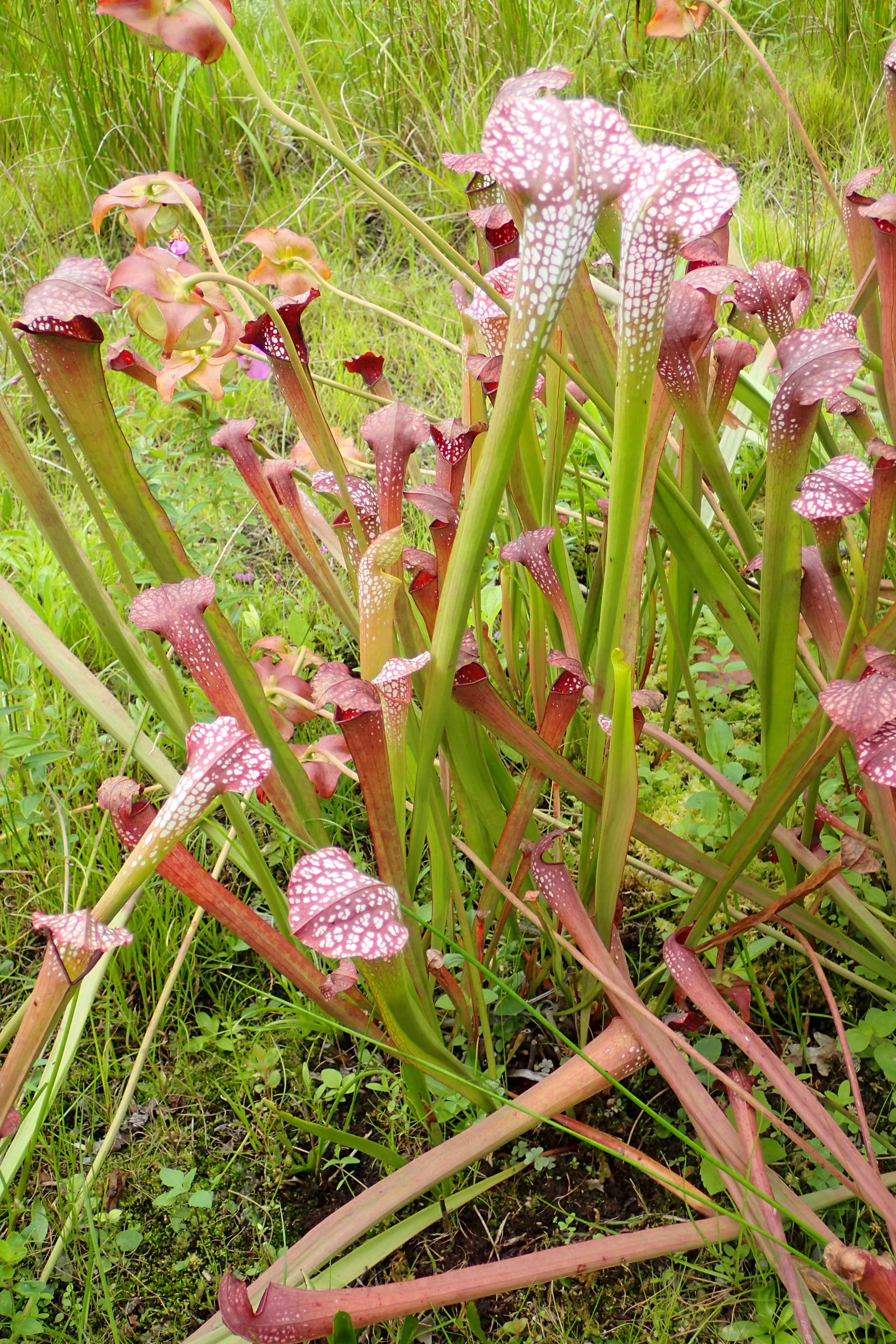
 © Krzysztof Ziarnek, Kenraiz / CC BY-SA 4.0
Sarracenia × excellens
Sarracenia × excellens is a natural hybrid between S. leucophylla, known for its strikingly white pitcher tops, and S. minor, whose hood curls forward like a cap. The upper pitchers show the pale, net-like veining and wavy lid edges inherited from leucophylla, while the hood arching down over the mouth and the scattering of white speckles echo minor's influence. Each leaf carries a blend of both parents' character. It's considered an easy, beginner-friendly Sarracenia, and as a perennial it can be divided and grown on for many years.
View Sarracenia × excellens encyclopedia →0% commission on your first sales!Register by September 30, 2026 and your first 2 plants are commission-free!
Grower Wanted!
List your plants on GrowerDirect and sell directly to customers nationwide!
6 Transparency Commitments from GrowerDirect
Every Grower listing discloses variety, origin, light requirements, and difficulty level for Carnivorous Plants. Complete transparency, guaranteed.
- Variety Disclosed
- Real Photos
- Color Information
- Origin Disclosed
- Light Requirements
- Difficulty Level
Browse all 145 varieties
Light Requirements
Difficulty Level
Verified growers wanted for Carnivorous Plants
Growers are signing up now ahead of launch. Subscribe to be notified when new listings go live.
Getting alerts is free with a member account. When new listings match your saved search, we'll notify you by email and in-app.
Browse other categories
Are you growing carnivorous plants?
Register as a grower and connect with buyers directly.
Apply as a growerSarracenia × excellens key facts
- Growing Difficulty
- Beginner-friendly
- Lifespan
- Perennial (can be kept for many years by division)
- Size
- Little published size data (intermediate between the parents)
- Watering
- No fertilizer (catches insects)
- Light & Placement
- Grow outdoors in full sun; with too little light the colour is poor and the pitchers are weak.
- Watering
- Keep the pot standing in about 4-6 cm of water at all times and never let it dry out. Use rain water or other water low in dissolved minerals.
- Soil & Repotting
- A 1:1 peat and sand mix is the standard. Divide and repot well-grown plants every 3 or 4 years.
- Temperature & Overwintering
- Let it go dormant in winter. Fully dormant plants survive a few weeks frozen solid in their pots, but early and late frosts are the danger. Keep the winter spot cool, not warm.
- Fertilizer
- Do not fertilize the soil of mature plants; it can cause rhizome rot. Plenty of sun and access to prey are enough.
- Pruning & Grooming
- The plant recovers nutrients from old leaves, so cut off only the brown, dead parts.
About Sarracenia × excellens
Sarracenia × excellens is a natural hybrid of S. leucophylla and S. minor, with netted white pitcher tops, a drooping hood, and pale speckles. An easy-to-grow, beginner-friendly perennial pitcher plant.
7 things to know before growing Sarracenia × excellens
1Give It Full Sun
Sarracenia thrives in strong light, so grow it outdoors in a bright, well-ventilated spot to bring out vivid pitcher coloring and netted veining. A windowsill indoors usually doesn't provide enough light, so outdoor or greenhouse growing is best.
2Keep It in a Water Tray
Since it grows naturally in boggy ground, stand the pot in a shallow tray of water to keep the soil constantly moist. If your tap water is mineral-heavy, rainwater or purified water helps keep the plant healthier long-term.
3Use a Nutrient-Free Mix
Pot it in a mix of sphagnum moss, peat moss, and perlite with no added fertilizer. Ordinary potting soil for houseplants contains nutrients and additives that can damage the roots, so avoid it.
4Repot and Divide
Once a plant is well grown, repot and divide it every three to four years. The standard mix is equal parts peat and sand.
5Plan for Winter Dormancy
From autumn onward the pitchers die back and the plant enters dormancy, surviving winter mainly as roots. Water less often during dormancy, but never let the growing medium dry out completely.
6Enjoy Individual Variation
Because it's a natural hybrid, the extent of white netting and how far the hood droops varies from plant to plant. Comparing photos or plants in person to find markings you like is part of the fun.
7No Need to Feed Insects
The pitchers lure and trap insects on their own, so there's usually no need to feed the plant by hand. Kept outdoors, insects will find their way in naturally and provide nutrients.
Frequently asked questions about Sarracenia × excellens
- Q.Is Sarracenia × excellens suitable for beginners?
- A.Yes, it's considered an easy, beginner-friendly variety. As long as you give it plenty of light and keep it watered using the tray method, it doesn't require special equipment to grow well.
- Q.Can it be grown indoors?
- A.It can be grown indoors, but pitcher coloring often turns paler due to insufficient light. Growing it outdoors or on a balcony, somewhere bright and well-ventilated, is recommended.
- Q.How large does it grow?
- A.Since it's a hybrid, detailed size data is limited, but it's generally described as falling between its two parents, S. leucophylla and S. minor. Actual size also depends on growing conditions.
- Q.Does it die back in winter?
- A.The pitchers die back in winter, but this is a natural dormancy period, not the death of the plant. New growth emerges from the roots again in spring.
- Q.Do I need to feed it insects myself?
- A.Generally no, feeding isn't necessary. The pitchers naturally lure and trap insects, so a plant kept outdoors will get nutrients on its own.
Handy Growing Tools for Sarracenia × excellens
Learn more about Sarracenia × excellens in the encyclopedia
View Sarracenia × excellens encyclopedia entry →
Care difficulty, size, origin and light needs — all basics covered.
More in this category
Can't find the plant you're looking for?
Post your wishes for free and growers with matching plants will contact you with introductions.