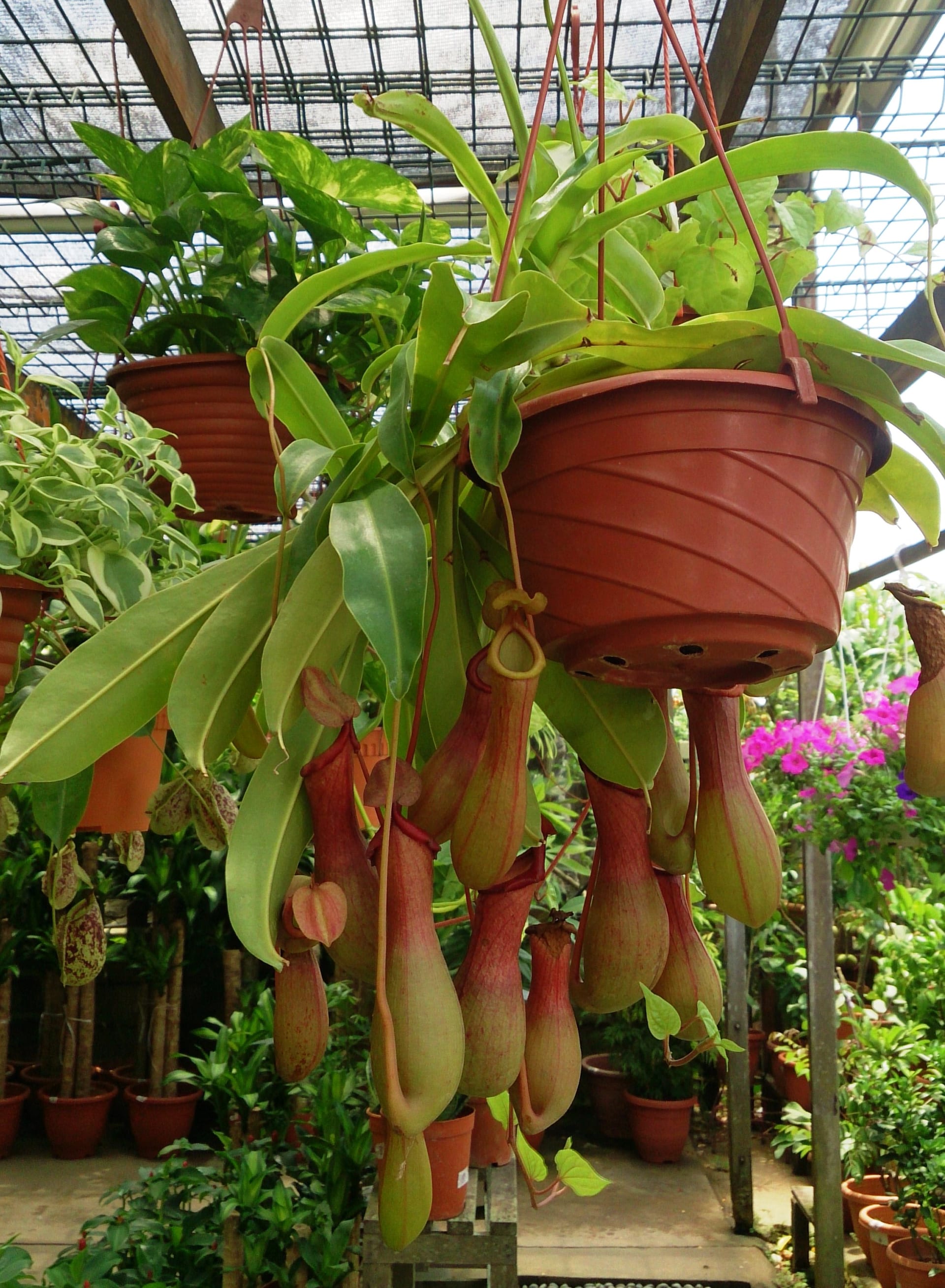
 © Mokkie / CC BY-SA 3.0
Nepenthes × ventrata
Nepenthes × ventrata is one of the most commonly found carnivorous plants at garden centers and home improvement stores. A hybrid of Nepenthes ventricosa and Nepenthes alata (broadly defined), both native to the Philippines, it produces green pitchers flushed with red that hang from its trailing vines. Hardy and highly adaptable, it's considered one of the easiest carnivorous plants for beginners and does well in a bright indoor spot. It's sometimes sold under the name "Nepenthes alata." As a perennial vine, it can be enjoyed for years with basic care.
View Nepenthes × ventrata encyclopedia →0% commission on your first sales!Register by September 30, 2026 and your first 2 plants are commission-free!
Grower Wanted!
List your plants on GrowerDirect and sell directly to customers nationwide!
6 Transparency Commitments from GrowerDirect
Every Grower listing discloses variety, origin, light requirements, and difficulty level for Carnivorous Plants. Complete transparency, guaranteed.
- Variety Disclosed
- Real Photos
- Color Information
- Origin Disclosed
- Light Requirements
- Difficulty Level
Browse all 145 varieties
Light Requirements
Difficulty Level
Verified growers wanted for Carnivorous Plants
Growers are signing up now ahead of launch. Subscribe to be notified when new listings go live.
Getting alerts is free with a member account. When new listings match your saved search, we'll notify you by email and in-app.
Browse other categories
Are you growing carnivorous plants?
Register as a grower and connect with buyers directly.
Apply as a growerNepenthes × ventrata key facts
- Growing Difficulty
- Beginner-friendly
- Lifespan
- Perennial climber
- Size
- Few published measurements
- Watering
- Very dilute fertilizer at most (catches insects)
- Light & Placement
- Grow at a bright window; pitcher plants with thick, glossy leaves do well where they get some direct sun.
- Watering
- Use rain water or water low in dissolved minerals and water before the mix dries out. Do not leave the pot standing in water; a free-draining mix keeps the roots healthy.
- Temperature & Overwintering
- A hybrid with highland affinities that appreciates cooler nights; bring it into a warm room for winter.
- Soil & Repotting
- Plant in a free-draining, airy mix; pure sphagnum or orchid mix with sphagnum or perlite are common choices.
- Fertilizer
- If using chemical fertilizer, use it at very low strength; an occasional insect dropped into a pitcher is enough.
- Propagation
- Cuttings root in damp sphagnum inside a bag or case in one to two months and start producing pitchers after about six months. Leggy vines cut back can be used as cuttings.
About Nepenthes × ventrata
Nepenthes × ventrata is a beginner-friendly carnivorous plant with green-and-red pitcher traps on trailing vines. This hardy perennial hybrid is easy to grow indoors — here are the care basics and common questions.
7 things to know before growing Nepenthes × ventrata
1Light & Placement
Nepenthes × ventrata prefers bright, indirect light, such as near a window filtered by a sheer curtain. Strong direct sun, especially in summer afternoons, can scorch the leaves, so adjust its position with the seasons.
2Watering Basics
Water thoroughly once the surface of the growing medium starts to dry out, and avoid letting it dry out completely. Since it enjoys humid air, misting the leaves or keeping some water near the pot can help raise local humidity.
3Well-Draining Mix
This plant does best in a mix that balances drainage and moisture retention, often based on sphagnum moss and perlite. Avoid rich, general-purpose potting soil, which can damage the roots.
4When to Repot
Repot into a slightly larger pot once the roots fill the container, ideally during the warmer growing season. After repotting, keep it out of direct sun in bright shade until the roots settle.
5Seasonal Care
During its active growing season, the vine extends vigorously, so give it room with a stake or a hanging spot. Growth slows as temperatures drop, so water less often and keep it away from cold drafts.
6Choosing a Plant
Look for a plant with sturdy vines, firm leaves, and a few pitchers already formed, as these tend to establish more easily. Since it's a long-lived perennial vine, there's no need to rush — let it adjust gradually to its new environment.
7Browning Pitchers Are Normal
Older pitchers naturally turn brown and die back once they've finished their job — this is a normal part of the growth cycle, not a sign of a problem. Simply trim away spent pitchers and watch for new vines and pitchers to develop.
Frequently asked questions about Nepenthes × ventrata
- Q.Is this a good plant for beginners?
- A.Yes, Nepenthes × ventrata is considered one of the more beginner-friendly carnivorous plants. It's hardy and adaptable, so following the basics of light and watering is usually enough to keep it thriving long-term.
- Q.Can it be grown indoors only?
- A.Yes, it can be grown entirely indoors as long as it gets a bright spot with plenty of indirect light. Since it enjoys humid air, misting the leaves can help make up for drier indoor conditions.
- Q.Why isn't it forming pitchers?
- A.When light or humidity is insufficient, the vine may keep growing without producing many pitchers. Moving it to a brighter spot and raising the surrounding humidity often encourages more pitchers to form.
- Q.How is it different from "Nepenthes alata"?
- A.Nepenthes × ventrata is a hybrid of Nepenthes ventricosa and Nepenthes alata (broadly defined), and it's often sold under the name "Nepenthes alata." Since care requirements are essentially the same either way, the labeling isn't something to worry too much about.
- Q.How long can it be kept as a houseplant?
- A.As a perennial vine, Nepenthes × ventrata can be grown for many years with proper care. Keeping up with basics like repotting lets you enjoy it as a long-term houseplant.
Handy Growing Tools for Nepenthes × ventrata
Learn more about Nepenthes × ventrata in the encyclopedia
View Nepenthes × ventrata encyclopedia entry →
Care difficulty, size, origin and light needs — all basics covered.
More in this category
Can't find the plant you're looking for?
Post your wishes for free and growers with matching plants will contact you with introductions.