 © Cooleyray / CC BY-SA 4.0
Drosera falconeri
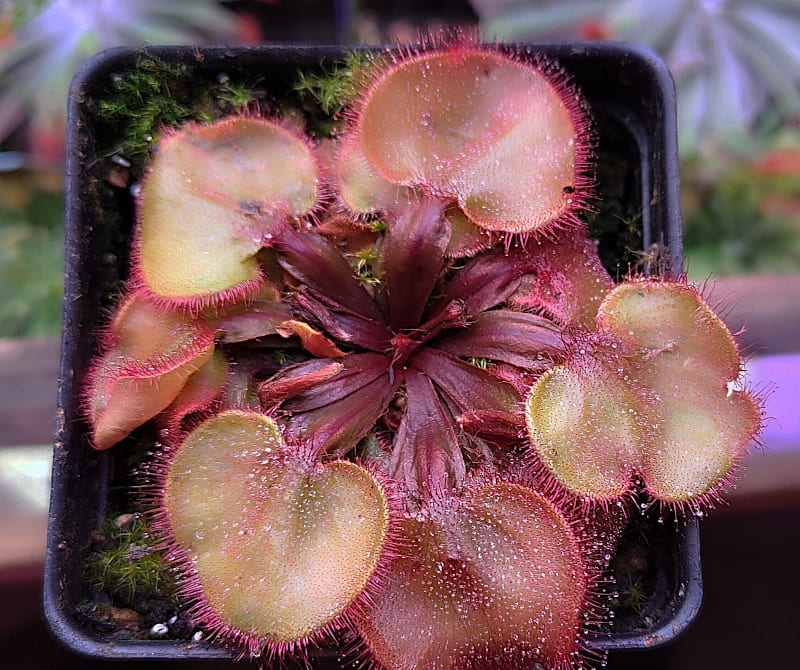
Drosera falconeri is a sundew native to the tropical woodlands of northern Australia, where it presses its round, kidney-shaped leaves flat against the ground in a rosette that brings a Venus flytrap to mind more than a typical sundew. The leaves stay compact, about 1.5 cm long and 2 cm wide, reaching up to 3 cm across on mature plants. Unlike most carnivorous plants, which favor acidic bogs, this species is one of the rare few that grows naturally in alkaline, lime-rich soil. It dies back to a resting bud through the dry season, and its particular needs make it a plant best suited to growers with some carnivorous-plant experience already under their belt.
View Drosera falconeri encyclopedia →0% commission on your first sales!Register by September 30, 2026 and your first 2 plants are commission-free!
Grower Wanted!
List your plants on GrowerDirect and sell directly to customers nationwide!
6 Transparency Commitments from GrowerDirect
Every Grower listing discloses variety, origin, light requirements, and difficulty level for Carnivorous Plants. Complete transparency, guaranteed.
- Variety Disclosed
- Real Photos
- Color Information
- Origin Disclosed
- Light Requirements
- Difficulty Level
Browse all 145 varieties
Light Requirements
Difficulty Level
Verified growers wanted for Carnivorous Plants
Growers are signing up now ahead of launch. Subscribe to be notified when new listings go live.
Getting alerts is free with a member account. When new listings match your saved search, we'll notify you by email and in-app.
Browse other categories
Are you growing carnivorous plants?
Register as a grower and connect with buyers directly.
Apply as a growerDrosera falconeri key facts
- Growing Difficulty
- Advanced
- Lifespan
- Perennial (rests as a bud in the dry season)
- Size
- Leaf blades about 1.5 cm long and 2 cm wide (to 3 cm wide on old plants)
- Watering
- No fertilizer (catches small insects)
- Temperature & Overwintering
- The petiolaris-complex sundews like the low 30s °C in summer and dislike falling below 18°C at any time. Japanese winters require heating; many growers use heat mats.
- Light & Placement
- Needs strong light. Wild plants are deep red, but in cultivation weaker light tends to leave them greener.
- Watering
- Keep small pots in a tray of water: higher in summer, lower in winter, even letting it dry for a few days. Use pure water.
- Dormancy Care
- In cultivation it may grow year-round without a dry-season rest. If it does rest, it forms a tight bud at soil level; do not mistake it for dead.
- Propagation
- It rarely divides and leaf cuttings often fail; submerging pulled leaves in pure water is a known method.
About Drosera falconeri
Drosera falconeri is a rare Australian sundew with flat, kidney-shaped leaves resembling a Venus flytrap. It grows naturally in alkaline soil and goes dormant in the dry season, making it a plant for experienced growers.
7 things to know before growing Drosera falconeri
1Light and placement
As a native of tropical northern Australia, this sundew wants strong light and warm temperatures year-round. Because its leaves spread flat rather than growing upright, give it a spot with plenty of open light overhead rather than tall growing space.
2Native to Limestone Soils
While most carnivorous plants grow in acidic soil, this sundew is unusual in growing on limy sand or grey clay of around pH 8 in the wild. In cultivation, though, the biggest challenge is temperature rather than soil: it dislikes dropping below 18°C at any time of year.
3Watering Approach
Stand a small pot in a water tray, keeping the level higher in summer and lower in winter, when letting it dry for a few days is fine. Use purified water.
4Dry-season dormancy
In its natural dry season, the above-ground growth dies back and the plant rests as a small bud at soil level. Cut back on watering during this period, then gradually resume as new growth signals the bud is waking up.
5Keep It Warm in Winter
Its relatives prefer the low 30s °C in summer and dislike falling below 18°C at any time. Japanese winters call for supplemental heat, and many growers use a heat mat. In cultivation it may skip dormancy and grow year-round.
6Choosing a healthy plant
Leaves typically run about 1.5 cm long and 2 cm wide, though older, well-grown plants can reach 3 cm across. Look for good leaf color, active new growth, and leaves that are clearly producing sticky mucilage.
7Suited to Experienced Growers
It is considered difficult, and the biggest challenge is keeping it warm: it dislikes dropping below 18°C at any time, so winter heating is essential. Building basic sundew-care skills with an easier Drosera first is a reasonable way to prepare.
Frequently asked questions about Drosera falconeri
- Q.Is this the same plant as a Venus flytrap?
- A.No, they belong to different genera. Drosera falconeri's flat, ground-hugging leaves look similar to a Venus flytrap at a glance, but as a true sundew it catches insects with sticky, mucilage-covered glands rather than snapping leaves.
- Q.What kind of soil does it grow in naturally?
- A.In northern Australia it grows on limy sand or grey clay of around pH 8, unlike the acidic soils most carnivorous plants favor. In cultivation, however, keeping it warm is the biggest challenge.
- Q.If the leaves die back in the dry season, has something gone wrong?
- A.No, that's normal behavior. The above-ground leaves naturally die back to a resting bud at soil level during the dry season. Cut back on watering and let the plant rest until new growth signals it's waking up.
- Q.Can beginners grow this plant?
- A.It is considered difficult and best for experienced growers. It dislikes falling below 18°C at any time, so you need equipment to keep it warm, including winter heating. Gaining experience with an easier Drosera first is a good way to prepare.
- Q.How big does this plant get?
- A.The leaves are compact, typically around 1.5 cm long and 2 cm wide. On older, well-established plants the leaf width can reach about 3 cm.
Handy Growing Tools for Drosera falconeri
Learn more about Drosera falconeri in the encyclopedia
View Drosera falconeri encyclopedia entry →
Care difficulty, size, origin and light needs — all basics covered.
More in this category
Can't find the plant you're looking for?
Post your wishes for free and growers with matching plants will contact you with introductions.