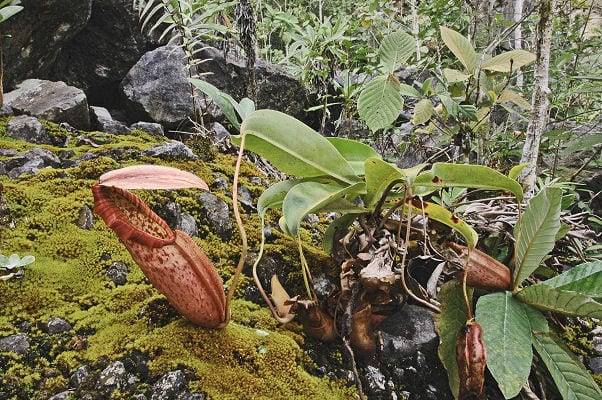
 © The original uploader was XQ fan at English Wikipedia. / Public domain
Nepenthes northiana
Nepenthes northiana is a large pitcher plant found only on limestone cliffs around Bau in Sarawak, Borneo. Its red-speckled pitchers can reach up to 40cm tall, with a broad, wavy peristome that curls dramatically along both sides — the plant's signature feature. The vine itself can stretch up to 10 meters as it matures, growing more striking with age. This advanced-level species demands real growing experience, but the reward is a spectacular, larger-than-life pitcher plant, making it a rewarding choice for enthusiasts who want carnivorous plants at their most dramatic.
View Nepenthes northiana encyclopedia →0% commission on your first sales!Register by September 30, 2026 and your first 2 plants are commission-free!
Grower Wanted!
List your plants on GrowerDirect and sell directly to customers nationwide!
6 Transparency Commitments from GrowerDirect
Every Grower listing discloses variety, origin, light requirements, and difficulty level for Carnivorous Plants. Complete transparency, guaranteed.
- Variety Disclosed
- Real Photos
- Color Information
- Origin Disclosed
- Light Requirements
- Difficulty Level
Browse all 145 varieties
Light Requirements
Difficulty Level
Verified growers wanted for Carnivorous Plants
Growers are signing up now ahead of launch. Subscribe to be notified when new listings go live.
Getting alerts is free with a member account. When new listings match your saved search, we'll notify you by email and in-app.
Browse other categories
Are you growing carnivorous plants?
Register as a grower and connect with buyers directly.
Apply as a growerNepenthes northiana key facts
- Growing Difficulty
- Advanced
- Lifespan
- Perennial climber
- Size
- Lower pitchers up to 40 cm tall and 15 cm wide; stems to 10 m
- Watering
- Very dilute fertilizer at most (catches insects)
- Temperature & Overwintering
- A lowland plant that likes warmth all year; keep it in a warm, fairly humid room through winter.
- Light & Placement
- It grows on exposed cliffs and likes bright light; in low light it rarely forms its big pitchers.
- Watering
- Use rain water or water low in dissolved minerals and water before the mix dries out. Do not leave the pot standing in water; a free-draining mix keeps the roots healthy.
- Soil & Repotting
- In the wild it grows only on limestone; in cultivation use a free-draining mix and avoid soggy roots.
- Fertilizer
- If using chemical fertilizer, use it at very low strength; an occasional insect dropped into a pitcher is enough.
- Pests & Cautions
- Wild populations have been reduced by over-collection. Buy only seed-grown or tissue-cultured plants.
About Nepenthes northiana
Nepenthes northiana is a large pitcher plant native to Borneo's limestone cliffs. Its red-spotted pitchers reach 40cm with a distinctive wavy rim, on vines that can grow to 10 meters — a perennial for experienced growers.
7 things to know before growing Nepenthes northiana
1Needs bright light and humidity
As a species native to open limestone cliffs, it prefers bright light. Direct summer sun outdoors can be too intense, so light shading such as a sheer curtain works well. A greenhouse or terrarium that holds humidity suits it better than a dry indoor room.
2Keep It Watered, Not Waterlogged
Water thoroughly before the mix dries out completely, but don't leave water standing in the saucer; use a free-draining mix so the roots don't stay soggy. Use rainwater or other water low in dissolved salts.
3Use a well-draining, moisture-retentive mix
A mix combining sphagnum moss, perlite, and similar materials that balances drainage with water retention works well. A commercial Nepenthes potting mix is an easy option. Avoid ordinary nutrient-rich potting soil, which can damage the roots.
4Repot as the vine lengthens
Since the vine can eventually reach 10 meters, repot into a larger container once roots fill the pot. The best time is during the warm growing season. Slide the whole root ball out gently with the surrounding medium to avoid damaging the roots.
5Requires warmth even in winter
Because it originates from tropical lowlands, this species is sensitive to cold and needs protection from low winter temperatures. Keep it in a warm indoor spot or greenhouse with stable temperatures year-round, and avoid sudden temperature swings.
6Check the vine and root condition
When choosing a plant, look for firm vines and leaves without much discoloration or damage. Since this is an advanced-level species, starting with a somewhat established plant can make it easier to get a feel for its care.
7Don't worry if pitchers stop forming
There are times, especially with young plants or after a change in environment, when pitchers form less readily. Keeping humidity and light stable and continuing patient care is the best path toward large, well-formed pitchers.
Frequently asked questions about Nepenthes northiana
- Q.Can it be grown indoors?
- A.Indoor growing is possible as long as humidity stays high, but pitchers tend to form poorly in dry conditions. A terrarium or greenhouse where humidity is easier to manage suits it better.
- Q.Is this suitable for beginners?
- A.This species is considered suitable for experienced growers. It's best approached after gaining some basic experience growing other Nepenthes first.
- Q.How large does it grow?
- A.The lower pitchers reach about 40cm in height and 15cm in width, and the vine can eventually stretch up to 10 meters. It's a species that grows large gradually, over time.
- Q.Where should it be placed?
- A.Since it's native to open limestone cliffs, it prefers bright light and high humidity. Avoid overly intense direct sun and provide light shading instead.
- Q.What should I know about overwintering?
- A.As a plant native to tropical regions, it is sensitive to cold. In winter, keep it in a warm indoor location or greenhouse and maintain stable temperatures throughout the year.
Handy Growing Tools for Nepenthes northiana
Learn more about Nepenthes northiana in the encyclopedia
View Nepenthes northiana encyclopedia entry →
Care difficulty, size, origin and light needs — all basics covered.
More in this category
Can't find the plant you're looking for?
Post your wishes for free and growers with matching plants will contact you with introductions.