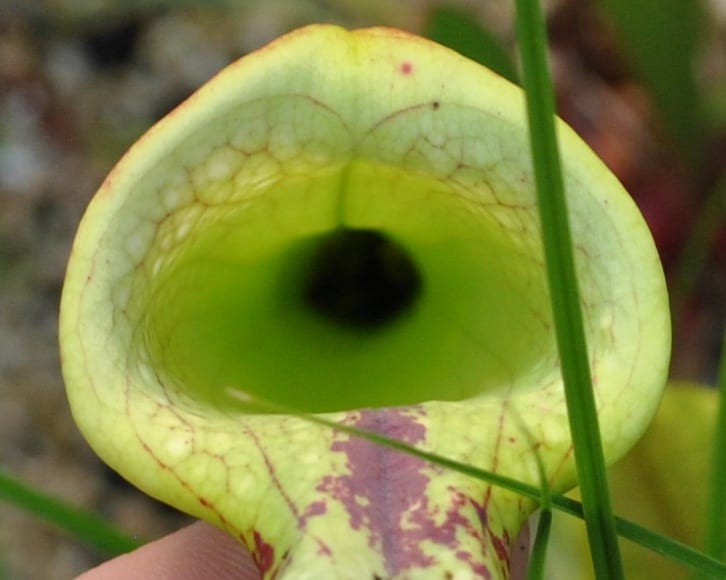
 © Aaron Carlson from Menomonie, WI, USA / CC BY-SA 2.0
Sarracenia × moorei
Sarracenia × moorei is a natural hybrid between S. flava, known for its yellow pitchers, and S. leucophylla, with its striking white-topped ones. It sends up tall pitchers that sit between the two parents, and the white patches near the top and the wavy edge of the lid show the S. leucophylla side of its ancestry. Given plenty of sun and constantly moist roots, it is easy to grow and is rated beginner-friendly. As a perennial that can be kept going for years by division, it is a good fit for anyone trying carnivorous plants for the first time.
View Sarracenia × moorei encyclopedia →0% commission on your first sales!Register by September 30, 2026 and your first 2 plants are commission-free!
Grower Wanted!
List your plants on GrowerDirect and sell directly to customers nationwide!
6 Transparency Commitments from GrowerDirect
Every Grower listing discloses variety, origin, light requirements, and difficulty level for Carnivorous Plants. Complete transparency, guaranteed.
- Variety Disclosed
- Real Photos
- Color Information
- Origin Disclosed
- Light Requirements
- Difficulty Level
Browse all 145 varieties
Light Requirements
Difficulty Level
Verified growers wanted for Carnivorous Plants
Growers are signing up now ahead of launch. Subscribe to be notified when new listings go live.
Getting alerts is free with a member account. When new listings match your saved search, we'll notify you by email and in-app.
Browse other categories
Are you growing carnivorous plants?
Register as a grower and connect with buyers directly.
Apply as a growerSarracenia × moorei key facts
- Growing Difficulty
- Beginner-friendly
- Lifespan
- Perennial (can be kept for many years by division)
- Size
- Little published size data (tall pitchers intermediate between the parents)
- Watering
- No fertilizer (catches insects)
- Light & Placement
- Grow outdoors in full sun; with too little light the colour is poor and the pitchers are weak.
- Watering
- Keep the pot standing in about 4-6 cm of water at all times and never let it dry out. Use rain water or other water low in dissolved minerals.
- Soil & Repotting
- A 1:1 peat and sand mix is the standard. Divide and repot well-grown plants every 3 or 4 years.
- Temperature & Overwintering
- Let it go dormant in winter. Fully dormant plants survive a few weeks frozen solid in their pots, but early and late frosts are the danger. Keep the winter spot cool, not warm.
- Fertilizer
- Do not fertilize the soil of mature plants; it can cause rhizome rot. Plenty of sun and access to prey are enough.
- Pruning & Grooming
- The plant recovers nutrients from old leaves, so cut off only the brown, dead parts.
About Sarracenia × moorei
Sarracenia × moorei is a natural hybrid of S. flava and S. leucophylla, a beginner-friendly perennial with tall pitchers and white patches. Learn how to grow it and how to choose a healthy plant.
7 things to know before growing Sarracenia × moorei
1Give it full sun
Keep it outdoors where it gets plenty of direct sun. With too little light the pitchers grow thin and the white patches become less noticeable. Good airflow also helps the plant grow sturdy.
2Keep the roots wet
Stand the pot in a tray of water so the base stays submerged, and don't let it dry out during the growing season. Rainwater or other low-mineral water is the best choice.
3Lean, acidic soil
A lean, acidic mix based on peat moss, with perlite or kanuma soil added, works well. Avoid ordinary potting soil and leaf mold, since their nutrients can damage the roots.
4Repot Every 3-4 Years
Once a plant is well grown, repot and divide it every three to four years, ideally before new growth starts. The standard mix is equal parts peat and sand.
5Watch water in summer
Sarracenia enjoy summer sun, but the water in the tray can warm up quickly. Refresh it often and check every day that it hasn't run low. If the pot gets too hot, shading just the pot itself can help.
6Let It Rest in Winter
Let the plant go dormant in winter. It may look dead, but the base is alive, so don't keep it anywhere too warm. Nutrients from old pitchers are recycled into new growth, so trim only the parts that have turned brown. Keep it watered through dormancy.
7Choosing a healthy plant
Look for a plant with a firm base and pitchers that stand up strongly. The white patches and the waviness of the lid edge vary from plant to plant, so check the photos to find the look you like. In winter the top growth is normally dead, so judge the plant by the buds at its base.
Frequently asked questions about Sarracenia × moorei
- Q.Can a beginner grow it?
- A.Yes, it is rated beginner-friendly. If you keep it outdoors in a sunny spot, stand the pot in water, and let it go through a cold winter, it is a manageable plant.
- Q.Can I grow it indoors?
- A.Outdoors in full sun is best, because indoor light is often too weak and the pitchers tend to grow thin. If you keep it inside, it needs a spot that gets a lot of direct sunlight.
- Q.Does it need fertilizer or insects?
- A.Fertilizer is generally not needed, and strong fertilizer can damage the roots. Outdoors, insects fall into the pitchers on their own, so you don't have to feed it.
- Q.How does it differ from its parents?
- A.Its pitchers are tall and sit between the two parents in form, while the white patches near the top and the wavy lid edge show the influence of S. leucophylla. It blends the look of yellow-pitchered S. flava with white-topped S. leucophylla.
- Q.Can I propagate it by division?
- A.Yes, it is a perennial that can be kept going for years by division. Cut the rhizome apart in early spring when you repot, then plant each piece separately. Make sure every piece has both roots and a bud.
Handy Growing Tools for Sarracenia × moorei
Learn more about Sarracenia × moorei in the encyclopedia
View Sarracenia × moorei encyclopedia entry →
Care difficulty, size, origin and light needs — all basics covered.
More in this category
Can't find the plant you're looking for?
Post your wishes for free and growers with matching plants will contact you with introductions.