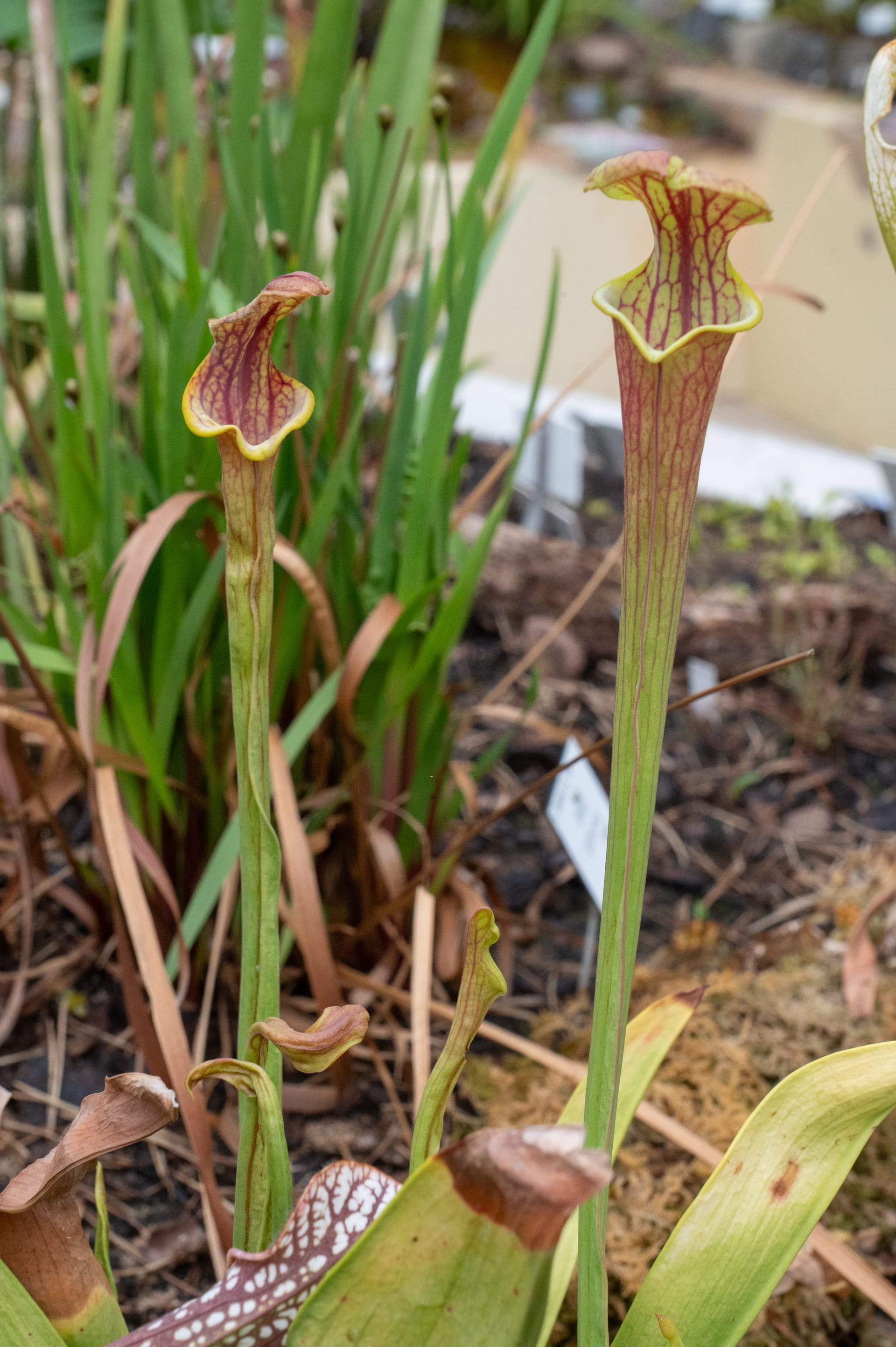
 © Mickaël Schauli / CC BY-SA 4.0
Sarracenia flava var. atropurpurea
Sarracenia flava var. atropurpurea is a striking variety of the yellow pitcher plant, distinguished by a deep reddish-purple color that runs from the base of the pitcher all the way up to the lid. The lid itself often opens already flushed with red, typically appearing even darker than the tube below it. Bringing out this rich coloration requires plenty of strong light, which makes watching the color deepen over the growing season one of the real pleasures of keeping this plant. While it is generally considered a variety better suited to growers with some prior experience, it is a long-lived perennial that can be maintained for years through division, rewarding patience with a truly dramatic pitcher plant.
View Sarracenia flava var. atropurpurea encyclopedia →0% commission on your first sales!Register by September 30, 2026 and your first 2 plants are commission-free!
Grower Wanted!
List your plants on GrowerDirect and sell directly to customers nationwide!
6 Transparency Commitments from GrowerDirect
Every Grower listing discloses variety, origin, light requirements, and difficulty level for Carnivorous Plants. Complete transparency, guaranteed.
- Variety Disclosed
- Real Photos
- Color Information
- Origin Disclosed
- Light Requirements
- Difficulty Level
Browse all 145 varieties
Light Requirements
Difficulty Level
Verified growers wanted for Carnivorous Plants
Growers are signing up now ahead of launch. Subscribe to be notified when new listings go live.
Getting alerts is free with a member account. When new listings match your saved search, we'll notify you by email and in-app.
Browse other categories
Are you growing carnivorous plants?
Register as a grower and connect with buyers directly.
Apply as a growerSarracenia flava var. atropurpurea key facts
- Growing Difficulty
- Intermediate
- Lifespan
- Perennial (can be kept for many years by division)
- Size
- Pitchers typically about 50 cm (the species can exceed 1 m)
- Watering
- No fertilizer (catches insects)
- Light & Placement
- The deep red needs a great deal of light. Grow it in full sun outdoors, and once placed, leave it be; some clones lose colour if moved or even turned.
- Watering
- Keep the pot standing in about 4-6 cm of water at all times and never let it dry out. Use rain water or other water low in dissolved minerals.
- Soil & Repotting
- A 1:1 peat and sand mix is the standard. Divide and repot well-grown plants every 3 or 4 years.
- Temperature & Overwintering
- Let it go dormant in winter. Fully dormant plants survive a few weeks frozen solid in their pots, but early and late frosts are the danger. Keep the winter spot cool, not warm.
- Fertilizer
- Do not fertilize the soil of mature plants; it can cause rhizome rot. Plenty of sun and access to prey are enough.
- Pests & Cautions
- The varieties of S. flava differ mainly in colour, and intermediate plants and crosses between varieties are common even in the wild. Do not rely on the variety name alone; check the colour of tube and lid on photos or the plant itself.
About Sarracenia flava var. atropurpurea
A Sarracenia flava variety whose pitchers and lids deepen into a rich reddish-purple under strong light. An intermediate-level, long-lived perennial pitcher plant that can be maintained through division.
7 things to know before growing Sarracenia flava var. atropurpurea
1Full Sun Is Essential
Choose a spot with as much direct sun as possible. Full sun throughout the day is essential for developing this variety's signature deep reddish-purple color; without enough light, the pitchers and lid will stay pale and the coloring won't reach its full potential. If grown indoors, place it by the brightest window available or supplement with a grow light.
2Watering: Keep It Wet
As a plant native to wetlands, Sarracenia is best kept in a saucer of standing water at all times rather than watered occasionally from above. Use rainwater or purified water rather than tap water, since mineral buildup can damage the roots over time. Check the water level often in summer, as it evaporates quickly and the pot shouldn't be allowed to dry out.
3Use Nutrient-Poor Soil
Sarracenia prefers low-nutrient growing media, so live sphagnum moss or a mix of ingredients like kanuma soil and perlite works well. Avoid regular potting soil or anything containing fertilizer, as it can damage the roots. Keep the medium consistently moist after planting.
4Repot During Dormancy
The best time to repot is during winter to early spring, while the plant is dormant. Repotting or refreshing the soil at this point causes the least stress to the roots. Disturbing the roots during the active growing season can weaken the plant, so it's best avoided.
5Let It Go Dormant in Winter
Sarracenia naturally dies back above ground each winter, and going through this dormant period is what keeps it healthy and vigorous the following year. It's best kept outdoors, with some protection from hard frost, so it experiences the cold needed to enter dormancy properly. Keeping it in a warm room through winter prevents dormancy and can weaken the plant over time.
6Propagate by Division
As a perennial, this variety naturally produces offshoot plantlets as it matures, which can be divided off to multiply the plant or keep it going long-term. The best time for division is the same dormant window, winter to early spring. Divided offshoots start out smaller than the parent plant, but grow into their full size and coloring over time.
7What to Look for When Choosing a Plant
When buying, confirm from photos or the plant itself that both the tube and lid are well colored. Deep color needs very strong light, and some plants won't color up for the year after simply being moved or having their pot turned. Once you've chosen a spot with strong light, leave it there.
Frequently asked questions about Sarracenia flava var. atropurpurea
- Q.Is this variety suitable for beginners?
- A.It's generally considered better suited to growers with some experience, though anyone comfortable with the basics of Sarracenia care, such as standing water and strong light, can grow it successfully. It's a good idea to get comfortable growing a more common Sarracenia first before trying this variety.
- Q.Why does it turn such a deep reddish-purple color?
- A.As a variety of the yellow pitcher plant, it has a strong tendency to develop deep pigment from the tube up through the lid. Bringing out this coloring depends heavily on strong sunlight, and the color stays pale if light levels are too low.
- Q.How large does it grow?
- A.The pitchers typically reach around 50 cm in height, though the species as a whole can occasionally exceed 1 meter. Actual size varies depending on growing conditions and the age of the plant.
- Q.Can it be grown indoors?
- A.Since it needs strong light, growing it indoors means placing it at the brightest window available or supplementing with a grow light. An outdoor spot with direct sun generally makes it easier to bring out the plant's full coloring.
- Q.How should it be cared for in winter?
- A.The plant dies back above ground and enters dormancy in winter, so it should generally be kept outdoors where it experiences some cold. If hard freezes are a concern, provide some protection, but avoid keeping it in a warm room the whole winter, as that prevents proper dormancy.
Handy Growing Tools for Sarracenia flava var. atropurpurea
Learn more about Sarracenia flava var. atropurpurea in the encyclopedia
View Sarracenia flava var. atropurpurea encyclopedia entry →
Care difficulty, size, origin and light needs — all basics covered.
More in this category
Can't find the plant you're looking for?
Post your wishes for free and growers with matching plants will contact you with introductions.