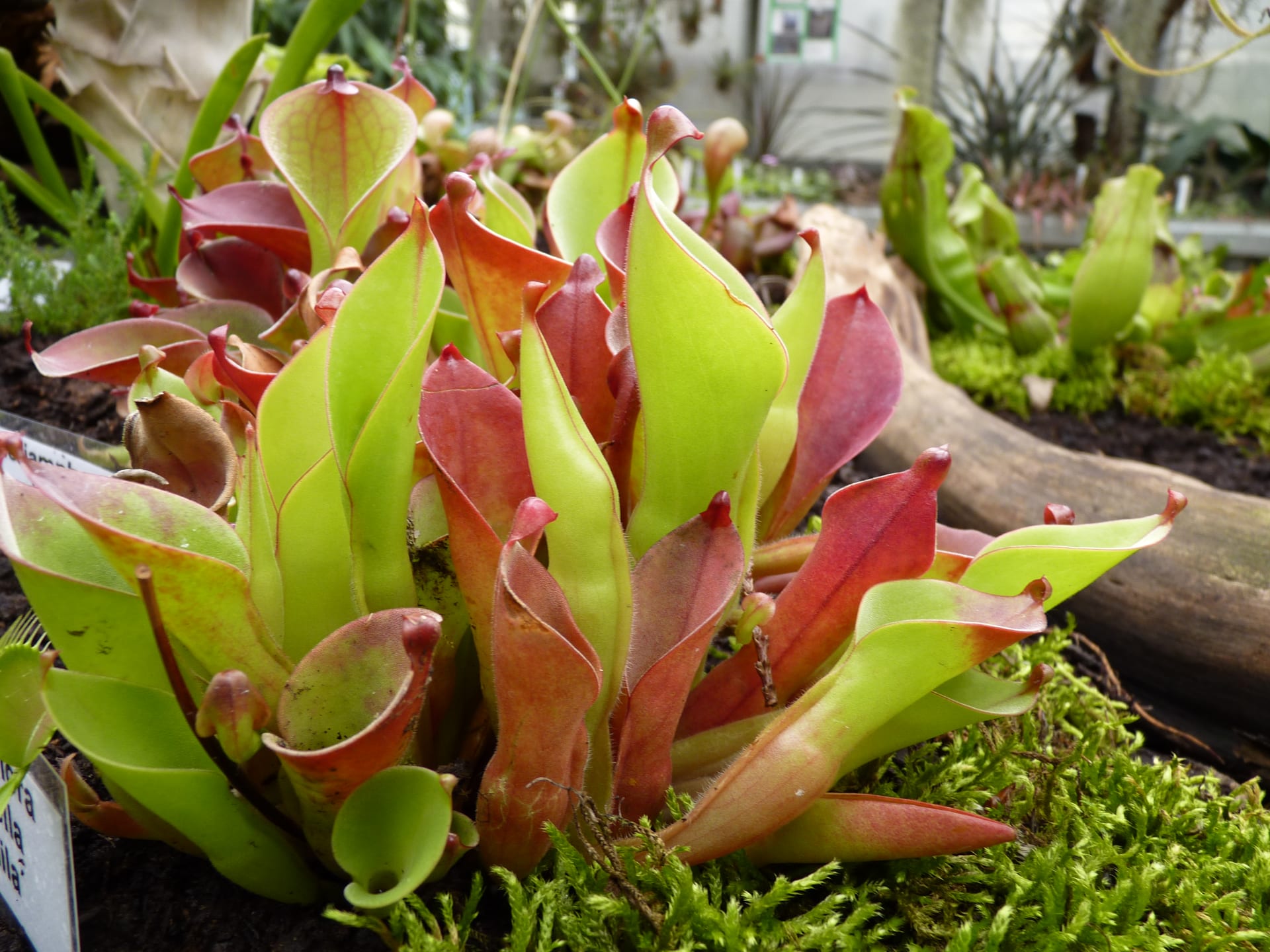
 © Michal Klajban / CC BY-SA 3.0
Heliamphora pulchella
Heliamphora pulchella is a compact pitcher plant native to the tepuis (table mountains) of the Chimantá Massif in Venezuela. Its tubular traps grow in clustered rosettes reaching roughly 5 to 20 cm tall, each capped with a small, helmet-shaped lid along the rim, a distinguishing feature among Heliamphora species. The species name "pulchella" is Latin for "pretty" or "lovely," fitting its neat, compact form. As a perennial, it can be enjoyed for years, though its cultivation demands specific care and is generally considered suited to experienced growers.
View Heliamphora pulchella encyclopedia →0% commission on your first sales!Register by September 30, 2026 and your first 2 plants are commission-free!
Grower Wanted!
List your plants on GrowerDirect and sell directly to customers nationwide!
6 Transparency Commitments from GrowerDirect
Every Grower listing discloses variety, origin, light requirements, and difficulty level for Carnivorous Plants. Complete transparency, guaranteed.
- Variety Disclosed
- Real Photos
- Color Information
- Origin Disclosed
- Light Requirements
- Difficulty Level
Browse all 145 varieties
Light Requirements
Difficulty Level
Verified growers wanted for Carnivorous Plants
Growers are signing up now ahead of launch. Subscribe to be notified when new listings go live.
Getting alerts is free with a member account. When new listings match your saved search, we'll notify you by email and in-app.
Browse other categories
Are you growing carnivorous plants?
Register as a grower and connect with buyers directly.
Apply as a growerHeliamphora pulchella key facts
- Growing Difficulty
- Advanced
- Lifespan
- Perennial
- Size
- Pitchers 5-20 cm tall
- Watering
- Generally unfertilized (catches insects); some growing methods use a little fertilizer
- Temperature & Overwintering
- Its highland home runs about 7-23°C. In cultivation it tolerates up to about 30°C, but large plants can die if kept above 26°C for long, and constant 28°C with high humidity has been linked to sudden death from a vascular fungus.
- Light & Placement
- Needs very bright light: indoors, LEDs about 10-15 cm above the plants for around 15 hours a day. Pitchers need light from the sides as well as above.
- Watering
- Use pure water such as RO; avoid tap or well water. Either keep a few millimetres of water in the tray or water from above daily, matching the mix. Unless room humidity stays above 70%, grow it in an enclosure such as a terrarium.
- Soil & Repotting
- Use a free-draining mix and never reuse old soil; pathogens can come from used or contaminated ingredients.
- Fertilizer
- Growers who water from above every day add a very little fertilizer to the water or use slow-release fertilizer in the mix; with drip watering, light foliar feeding is enough.
About Heliamphora pulchella
Heliamphora pulchella is a compact pitcher plant from the tepuis of Venezuela's Chimantá Massif, with clustered tubular traps 5-20 cm tall and a distinctive helmet-shaped lid. A perennial best suited to experienced growers.
7 things to know before growing Heliamphora pulchella
1Strong Light and Temperature
Heliamphora need strong light. Indoors, run LED lights for about 15 hours a day, 10 to 15cm above the plant, and make sure the pitchers get light from the sides as well. Its native habitat is a cool highland of about 7 to 23°C, and large plants can die if temperatures stay above 26°C, so keeping it cool in summer is essential.
2Watch water quality
These plants thrive on mineral-poor water similar to the rainfall on their native tepuis. Tap water can cause salts to build up in the soil over time, so rainwater, distilled water, or RO water is preferable. Keep the growing medium consistently moist rather than letting it dry out.
3Soil: drainage and moisture
A mix based on sphagnum moss with added perlite works well, balancing drainage with moisture retention. Because nutrient-rich soil can damage the roots, choose a low-fertility mix instead.
4Repot with care for the roots
Because damaged roots can take a long time to recover, repotting should be kept to a minimum. If needed, it's best done when the plant is actively growing and has clearly outgrown its pot.
5Cool summers, mild winters
In their native habitat, temperatures stay cool year-round, so summer heat can slow growth. In winter, avoid extreme cold while maintaining a gentle day-night temperature swing. Paying attention to seasonal temperature changes is key to growing this plant successfully over the long term.
6Choosing a healthy plant
When choosing a plant, look for one with upright, undamaged pitchers and minimal discoloration. Blackening at the base or around the lid can be a sign of rot. A plant with several pitchers clustered together generally indicates a stable, well-established specimen.
7The Helmet-Shaped Lid
Each pitcher rim bears a small helmet-shaped lid of up to about 10 by 8mm on a short stalk. This little lid is one of the features that give the species its distinctive look.
Frequently asked questions about Heliamphora pulchella
- Q.Can beginners grow this plant?
- A.Heliamphora pulchella is considered an advanced-level plant to grow. It requires specific conditions such as cool temperatures and careful water quality management, so prior experience with carnivorous plants is helpful.
- Q.How large does it grow?
- A.The pitchers reach roughly 5 to 20 cm in height and grow in clustered bunches from the base. Compared with larger Heliamphora species, it stays relatively compact.
- Q.Is regular tap water okay for watering?
- A.Tap water isn't ideal, since minerals can build up in the soil over time. Rainwater, distilled water, or RO water, all low in minerals, help keep the plant healthy.
- Q.How long can this plant live?
- A.Heliamphora pulchella is a perennial, and with suitable care it can be grown for many years. As the plant matures, it produces more pitchers, forming an increasingly full, clustered shape.
- Q.What is the small helmet-like part on the rim?
- A.It's a small helmet-shaped lid, up to about 10 by 8mm, attached to the pitcher rim by a short stalk.
Handy Growing Tools for Heliamphora pulchella
Learn more about Heliamphora pulchella in the encyclopedia
View Heliamphora pulchella encyclopedia entry →
Care difficulty, size, origin and light needs — all basics covered.
More in this category
Can't find the plant you're looking for?
Post your wishes for free and growers with matching plants will contact you with introductions.