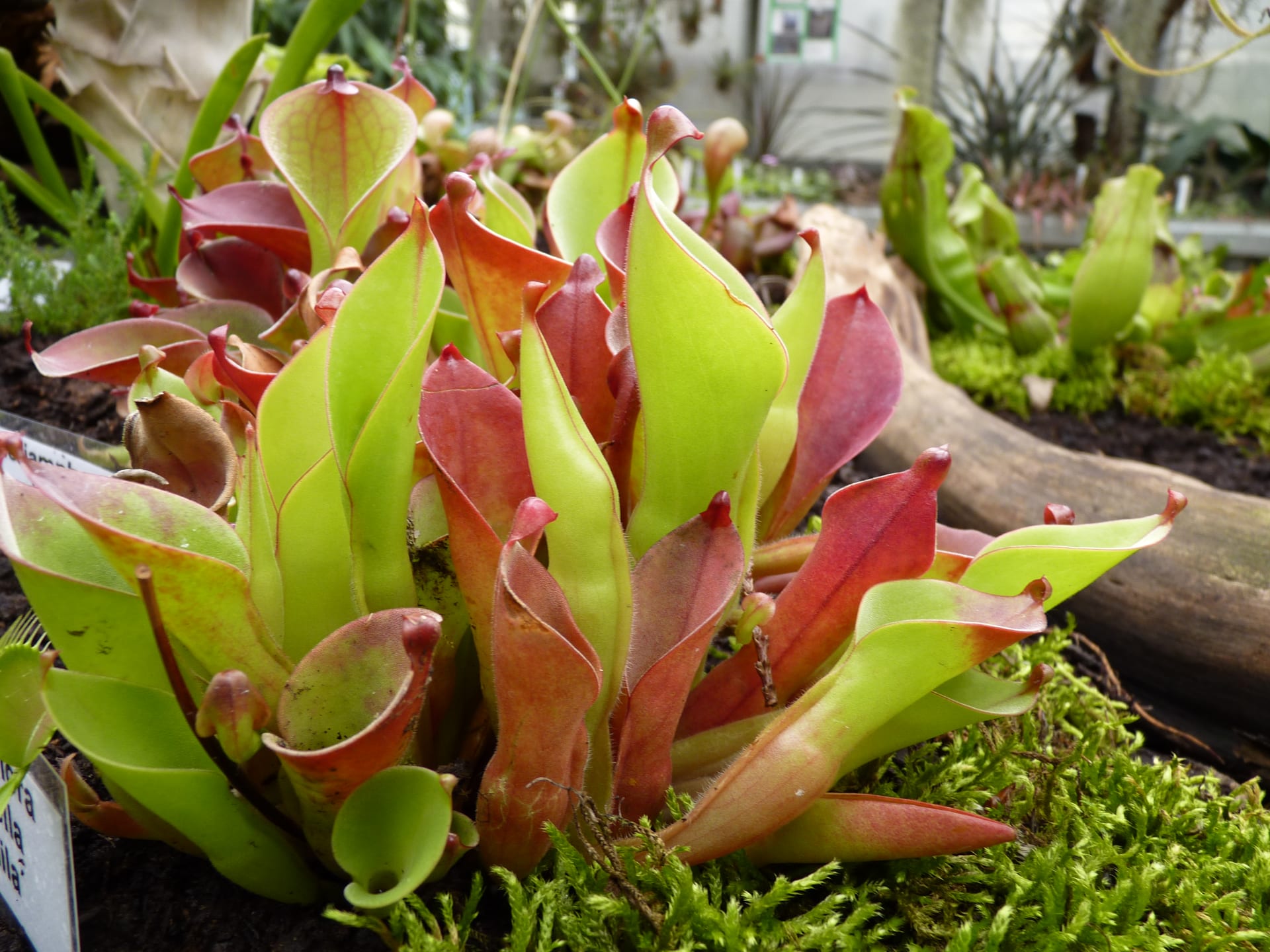
Source: Wikimedia Commons
Heliamphora pulchella
AdvancedHeliamphora pulchella
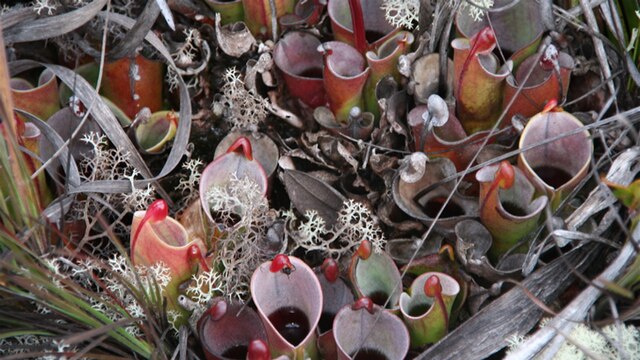
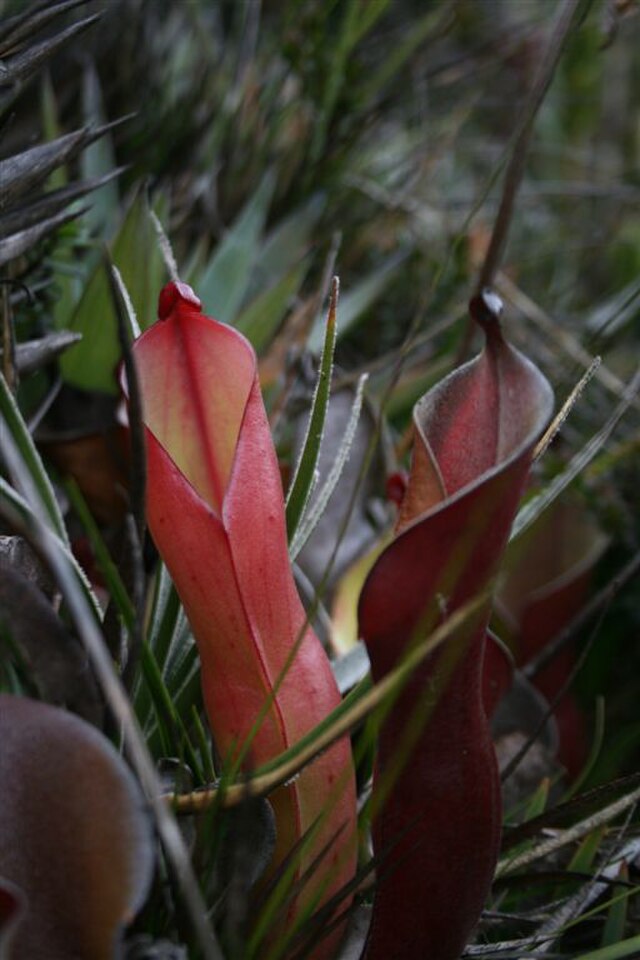
A small sun pitcher with clustered tubular pitchers 5-20 cm tall, each topped by a tiny helmet-shaped lid. It grows on the tepuis of the Chimantá Massif in Venezuela, and its name means 'pretty'.
About
Heliamphora pulchella is a sun pitcher endemic to the Chimantá Massif and neighbouring tepuis (table mountains) in Venezuela. It was described in 2005 by Wistuba and colleagues and separated from its close relative H. minor. One of the smaller species in the genus, it forms tubular pitchers 5-20 cm tall and up to about 8 cm across, with sparse bristly hairs several millimetres long inside. A tiny helmet-shaped lid up to about 10 x 8 mm sits on a short stalk at the rim. Flower stalks about 50 cm tall bear flowers with four narrow white to pale pink tepals. In the wild it favours sunny, occasionally flooded sites beside shallow water. Two forms are known: the typical one with retentive hairs inside the pitcher, and a hairless form from Amurí Tepui. The name is Latin for 'pretty'. In Japan it is one of the most available Heliamphora species, sold by specialist nurseries and at online auctions. In cultivation it needs coolness, strong light and high humidity together, and coping with Japan's summer heat is the main challenge.
Source: Wikipedia (CC BY-SA 4.0)
Size of the Heliamphora pulchella
The Heliamphora pulchella grows to Pitchers 5-20 cm tall.
Temperature & humidity for the Heliamphora pulchella
The summits of the Guiana Highlands' table mountains (tepuis) generally range from about 7 to 23°C, rarely freeze, and receive very heavy rainfall.
Basic Info
Origin
Venezuela (Chimantá Massif and nearby tepuis)
Lifespan
Perennial
Size
Pitchers 5-20 cm tall
Temperature
10〜30℃
Humidity
60〜90%
Watering & Fertilizer
Generally unfertilized (catches insects); some growing methods use a little fertilizer
Growing Tips
Temperature & Overwintering
Its highland home runs about 7-23°C. In cultivation it tolerates up to about 30°C, but large plants can die if kept above 26°C for long, and constant 28°C with high humidity has been linked to sudden death from a vascular fungus.
Light & Placement
Needs very bright light: indoors, LEDs about 10-15 cm above the plants for around 15 hours a day. Pitchers need light from the sides as well as above.
Watering
Use pure water such as RO; avoid tap or well water. Either keep a few millimetres of water in the tray or water from above daily, matching the mix. Unless room humidity stays above 70%, grow it in an enclosure such as a terrarium.
Soil & Repotting
Use a free-draining mix and never reuse old soil; pathogens can come from used or contaminated ingredients.
Fertilizer
Growers who water from above every day add a very little fertilizer to the water or use slow-release fertilizer in the mix; with drip watering, light foliar feeding is enough.
Heliamphora pulchella FAQ
QWhat is the growing difficulty level for Heliamphora pulchella?
Advanced. A variety suitable for advanced growers. Requires advanced cultivation techniques and specialized equipment, with careful environmental adjustments needed.
QHow large does Heliamphora pulchella get?
The mature size of Heliamphora pulchella is Pitchers 5-20 cm tall. This may vary slightly depending on cultivation environment and individual differences.
QHow should I water and fertilize Heliamphora pulchella?
Heliamphora pulchella: watering & fertilizer — Generally unfertilized (catches insects); some growing methods use a little fertilizer. Aim for appropriate frequency and amount.
QWhat is the typical price for Heliamphora pulchella?
The price of Heliamphora pulchella varies significantly by variety, characteristics, size, and lineage. Please check GrowerDirect's price guide for the latest market information.
Last updated: September 23, 2026
References & Sources
Edited & verified by: GrowerDirect Editorial Team
The classifications, regulations, and growing data on this page are created and verified based on the primary information database below.
Taxonomy & Authority
Accepted name: Heliamphora pulchella Wistuba, Carow, Harbarth & Nerz
Authority databases: GBIF · GBIF Heliamphora pulchella Wistuba, Carow, Harbarth & Nerz
Nomenclature follows global taxonomic authority databases.
Regulations & Conservation Status
Heliamphora is not listed under CITES and is not regulated by Japanese law. Because it grows only on a few mountain tops, choose nursery-propagated plants.
Sources: Species+ (no Heliamphora listings)
Regulations may change. Always verify the latest information with the relevant authorities.
Related Species
Find listings for this species
Related Articles
Guide to Caring for Rare Carnivorous Plants | Care of Heliamphora, Genlisea, Byblis, and Roridula
This article provides detailed explanations of the capture mechanisms, required cultivation environments, and management methods for rare carnivorous plants (Heliamphora, Genlisea, Byblis, and Roridula) that attract collectors' attention. A complete cultivation guide for these advanced-level rare genera.
Complete Guide to Growing Heliamphora | A Highland Carnivorous Plant with Beautiful Tubular Pitcher Leaves
How to grow Heliamphora, which prefers cool, humid environments. We've summarized cultivation tips covering temperature and humidity management, watering, and propagation by division.
Why Carnivorous Plant Traps Fail and How to Fix Them | Optimizing Humidity, Nutrition, and Prey-Capture Systems
Investigate why carnivorous plant traps fail to capture insects. From humidity management to nutrient balance, gland secretion function, and dormancy, a detailed scientific approach to restoring trap function.
A Guide to Giving Carnivorous Plants as Gifts | How to Choose Unique Presents and Tips for Long-Term Enjoyment
A guide to selecting carnivorous plants as gifts. Covers how to choose varieties based on the recipient's type, and important care tips to communicate before gifting, such as water quality and dormancy periods.
Can't find the plant you're looking for?
Post your wishes for free and growers with matching plants will contact you with introductions.