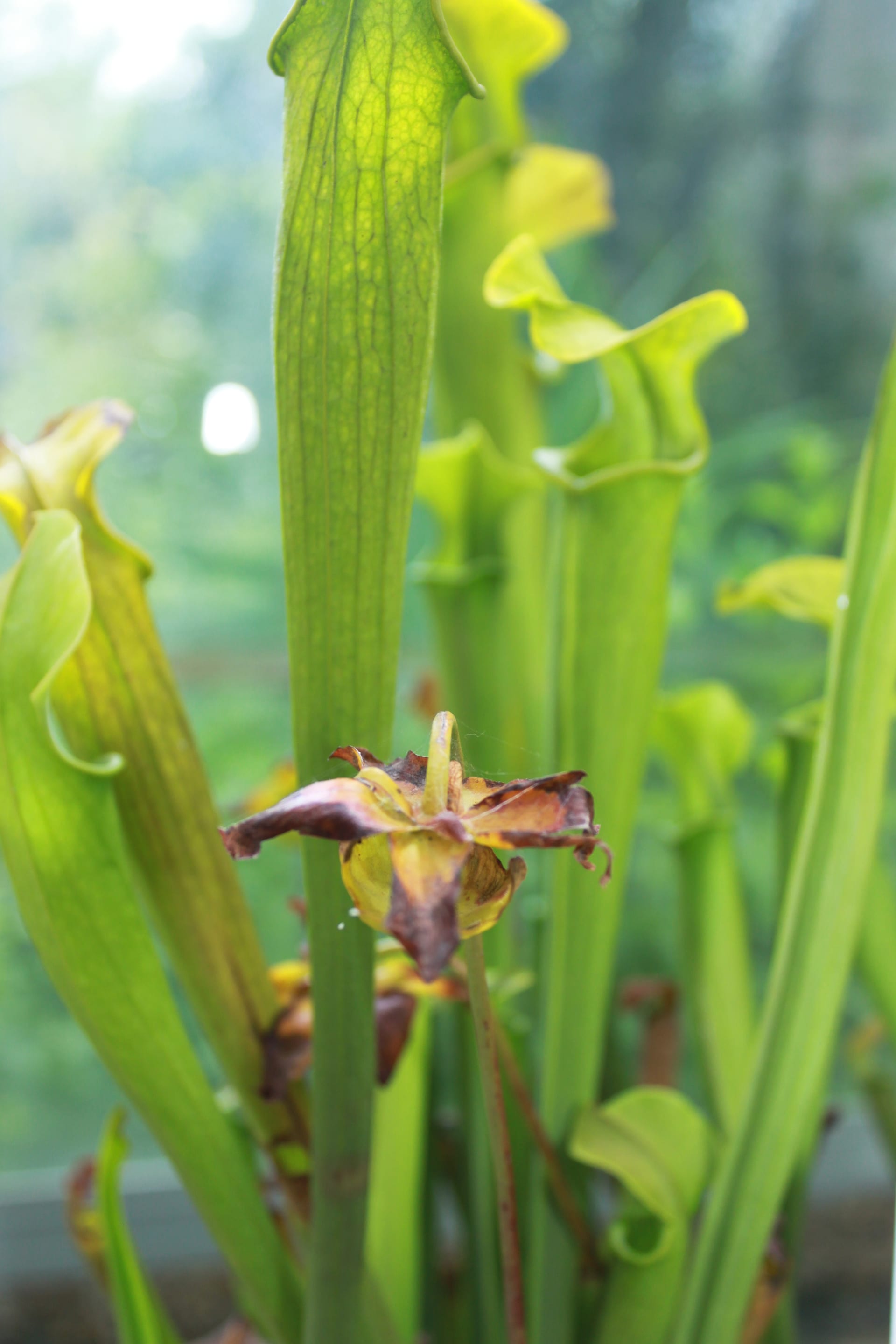
 © Brian Gratwicke / CC BY 2.0
Alabama canebrake pitcher plant
Sarracenia rubra subsp. alabamensis, the Alabama canebrake pitcher plant, is a subspecies native only to a small number of wetland sites in central Alabama. Its yellow-green pitchers are covered in fine hairs and traced with red veins, and in spring it produces reddish-purple flowers with a raspberry-like scent. It is listed in CITES Appendix I, and in Japan any sale or transfer in principle requires a registration certificate under the Act on Conservation of Endangered Species. Plants propagated in Japan are also subject to registration, so always confirm that a registration certificate comes with the plant when buying. Suited to intermediate growers, it makes a rewarding next step once you are comfortable with basic Sarracenia care, and as a perennial it can be kept for years through division.
View Alabama canebrake pitcher plant encyclopedia →0% commission on your first sales!Register by September 30, 2026 and your first 2 plants are commission-free!
Grower Wanted!
List your plants on GrowerDirect and sell directly to customers nationwide!
6 Transparency Commitments from GrowerDirect
Every Grower listing discloses variety, origin, light requirements, and difficulty level for Carnivorous Plants. Complete transparency, guaranteed.
- Variety Disclosed
- Real Photos
- Color Information
- Origin Disclosed
- Light Requirements
- Difficulty Level
Browse all 145 varieties
Light Requirements
Difficulty Level
Verified growers wanted for Carnivorous Plants
Growers are signing up now ahead of launch. Subscribe to be notified when new listings go live.
Getting alerts is free with a member account. When new listings match your saved search, we'll notify you by email and in-app.
Browse other categories
Are you growing carnivorous plants?
Register as a grower and connect with buyers directly.
Apply as a growerAlabama canebrake pitcher plant key facts
- Growing Difficulty
- Intermediate
- Lifespan
- Perennial (can be kept for many years by division)
- Size
- Pitchers about 20-65 cm tall
- Watering
- No fertilizer (catches insects)
- Light & Placement
- Grow outdoors in full sun; with too little light the colour is poor and the pitchers are weak.
- Watering
- Keep the pot standing in about 4-6 cm of water at all times and never let it dry out. Use rain water or other water low in dissolved minerals.
- Soil & Repotting
- A 1:1 peat and sand mix is the standard. Divide and repot well-grown plants every 3 or 4 years.
- Temperature & Overwintering
- Let it go dormant in winter. Fully dormant plants survive a few weeks frozen solid in their pots, but early and late frosts are the danger. Keep the winter spot cool, not warm.
- Fertilizer
- Do not fertilize the soil of mature plants; it can cause rhizome rot. Plenty of sun and access to prey are enough.
- Pests & Cautions
- A CITES Appendix I subspecies; selling or giving plants within Japan requires a registration certificate. Do not buy plants without one.
About Alabama canebrake pitcher plant
A Sarracenia subspecies native to a small number of wetland sites in central Alabama. Yellow-green pitchers with red veins and raspberry-scented reddish-purple flowers; an intermediate-level perennial that can be divided and grown for years.
7 things to know before growing Alabama canebrake pitcher plant
1Sunlight & Placement
Sarracenia thrive in full sun with good airflow. Strong, direct light outdoors helps the yellow-green pitchers develop their vivid red veining; too little light can cause weak, poorly colored growth.
2Bottom Watering
As a wetland native, it does best with a shallow water tray kept under the pot at all times. If your tap water is mineral-heavy, rainwater or purified water helps keep the plant healthier long-term.
3Nutrient-Free Soil Mix
Use a carnivorous-plant soil mix or a blend of peat moss with sand or perlite that contains no added nutrients. Fertilizer or compost can damage the roots, since this plant gets its nutrients from insects caught in its pitchers rather than from the soil.
4Repotting & Division
As a perennial, it fills out its pot over the years, so repot roughly every couple of years in early spring as it comes out of dormancy. Divide the rhizome gently, without breaking up the root ball too much, to refresh each section.
5Winter Dormancy
The foliage dies back in autumn as the plant enters dormancy, which is a normal part of its yearly cycle. Let it experience outdoor cold, but protect the pot from hard freezing so new growth emerges evenly the following spring.
6Raspberry-Scented Spring Flowers
In early spring, before the new pitchers unfurl, it sends up a flower stalk topped with a reddish-purple bloom with a sweet scent reminiscent of raspberries. Flowers and new pitchers appearing at separate times is typical of Sarracenia.
7Choosing a Healthy Plant
Look for a plant with a firm rhizome at the base and pitchers that still show their yellow-green color, red veining, and fine surface hairs clearly. Pitchers can reach roughly 20 to 65 cm tall, so it is worth planning your growing space with that mature size in mind.
Frequently asked questions about Alabama canebrake pitcher plant
- Q.Can beginners grow this plant?
- A.This variety is generally considered suited to intermediate growers. It's easiest to take on after you have some experience with Sarracenia basics like bottom watering and handling dormancy.
- Q.Does it die back in winter?
- A.The foliage dying back in autumn is a normal sign of entering dormancy, not the plant dying. New growth emerges from the rhizome again in spring.
- Q.How large does it grow?
- A.The pitchers reach roughly 20 to 65 cm in height. Through repeated division, the overall clump also fills out more each year.
- Q.Does it need to catch insects to survive?
- A.It typically catches insects that come to it naturally, indoors or out, so feeding it by hand usually isn't necessary. If growth seems weak, check light and watering first rather than adding insects.
- Q.Do the flowers and pitchers appear at the same time?
- A.The flowers bloom first in spring, with the new pitchers unfurling somewhat afterward. You get to enjoy the raspberry-scented blooms and the red-veined pitchers at slightly different times.
Handy Growing Tools for Alabama canebrake pitcher plant
Learn more about Alabama canebrake pitcher plant in the encyclopedia
View Alabama canebrake pitcher plant encyclopedia entry →
Care difficulty, size, origin and light needs — all basics covered.
More in this category
Can't find the plant you're looking for?
Post your wishes for free and growers with matching plants will contact you with introductions.