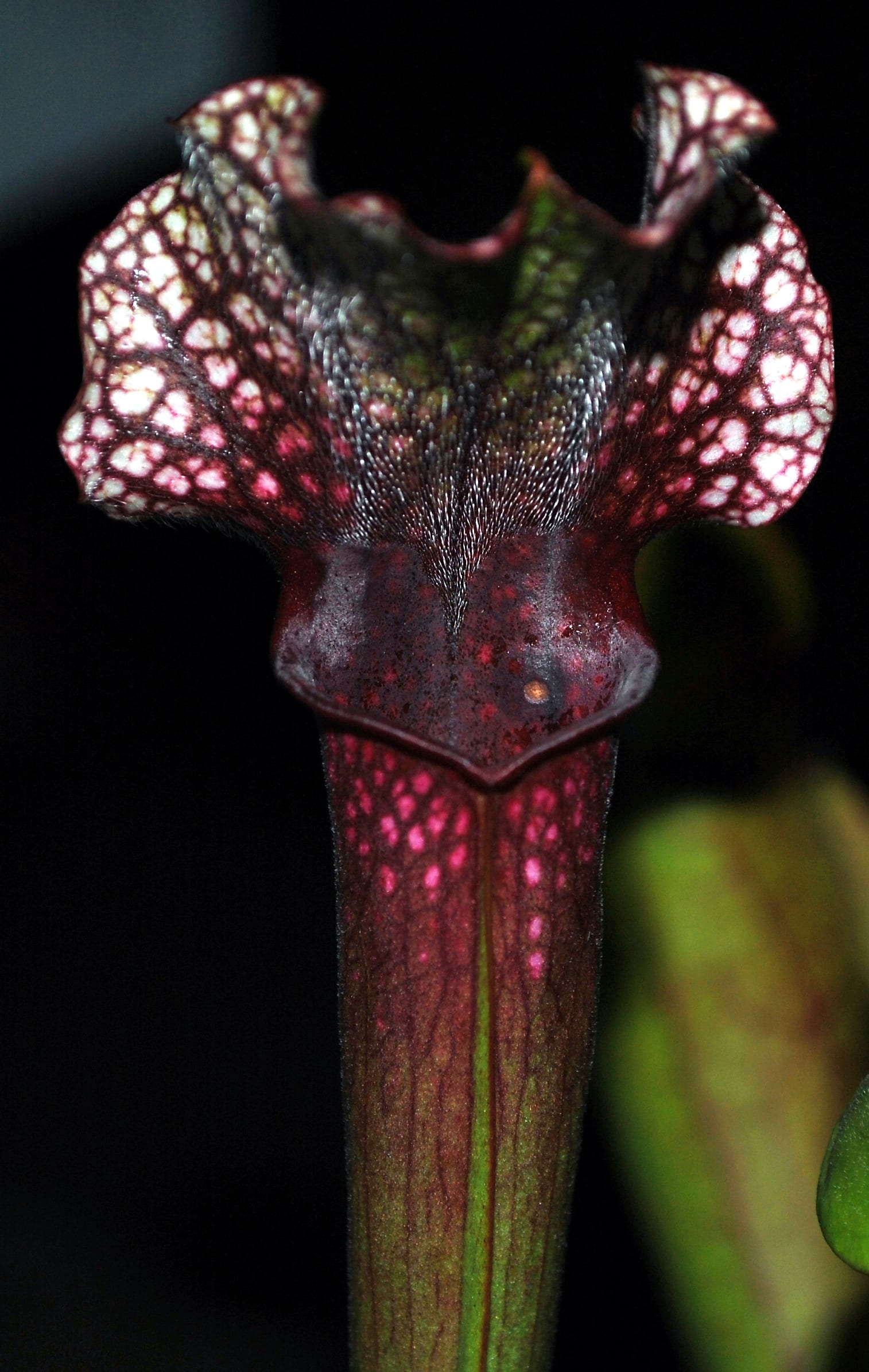
 © Aaron Carlson from Menomonie, WI, USA / CC BY-SA 2.0
Sarracenia 'Judith Hindle'
Sarracenia 'Judith Hindle' is a hybrid bred in the UK by A. Hindle, crossing three Sarracenia species into one striking pitcher plant. In spring, the pitchers emerge bright green laced with a yellow net-like pattern, then deepen into rich reddish-purple as summer draws to a close. The wavy lid arching over each pitcher's mouth carries mottled patches of white, yellow, and green, giving the plant a different look with every season. As a perennial, it can be divided and kept going for years, and it's generally considered an easy variety for beginners starting out with Sarracenia.
View Sarracenia 'Judith Hindle' encyclopedia →0% commission on your first sales!Register by September 30, 2026 and your first 2 plants are commission-free!
Grower Wanted!
List your plants on GrowerDirect and sell directly to customers nationwide!
6 Transparency Commitments from GrowerDirect
Every Grower listing discloses variety, origin, light requirements, and difficulty level for Carnivorous Plants. Complete transparency, guaranteed.
- Variety Disclosed
- Real Photos
- Color Information
- Origin Disclosed
- Light Requirements
- Difficulty Level
Browse all 145 varieties
Light Requirements
Difficulty Level
Verified growers wanted for Carnivorous Plants
Growers are signing up now ahead of launch. Subscribe to be notified when new listings go live.
Getting alerts is free with a member account. When new listings match your saved search, we'll notify you by email and in-app.
Browse other categories
Are you growing carnivorous plants?
Register as a grower and connect with buyers directly.
Apply as a growerSarracenia 'Judith Hindle' key facts
- Growing Difficulty
- Beginner-friendly
- Lifespan
- Perennial (can be kept for many years by division)
- Size
- Little published size data
- Watering
- No fertilizer (catches insects)
- Light & Placement
- Grow outdoors in full sun; with too little light the colour is poor and the pitchers are weak.
- Watering
- Keep the pot standing in about 4-6 cm of water at all times and never let it dry out. Use rain water or other water low in dissolved minerals.
- Soil & Repotting
- A 1:1 peat and sand mix is the standard. Divide and repot well-grown plants every 3 or 4 years.
- Temperature & Overwintering
- Let it go dormant in winter. Fully dormant plants survive a few weeks frozen solid in their pots, but early and late frosts are the danger. Keep the winter spot cool, not warm.
- Fertilizer
- Do not fertilize the soil of mature plants; it can cause rhizome rot. Plenty of sun and access to prey are enough.
- Propagation
- Keep the cultivar true by division; seedlings will not be the same cultivar.
About Sarracenia 'Judith Hindle'
A UK-bred Sarracenia hybrid whose pitchers shift from yellow-netted green in spring to deep reddish-purple with a mottled lid by late summer. Beginner-friendly and easy to divide for years of growth.
7 things to know before growing Sarracenia 'Judith Hindle'
1Give It Full Sun Outdoors
Sarracenia thrive in full sun, so grow them outdoors in a bright, well-ventilated spot. Without enough light, the pitchers won't develop their vivid coloring or netted pattern as strongly. Strong afternoon sun in midsummer can scorch the leaves, so some shading may help.
2Keep the Soil Constantly Moist
During the growing season, keep the soil constantly moist, for example by standing the pot in a shallow tray of water. Minerals in tap water can build up and stress the plant over time, so rainwater or purified water is preferable. Ease off on watering slightly during winter dormancy to avoid excess moisture.
3Use Sphagnum or Peat-Based Soil
Ordinary potting soil is too rich in nutrients and can damage the roots, so use a mineral, low-nutrient mix based on sphagnum moss or peat. Mixing in akadama or coarse sand is a common way to adjust drainage. A pre-made carnivorous plant soil mix is an easy option too.
4Skip the Fertilizer
Sarracenia get most of their nutrients by catching insects with their pitchers, so fertilizer is rarely needed. Rich soil or liquid fertilizer can harm the roots, so it's best avoided. Kept outdoors, the plant will naturally catch insects and get what it needs to grow.
5Repot Every 3-4 Years
Once a plant is well grown, repot and divide it every three to four years, using an equal mix of peat and sand. Propagate by division to keep the cultivar's traits, and remove as much old soil as possible when repotting.
6Let It Rest Dormant in Winter
The above-ground growth dies back in winter as the plant enters dormancy — this is a normal part of its cycle, not a cause for concern. Exposure to outdoor cold helps trigger dormancy and supports strong growth and coloring the following spring. In areas with harsh freezes, some winter protection is reassuring.
7Expect Seasonal Color Shifts
Judith Hindle's pitchers look quite different in spring versus late summer, shifting from mostly green to a deeper reddish-purple. Depending on when you acquire your plant, it may arrive showing either look, so it helps to keep the season in mind when judging its color. Each plant also has its own take on the wavy lid and mottled markings, so part of the fun is finding one whose look you like.
Frequently asked questions about Sarracenia 'Judith Hindle'
- Q.Is this a good plant for beginners?
- A.Yes, Sarracenia 'Judith Hindle' is generally considered an easy variety for beginners. As long as you cover the basics — good light and consistently moist soil — it's manageable to grow.
- Q.Can I grow it indoors?
- A.Since it needs strong light, it's better suited to an outdoor spot with plenty of sun. Indoors, light levels are often too low, which can make the pitcher coloring less vivid.
- Q.Will it die if it doesn't catch insects?
- A.Catching insects is just a way for the plant to supplement its nutrients, not a requirement for survival. Grown outdoors, it will naturally catch insects on its own, so no special feeding is needed.
- Q.How long can I keep growing this plant?
- A.It's a perennial, so it can be kept going for many years through division. Repotting and dividing it periodically helps refresh and maintain the plant over the long term.
- Q.Does it need special care in winter?
- A.The above-ground growth dies back in winter as the plant enters dormancy, which is a normal part of its cycle and nothing to worry about. Exposing it to outdoor cold during this time helps support healthy growth the following spring.
Handy Growing Tools for Sarracenia 'Judith Hindle'
Learn more about Sarracenia 'Judith Hindle' in the encyclopedia
View Sarracenia 'Judith Hindle' encyclopedia entry →
Care difficulty, size, origin and light needs — all basics covered.
More in this category
Can't find the plant you're looking for?
Post your wishes for free and growers with matching plants will contact you with introductions.