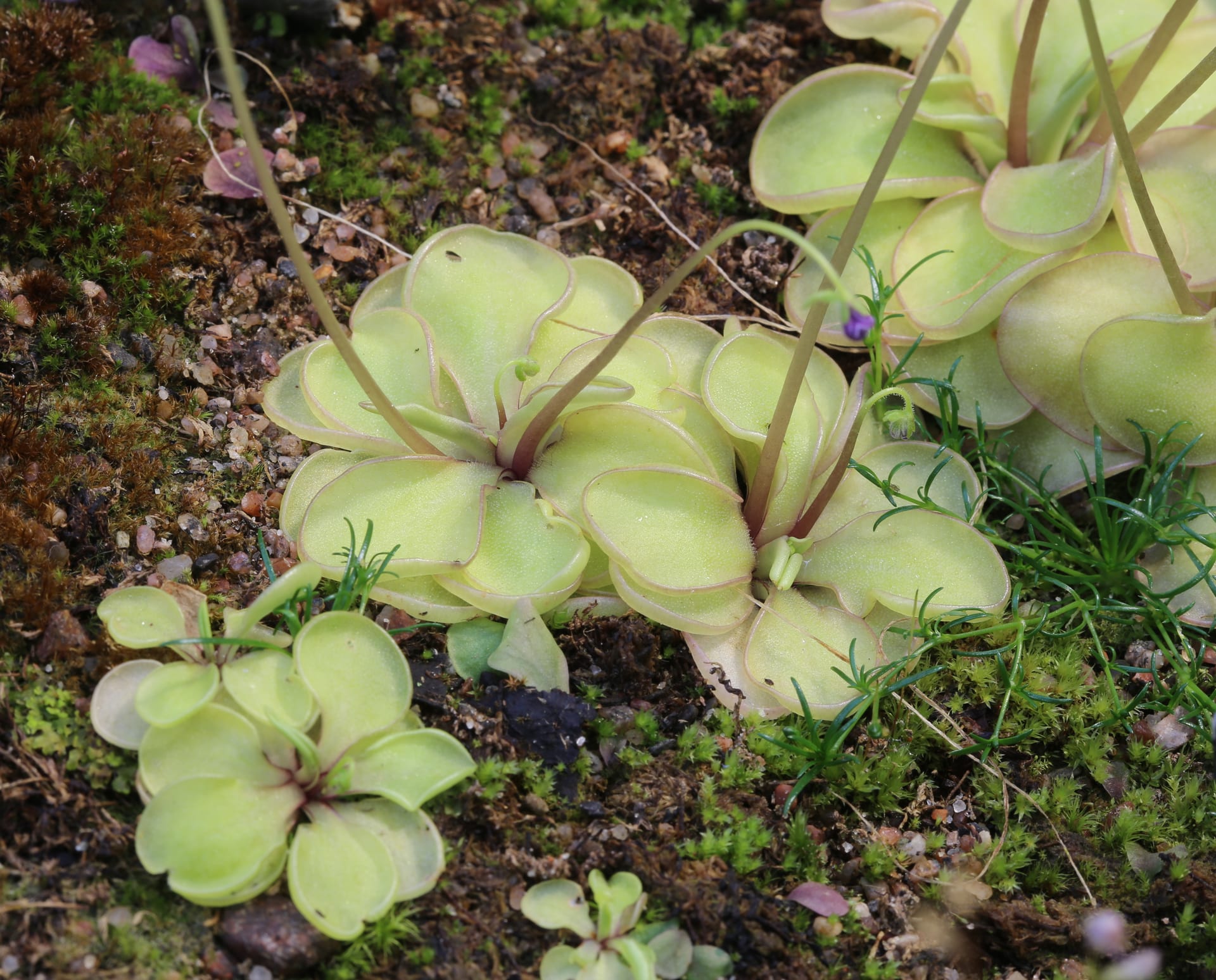
 © Averater / CC BY-SA 3.0
Pinguicula emarginata
Pinguicula emarginata is a small carnivorous plant native to rocky outcrops in Mexico's cloud forests. Like other butterworts, it traps and digests small insects using sticky mucilage on its leaf surface. Unlike many Pinguicula species that shrink into a compact winter rosette, this species keeps the same leaves year-round, which makes seasonal care simpler than for many of its relatives. Its small flowers are white with purple veining, and the notched petal tips are actually the origin of its species name, emarginata, meaning "notched." As a beginner-friendly perennial, it's a great pick for anyone trying carnivorous plants for the first time.
View Pinguicula emarginata encyclopedia →0% commission on your first sales!Register by September 30, 2026 and your first 2 plants are commission-free!
Grower Wanted!
List your plants on GrowerDirect and sell directly to customers nationwide!
6 Transparency Commitments from GrowerDirect
Every Grower listing discloses variety, origin, light requirements, and difficulty level for Carnivorous Plants. Complete transparency, guaranteed.
- Variety Disclosed
- Real Photos
- Color Information
- Origin Disclosed
- Light Requirements
- Difficulty Level
Browse all 145 varieties
Light Requirements
Difficulty Level
Verified growers wanted for Carnivorous Plants
Growers are signing up now ahead of launch. Subscribe to be notified when new listings go live.
Getting alerts is free with a member account. When new listings match your saved search, we'll notify you by email and in-app.
Browse other categories
Are you growing carnivorous plants?
Register as a grower and connect with buyers directly.
Apply as a growerPinguicula emarginata key facts
- Growing Difficulty
- Beginner-friendly
- Lifespan
- Perennial
- Size
- Leaves 1-5 cm long; flowers about 1-1.7 cm long
- Watering
- Little or no fertilizer needed (catches small insects on sticky leaves)
- Temperature & Overwintering
- It grows all year without a winter rosette. As a plant of humid subtropical uplands, keep it in a bright, frost-free room in winter.
- Light & Placement
- Grow on a bright windowsill or under lights. Many grow on cliffs with little direct sun in the wild, so avoid harsh midsummer sun.
- Watering
- It keeps the same leaves all year, so water so that the mix never dries out completely in any season. It is not a bog plant, so do not keep it waterlogged.
- Soil & Repotting
- It is not a bog plant; a mix of equal parts peat, coarse sand and perlite with dolomitic lime added to make it alkaline suits it.
- Pests & Cautions
- Do not use fungicides on Pinguicula; they can kill the plants. Fungus gnat larvae eat the leaves, so a thin layer of coarse sand on the soil surface helps.
About Pinguicula emarginata
A small carnivorous plant from Mexico's cloud forests, Pinguicula emarginata keeps the same leaves year-round with no winter rosette, and bears white flowers veined in purple. A beginner-friendly perennial.
7 things to know before growing Pinguicula emarginata
1Choosing a Bright Spot
This plant prefers bright light without harsh direct sun. Avoid intense, hot afternoon sun in summer, and keep it in a well-ventilated spot with filtered or indirect light for healthy leaf growth.
2Water Before It Dries Out
Because it keeps the same leaves all year without forming a winter rosette, water whenever needed to keep the mix from drying out completely, in every season. It isn't a bog plant, though, so avoid keeping it waterlogged.
3Well-Draining Mineral Soil
Because it grows on rocky outcrops in the wild, it favors a well-draining, mineral-rich mix. Growers commonly use a blend with extra perlite or pumice for drainage, rather than a standard potting mix.
4When to Repot
Unlike butterworts that go dormant in winter, this species has no distinct dormant period, so repotting is possible across most of the year except the height of summer heat. Once roots fill the pot, move it to a slightly larger one during a period of steadier growth.
5Same Leaves All Year Round
Many Pinguicula species shrink into a compact winter rosette, but P. emarginata skips this transformation and keeps the same leaf form year-round. That means there's no need to learn dramatically different seasonal routines — care stays fairly consistent throughout the year.
6Picking a Healthy Plant
Look for leaves that are glossy and visibly coated in sticky mucilage, without damage or blackened patches. Avoid plants with dried leaf tips or a browning, discolored base.
7Enjoying the Flowers
The plant produces small flowers, about 1–1.7cm long, that are white with purple veining. The notched tips of the petals give the species its name — emarginata means "notched."
Frequently asked questions about Pinguicula emarginata
- Q.Is this suitable for beginners?
- A.Yes, it's rated as a beginner-friendly species. As long as you follow the basics of watering and placement, it's an approachable choice even for first-time carnivorous plant growers.
- Q.Do I need to feed it insects?
- A.If it's kept outdoors or near an open window, it will typically catch small insects on its own, so manual feeding usually isn't necessary. Even in an indoor space with no insects at all, skipping feeding generally doesn't cause major problems for growth.
- Q.Does it need special winter care?
- A.Because it doesn't form a winter rosette, it doesn't undergo the dramatic seasonal change many other Pinguicula species do. As long as it's kept somewhere that doesn't get too cold, you can care for it much the same way year-round.
- Q.How large does it get?
- A.Leaves reach about 1–5cm long and the flowers are around 1–1.7cm, making this a compact species overall. Because it stays small, it doesn't take up much space on a growing shelf.
- Q.Is the sticky residue on the leaves a sign of disease?
- A.No, the sticky mucilage on the leaf surface is a normal part of how it traps insects. A plant producing plenty of mucilage is actually a sign of good health.
Handy Growing Tools for Pinguicula emarginata
Learn more about Pinguicula emarginata in the encyclopedia
View Pinguicula emarginata encyclopedia entry →
Care difficulty, size, origin and light needs — all basics covered.
More in this category
Can't find the plant you're looking for?
Post your wishes for free and growers with matching plants will contact you with introductions.