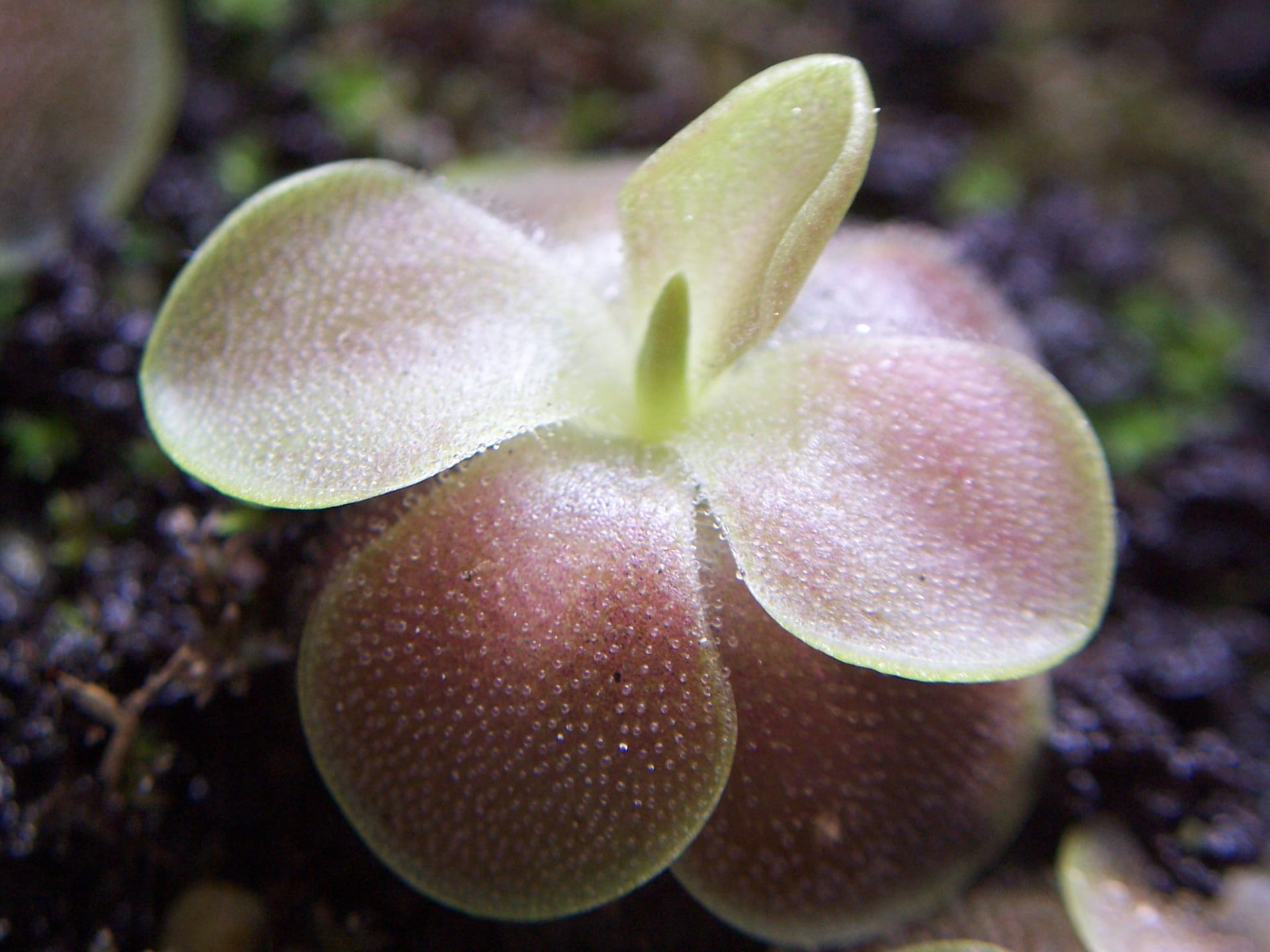
 © User:Ch.Andrew / CC BY 3.0
Pinguicula 'Sethos'
Pinguicula 'Sethos' is a classic hybrid butterwort created by crossing two Mexican species, P. moranensis and P. ehlersiae. Despite being a carnivorous plant, it's generally considered beginner-friendly, trapping small insects with the sticky droplets on its leaves as it grows. Its biggest draw is how freely it flowers: large reddish-purple blooms open one after another, each marked with a striking white star-shaped pattern radiating from the throat. As a perennial, it can also be propagated through division or leaf cuttings, so a single plant can be enjoyed for years to come.
View Pinguicula 'Sethos' encyclopedia →0% commission on your first sales!Register by September 30, 2026 and your first 2 plants are commission-free!
Grower Wanted!
List your plants on GrowerDirect and sell directly to customers nationwide!
6 Transparency Commitments from GrowerDirect
Every Grower listing discloses variety, origin, light requirements, and difficulty level for Carnivorous Plants. Complete transparency, guaranteed.
- Variety Disclosed
- Real Photos
- Color Information
- Origin Disclosed
- Light Requirements
- Difficulty Level
Browse all 145 varieties
Light Requirements
Difficulty Level
Verified growers wanted for Carnivorous Plants
Growers are signing up now ahead of launch. Subscribe to be notified when new listings go live.
Getting alerts is free with a member account. When new listings match your saved search, we'll notify you by email and in-app.
Browse other categories
Are you growing carnivorous plants?
Register as a grower and connect with buyers directly.
Apply as a growerPinguicula 'Sethos' key facts
- Growing Difficulty
- Beginner-friendly
- Lifespan
- Perennial (can be kept for years by division and leaf cuttings)
- Size
- Little published size data
- Watering
- Little or no fertilizer needed (catches small insects on sticky leaves)
- Temperature & Overwintering
- In summer it makes carnivorous leaves in warm, humid conditions; in winter keep it cooler and drier and it rests as a rosette of succulent leaves. Typical indoor windowsill conditions suit it well.
- Light & Placement
- Grow on a bright windowsill or under lights. Many grow on cliffs with little direct sun in the wild, so avoid harsh midsummer sun.
- Watering
- In summer, when it has carnivorous leaves, the pot can stand in up to 2 cm of water. Once it switches to succulent winter leaves, let it dry for about a week between waterings.
- Soil & Repotting
- It is not a bog plant; a mix of equal parts peat, coarse sand and perlite with dolomitic lime added to make it alkaline suits it. Repot or divide in the winter resting phase.
- Propagation
- Keep the cultivar true by leaf cuttings or division; plants raised from seed will not be the same cultivar.
- Pests & Cautions
- Do not use fungicides on Pinguicula; they can kill the plants. Fungus gnat larvae eat the leaves, so a thin layer of coarse sand on the soil surface helps.
About Pinguicula 'Sethos'
A classic Mexican butterwort hybrid (P. moranensis × P. ehlersiae) with large reddish-purple flowers and a white star-shaped throat pattern. Beginner-friendly and easy to propagate by division or leaf cuttings.
7 things to know before growing Pinguicula 'Sethos'
1Bright, Indirect Light
Sethos enjoys plenty of light, but direct midday sun in summer can scorch the leaves, so a spot with filtered light — such as behind a sheer curtain — works well. Good air circulation also helps keep the plant healthy.
2Water via the Tray Method
Sethos likes consistently moist soil, so standing the pot in a shallow water tray for bottom watering is the standard approach. Ease off during the winter dormant period described below and let it run a bit drier.
3Free-Draining, Slightly Alkaline Mix
It isn't a bog plant, so an equal mix of peat, coarse sand, and perlite with dolomite lime added to make it slightly alkaline suits it well.
4Repot During Winter Rest
Repotting and division are best done during the winter rest period. Dividing at the same time lets you refresh the plant while propagating it. To keep the cultivar's traits, propagate by division or leaf cuttings.
5Watch for the Winter Rosette
Mexican pinguiculas like Sethos change form in winter, shifting from sticky carnivorous leaves into a small, tightly packed non-carnivorous winter rosette as they go dormant. Keep watering light and let the soil stay on the drier side during this period.
6Propagate by Leaf or Division
Sethos propagates easily from leaf cuttings — simply place a detached leaf on moist soil to start a new plant — or by dividing an established clump. As a perennial, a single plant can keep providing new starts for years.
7What to Look for in a Healthy Plant
Look for firm leaves with little discoloration or damage, which tend to be easier to care for going forward. Since Sethos flowers readily, the presence of flower buds is also a good sign of a plant in good condition.
Frequently asked questions about Pinguicula 'Sethos'
- Q.Is Sethos suitable for beginners?
- A.Yes, Pinguicula 'Sethos' is generally considered one of the more beginner-friendly carnivorous plants. Sticking to bottom watering and letting it dry out a bit during winter dormancy is usually enough to keep it healthy.
- Q.Do I need to feed it insects?
- A.No special feeding is required. The sticky leaves naturally trap small insects on their own, so keeping the plant outdoors or near an open window is usually enough.
- Q.How big does it grow?
- A.Detailed size information for this particular cultivar is limited, but like other Mexican butterworts it forms a rosette of leaves. Its appearance can also vary somewhat depending on growing conditions.
- Q.Why does it look different in winter?
- A.Mexican pinguiculas like Sethos go dormant in winter, changing from sticky carnivorous leaves into a small, tightly packed non-carnivorous winter rosette. This is a natural part of its life cycle, not a sign that the plant is dying.
- Q.When does it flower?
- A.Sethos is known for blooming readily, producing large reddish-purple flowers with a white star-shaped pattern radiating from the throat. Exact timing varies with growing conditions, so it's worth observing your own plant.
Handy Growing Tools for Pinguicula 'Sethos'
Learn more about Pinguicula 'Sethos' in the encyclopedia
View Pinguicula 'Sethos' encyclopedia entry →
Care difficulty, size, origin and light needs — all basics covered.
More in this category
Can't find the plant you're looking for?
Post your wishes for free and growers with matching plants will contact you with introductions.