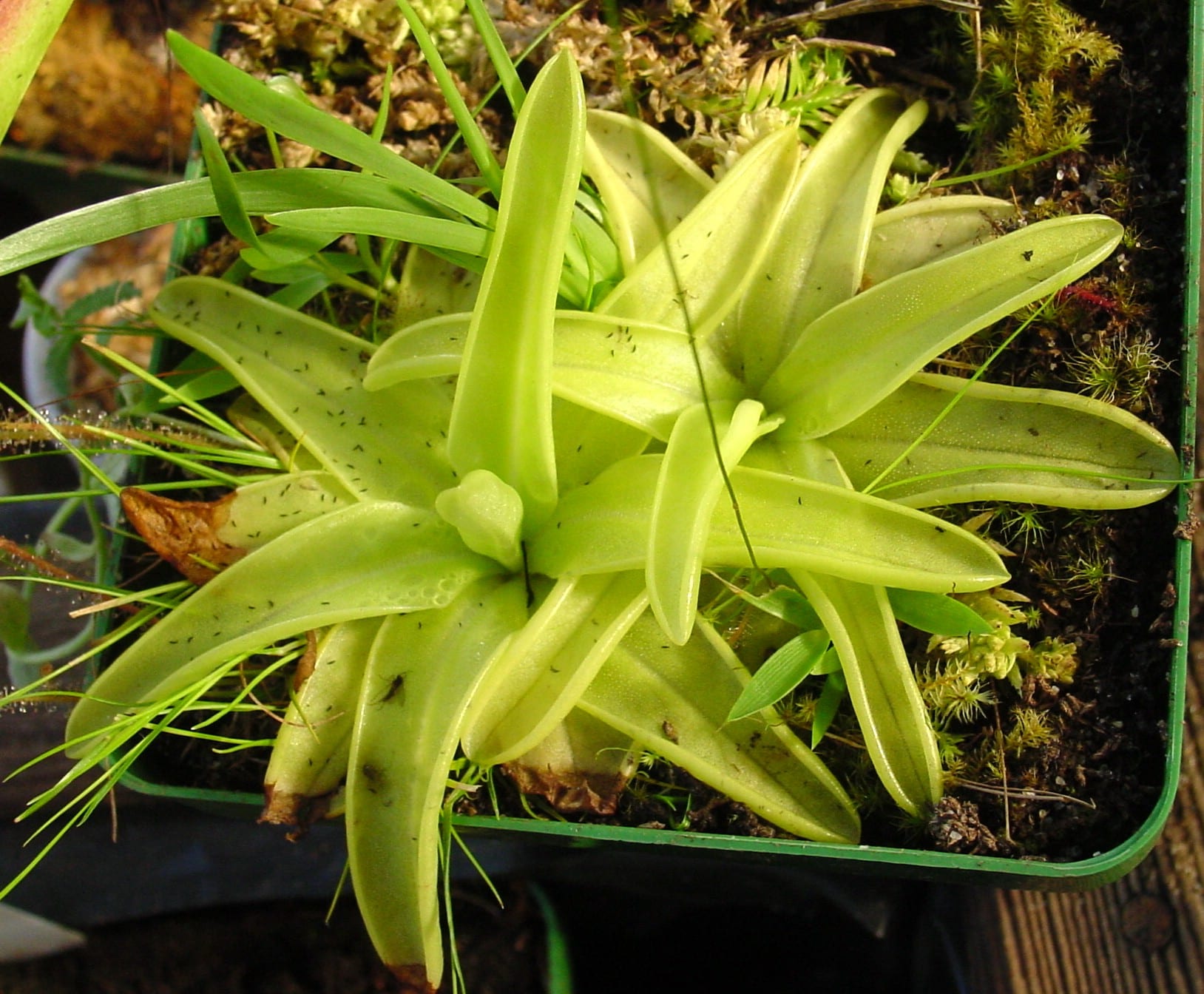
 © Noah Elhardt / CC BY-SA 2.5
Yellow butterwort
Pinguicula lutea, the yellow butterwort, is a carnivorous plant native to savannas and sandy wetlands of the southeastern United States. Its biggest draw is a vivid yellow flower that blooms in spring, an unusual color within the genus, set above a rosette of yellow-green leaves that grows to about 15 cm across. The sticky leaves trap tiny insects for extra nutrition. It keeps the same kind of leaves all year and has no way to withstand freezing, so in winter it should be kept somewhere frost-free. Because it's a short-lived perennial, the standard approach is to collect seed and renew plants over time.
View Yellow butterwort encyclopedia →0% commission on your first sales!Register by September 30, 2026 and your first 2 plants are commission-free!
Grower Wanted!
List your plants on GrowerDirect and sell directly to customers nationwide!
6 Transparency Commitments from GrowerDirect
Every Grower listing discloses variety, origin, light requirements, and difficulty level for Carnivorous Plants. Complete transparency, guaranteed.
- Variety Disclosed
- Real Photos
- Color Information
- Origin Disclosed
- Light Requirements
- Difficulty Level
Browse all 145 varieties
Light Requirements
Difficulty Level
Verified growers wanted for Carnivorous Plants
Growers are signing up now ahead of launch. Subscribe to be notified when new listings go live.
Getting alerts is free with a member account. When new listings match your saved search, we'll notify you by email and in-app.
Browse other categories
Are you growing carnivorous plants?
Register as a grower and connect with buyers directly.
Apply as a growerYellow butterwort key facts
- Growing Difficulty
- Advanced
- Lifespan
- Short-lived perennial
- Size
- Rosette up to 15 cm across; flowers 1-3 cm across
- Watering
- Little or no fertilizer needed (catches small insects on sticky leaves)
- Light & Placement
- Wild plants grow in open pine woods and savannas. Give it a bright spot, with some shade in the height of summer.
- Watering
- Keep the mix damp at all times. It grows in drier spots than other southern butterworts, so do not keep it waterlogged.
- Temperature & Overwintering
- It keeps the same leaves all year and has no adaptations to freezing. Bring it in before frost, or protect it if grown outside.
- Soil & Repotting
- Grow in 3 parts peat, 1 part silica sand and 1 part perlite, or in pure peat. Replant into fresh mix if moss or cyanobacteria start to cover it.
- Propagation
- A short-lived perennial, so collecting seed is essential to keep it long term. It needs hand pollination with a small brush. Seed germinates in 2-4 weeks at above 15°C.
About Yellow butterwort
A carnivorous butterwort native to the southeastern US, prized for its unusually vivid yellow spring blooms. This short-lived perennial forms a yellow-green rosette up to 15 cm across and suits experienced growers.
7 things to know before growing Yellow butterwort
1Grow It in Bright Light
In the wild it grows in open pine woods and savannas. Give it a bright spot, with light shade during midsummer. Without enough light, the leaves stretch out and flowering suffers.
2Soil: drainage and moisture together
To mimic its sandy wetland habitat, use a fertilizer-free mix of peat moss and sand or perlite. Aim for a blend that drains well yet stays consistently moist. A ready-made carnivorous plant potting mix also works.
3Keep the Mix Moist
Keep the mix consistently moist. This species grows in drier spots than other southern butterworts, though, so don't let it sit waterlogged. Keep it somewhere with good airflow.
4Same Leaves Through Winter
Pinguicula lutea is a warm-temperate species that keeps the same kind of rosette all year and does not form a hibernaculum. It has no way to withstand freezing, so bring it somewhere frost-free for winter or protect it from frost if it stays outdoors.
5Repot When the Mix Deteriorates
When the surface of the mix becomes covered with moss or blue-green algae, repot into fresh mix. A blend of three parts peat, one part silica sand, and one part perlite, or pure peat, is commonly used. Remove the old mix and handle the roots gently.
6Check the Base When Choosing a Plant
When choosing a plant, check that the center of the rosette and the base aren't blackened or mushy. Firm, plump, vividly yellow-green leaves are a sign of healthy growth.
7Skip the fertilizer
As a carnivorous plant, Pinguicula lutea doesn't need fertilizer or supplemental feeding. Added nutrients can actually damage the roots, so a fertilizer-free mix plus whatever small insects it catches naturally is enough, especially when grown outdoors.
Frequently asked questions about Yellow butterwort
- Q.Does it need to be fed insects to survive?
- A.No — if it's kept outdoors or near an open window where small insects can land, it will catch enough on its own. The sticky leaves naturally trap and digest tiny prey for extra nutrients. Even indoors, there's no need to feed it by hand.
- Q.What does it look like in winter?
- A.Pinguicula lutea keeps the same kind of rosette all year and doesn't form a dormant hibernaculum. It can't withstand freezing, though, so bring it somewhere frost-free or protect it from frost in winter.
- Q.Why is this species considered advanced to grow?
- A.It's a short-lived perennial that can weaken from flowering too heavily, so it needs to be renewed from seed. It doesn't self-pollinate easily, which means hand-pollinating with a brush. It also can't tolerate freezing, so its winter location needs care.
- Q.When does it flower, and how big are the blooms?
- A.It flowers in spring, with blooms about 1 to 3 cm across held on a stalk rising above the rosette. The vivid yellow color is unusual for the genus Pinguicula, making it a distinctive sight among butterworts.
- Q.Can it be grown indoors on a windowsill alone?
- A.It can, as long as it gets plenty of light; without enough, growth becomes weak and stretched. Aim for a bright spot with light shade in midsummer, and add a grow light if the windowsill isn't bright enough.
Handy Growing Tools for Yellow butterwort
Learn more about Yellow butterwort in the encyclopedia
View Yellow butterwort encyclopedia entry →
Care difficulty, size, origin and light needs — all basics covered.
More in this category
Can't find the plant you're looking for?
Post your wishes for free and growers with matching plants will contact you with introductions.