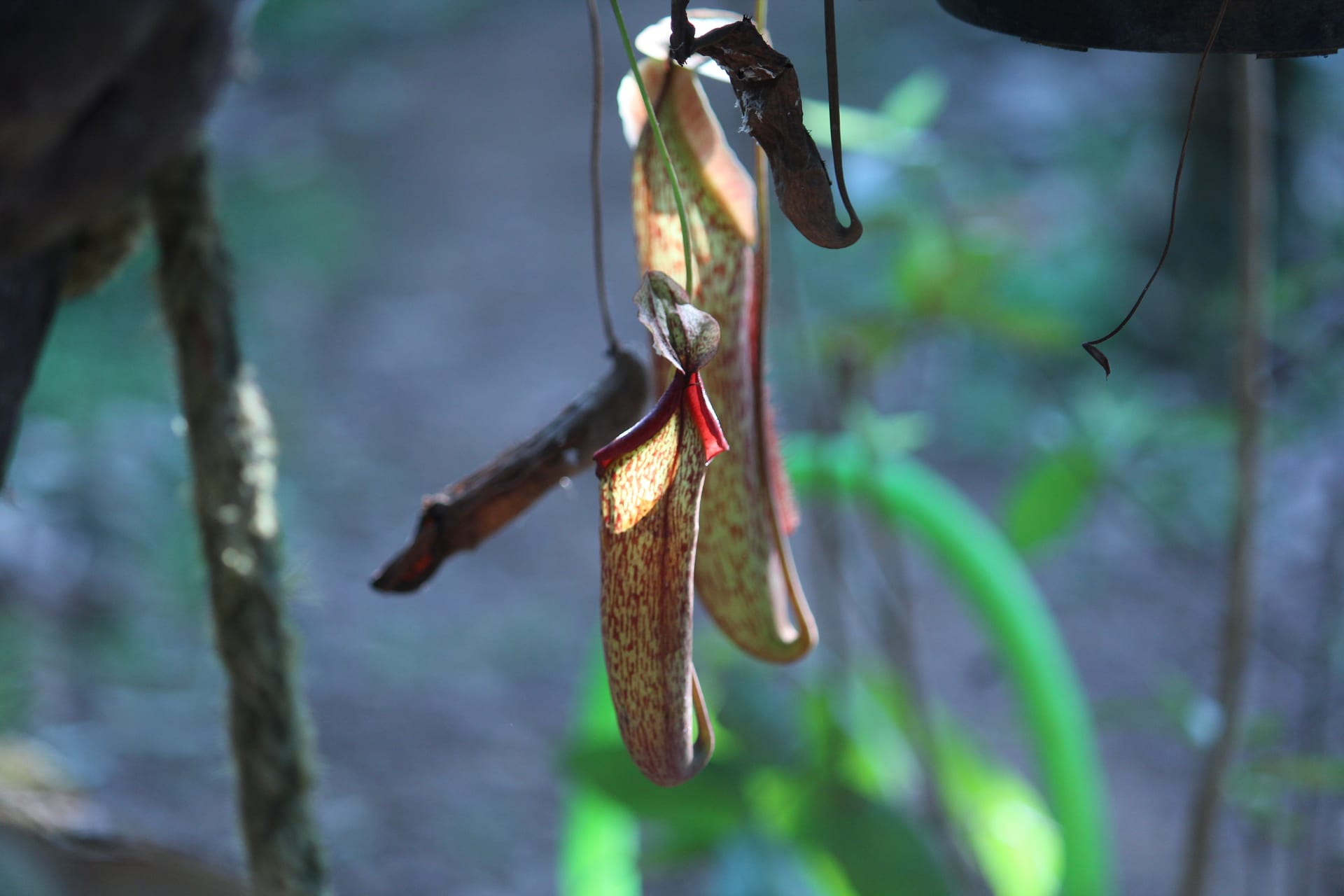
 © vijayakumarblathur / CC BY-SA 4.0
Nepenthes Miranda
Nepenthes Miranda is a hybrid pitcher plant known for its large pitchers, pale green with reddish-brown speckling and a nearly vertical mouth rimmed in deep reddish-brown, called the peristome. Pitchers typically reach about 25 to 30 cm in height, and the vine grows continuously, producing new pitchers as it climbs. As a perennial vine, it's generally considered beginner-friendly, making it a popular starting point for anyone curious about carnivorous plants. Its striking pitchers and vigorous growth habit give it a presence unlike typical foliage plants, appealing to hobbyists who want a bit more character on their shelf.
View Nepenthes Miranda encyclopedia →0% commission on your first sales!Register by September 30, 2026 and your first 2 plants are commission-free!
Grower Wanted!
List your plants on GrowerDirect and sell directly to customers nationwide!
6 Transparency Commitments from GrowerDirect
Every Grower listing discloses variety, origin, light requirements, and difficulty level for Carnivorous Plants. Complete transparency, guaranteed.
- Variety Disclosed
- Real Photos
- Color Information
- Origin Disclosed
- Light Requirements
- Difficulty Level
Browse all 145 varieties
Light Requirements
Difficulty Level
Verified growers wanted for Carnivorous Plants
Growers are signing up now ahead of launch. Subscribe to be notified when new listings go live.
Getting alerts is free with a member account. When new listings match your saved search, we'll notify you by email and in-app.
Browse other categories
Are you growing carnivorous plants?
Register as a grower and connect with buyers directly.
Apply as a growerNepenthes Miranda key facts
- Growing Difficulty
- Beginner-friendly
- Lifespan
- Perennial climber
- Size
- Pitchers 25-30 cm tall
- Watering
- Very dilute fertilizer at most (catches insects)
- Light & Placement
- Grow in bright light; too little light means fewer pitchers. Hanging baskets show off the large pitchers.
- Watering
- Use rain water or water low in dissolved minerals and water before the mix dries out. Do not leave the pot standing in water; a free-draining mix keeps the roots healthy.
- Temperature & Overwintering
- With highland and lowland ancestry it adapts to a wide temperature range; keep it in a warm room in winter.
- Soil & Repotting
- Plant in a free-draining, airy mix; pure sphagnum or orchid mix with sphagnum or perlite are common choices.
- Fertilizer
- If using chemical fertilizer, use it at very low strength; an occasional insect dropped into a pitcher is enough.
- Propagation
- Cuttings root in damp sphagnum inside a bag or case in one to two months and start producing pitchers after about six months.
About Nepenthes Miranda
Nepenthes Miranda is a hybrid pitcher plant with large, reddish-speckled pitchers reaching 25-30 cm. Beginner-friendly and vigorous, this perennial vine makes an eye-catching pick for new carnivorous plant growers.
7 things to know before growing Nepenthes Miranda
1Light & Placement
Nepenthes Miranda prefers bright, indirect light, such as near a window filtered by a sheer curtain, rather than direct sun. Prolonged exposure to strong direct sunlight can scorch the leaves, so filtered light is safer. Good airflow combined with adequate humidity tends to encourage better pitcher formation.
2Watering & Humidity
Water before the growing medium fully dries out, and avoid letting it dry out too much between waterings. Low humidity can prevent pitchers from developing properly, so misting or other humidity boosts help. Avoid leaving standing water in the saucer, as this can lead to root rot.
3Choosing a Growing Medium
This plant prefers a well-draining, low-nutrient mix, such as sphagnum moss combined with bark chips and perlite. Standard potting soil for houseplants tends to hold too much moisture and nutrients, so it's best avoided.
4When to Repot
Repot into a slightly larger container once roots fill the current pot. Nepenthes roots are delicate, so handle the root ball gently and avoid disturbing it more than necessary. Repotting during active growth, rather than a slower season, tends to go more smoothly.
5Temperature & Winter Care
As a vine that favors warm conditions, this plant can weaken if exposed to cold temperatures in winter. Moving it to a warm indoor spot and keeping temperatures from dropping too low are key to a successful winter.
6Feeding Is Rarely Needed
Because the pitchers naturally trap small insects for nutrients, additional fertilizing usually isn't necessary. If you do fertilize, use a diluted liquid feed sparingly, since concentrated fertilizer can damage the roots.
7What to Look For When Choosing a Plant
Check whether new pitchers are forming at the tip of the vine and whether the leaves and vine show any signs of damage. It's also worth confirming that the base is stable and the roots are well established.
Frequently asked questions about Nepenthes Miranda
- Q.Is this a good plant for beginners?
- A.Yes — Nepenthes Miranda is generally considered a beginner-friendly variety. With the basics of bright light and humidity management in place, it's manageable even for first-time carnivorous plant growers.
- Q.How big do the pitchers get?
- A.Pitchers typically reach about 25 to 30 cm in height. They're pale green with reddish-brown speckling, and the rim, or peristome, develops a deep reddish-brown color.
- Q.Is it better to grow it indoors or outdoors?
- A.It can be grown either indoors or outdoors as long as it's protected from direct sun and sudden temperature swings. Since it's sensitive to cold, though, it's safer to keep it in a warm indoor spot during cooler seasons.
- Q.Do I need to feed it insects?
- A.Not really — the pitchers naturally catch small insects on their own, so actively feeding it usually isn't necessary. Forcing insects into the pitchers can even damage them, so it's best avoided.
- Q.An old pitcher has turned brown and dried out — is that a problem?
- A.Individual pitchers have a natural lifespan, and it's normal for older ones to brown and die back once they've done their job. As long as new pitchers are forming at the vine's tip, the plant itself is healthy.
Handy Growing Tools for Nepenthes Miranda
Learn more about Nepenthes Miranda in the encyclopedia
View Nepenthes Miranda encyclopedia entry →
Care difficulty, size, origin and light needs — all basics covered.
More in this category
Can't find the plant you're looking for?
Post your wishes for free and growers with matching plants will contact you with introductions.