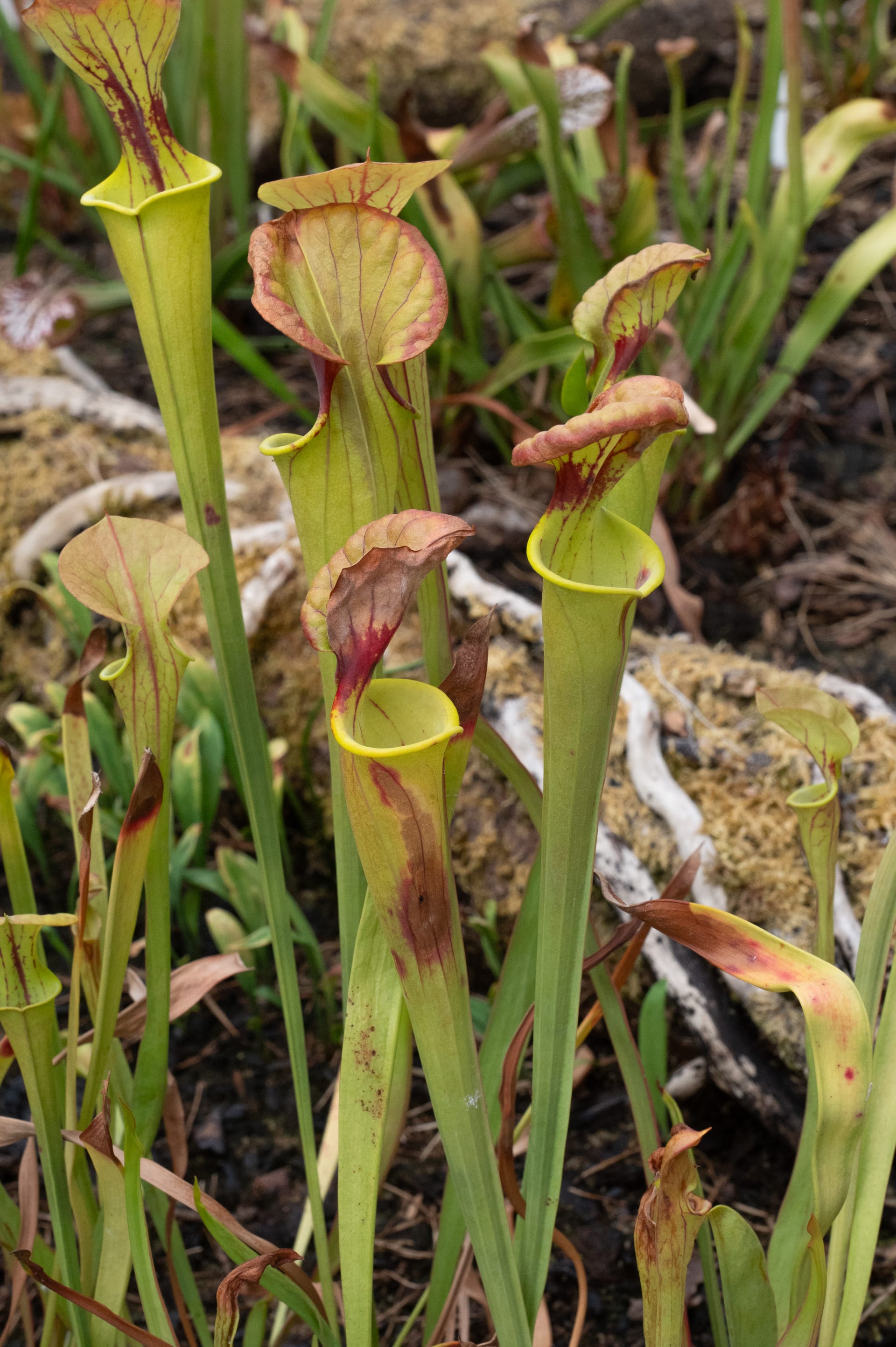
 © Mickaël Schauli / CC BY-SA 4.0
Sarracenia flava var. cuprea
Sarracenia flava var. cuprea is a variety of the yellow pitcher plant (Sarracenia flava), best known for the striking contrast between its green-to-yellow tubular pitchers and the copper-red lid that caps each one. On some plants, that copper hue gradually softens as the season progresses, giving each specimen its own character over time. Rated as beginner-friendly, this is a long-lived perennial that can be kept going for years through division. With the basics of light and soil in place, it's an approachable choice for anyone growing carnivorous plants for the first time.
View Sarracenia flava var. cuprea encyclopedia →0% commission on your first sales!Register by September 30, 2026 and your first 2 plants are commission-free!
Grower Wanted!
List your plants on GrowerDirect and sell directly to customers nationwide!
6 Transparency Commitments from GrowerDirect
Every Grower listing discloses variety, origin, light requirements, and difficulty level for Carnivorous Plants. Complete transparency, guaranteed.
- Variety Disclosed
- Real Photos
- Color Information
- Origin Disclosed
- Light Requirements
- Difficulty Level
Browse all 145 varieties
Light Requirements
Difficulty Level
Verified growers wanted for Carnivorous Plants
Growers are signing up now ahead of launch. Subscribe to be notified when new listings go live.
Getting alerts is free with a member account. When new listings match your saved search, we'll notify you by email and in-app.
Browse other categories
Are you growing carnivorous plants?
Register as a grower and connect with buyers directly.
Apply as a growerSarracenia flava var. cuprea key facts
- Growing Difficulty
- Beginner-friendly
- Lifespan
- Perennial (can be kept for many years by division)
- Size
- Pitchers typically about 50 cm (the species can exceed 1 m)
- Watering
- No fertilizer (catches insects)
- Light & Placement
- Grow outdoors in full sun; with too little light the colour is poor and the pitchers are weak.
- Watering
- Keep the pot standing in about 4-6 cm of water at all times and never let it dry out. Use rain water or other water low in dissolved minerals.
- Soil & Repotting
- A 1:1 peat and sand mix is the standard. Divide and repot well-grown plants every 3 or 4 years.
- Temperature & Overwintering
- Let it go dormant in winter. Fully dormant plants survive a few weeks frozen solid in their pots, but early and late frosts are the danger. Keep the winter spot cool, not warm.
- Fertilizer
- Do not fertilize the soil of mature plants; it can cause rhizome rot. Plenty of sun and access to prey are enough.
- Pests & Cautions
- The varieties of S. flava differ mainly in colour, and intermediate plants and crosses between varieties are common even in the wild. Do not rely on the variety name alone; check the colour of tube and lid on photos or the plant itself.
About Sarracenia flava var. cuprea
Sarracenia flava var. cuprea is a beginner-friendly carnivorous plant variety with green-yellow pitchers and a striking copper-red lid, easily maintained long-term through division.
7 things to know before growing Sarracenia flava var. cuprea
1Give It Full Sun
Sarracenia flava var. cuprea develops its sharpest color contrast — vivid yellow-green pitchers against a copper-red lid — when it gets strong light all day. An outdoor spot with good airflow and full sun is ideal; too little light leads to leggy growth and duller coloring.
2Water From Below
Keep the soil constantly moist by standing the pot in a shallow tray of water (the "tray method"). If tap water minerals are a concern, rainwater or distilled water is gentler on the plant over time.
3Use a Nutrient-Free Mix
Plant it in a nutrient-free mix such as sphagnum moss or peat combined with sand or perlite. Standard potting soil formulated for houseplants contains fertilizer that can damage the roots.
4Repot in Spring
The best time to repot is early spring, just as the plant wakes from dormancy and new growth begins. Repot every few years as the mix breaks down or the plant becomes crowded, and divide the clump at the same time to minimize stress.
5It Dies Back in Winter
As a temperate species, Sarracenia flava var. cuprea drops its pitchers and enters dormancy from autumn onward. Cut back on watering during dormancy but keep the mix from drying out completely, and let the plant experience cold — this supports strong growth the following spring.
6Lid Color Can Shift
The signature copper-red lid can fade somewhat as the season progresses, and this varies from plant to plant. This is normal individual variation, and the intensity often reflects how much light the plant is getting and its overall condition.
7What to Look For
Look for a plant with upright, well-formed pitchers and good lid coloration, since that reflects its current condition. Plants with multiple growth points at the base are easier to divide later and tend to be easier to maintain long-term.
Frequently asked questions about Sarracenia flava var. cuprea
- Q.Is it suitable for beginners?
- A.Yes, Sarracenia flava var. cuprea is generally considered beginner-friendly. As long as you cover the basics of light, watering, and soil, it's an approachable plant even for first-time carnivorous plant growers.
- Q.How large does it get?
- A.The pitchers typically reach around 50 cm tall. Some individuals of the species can exceed 1 meter, though this varies by plant and growing conditions.
- Q.Does the copper-red lid stay that color?
- A.On some plants, the copper-red coloring gradually fades as the season progresses. This is normal individual variation, and the intensity often depends on light exposure and the plant's overall condition.
- Q.What does winter care involve?
- A.The pitchers die back as the plant enters dormancy from autumn onward, so watering should be reduced while still keeping the mix from drying out completely. Exposing the plant to cold during dormancy supports healthy growth the following spring.
- Q.Can it be propagated by division?
- A.Yes, it's a perennial that can be maintained long-term through division. Dividing the clump in early spring, alongside repotting, minimizes stress on the plant.
Handy Growing Tools for Sarracenia flava var. cuprea
Learn more about Sarracenia flava var. cuprea in the encyclopedia
View Sarracenia flava var. cuprea encyclopedia entry →
Care difficulty, size, origin and light needs — all basics covered.
More in this category
Can't find the plant you're looking for?
Post your wishes for free and growers with matching plants will contact you with introductions.