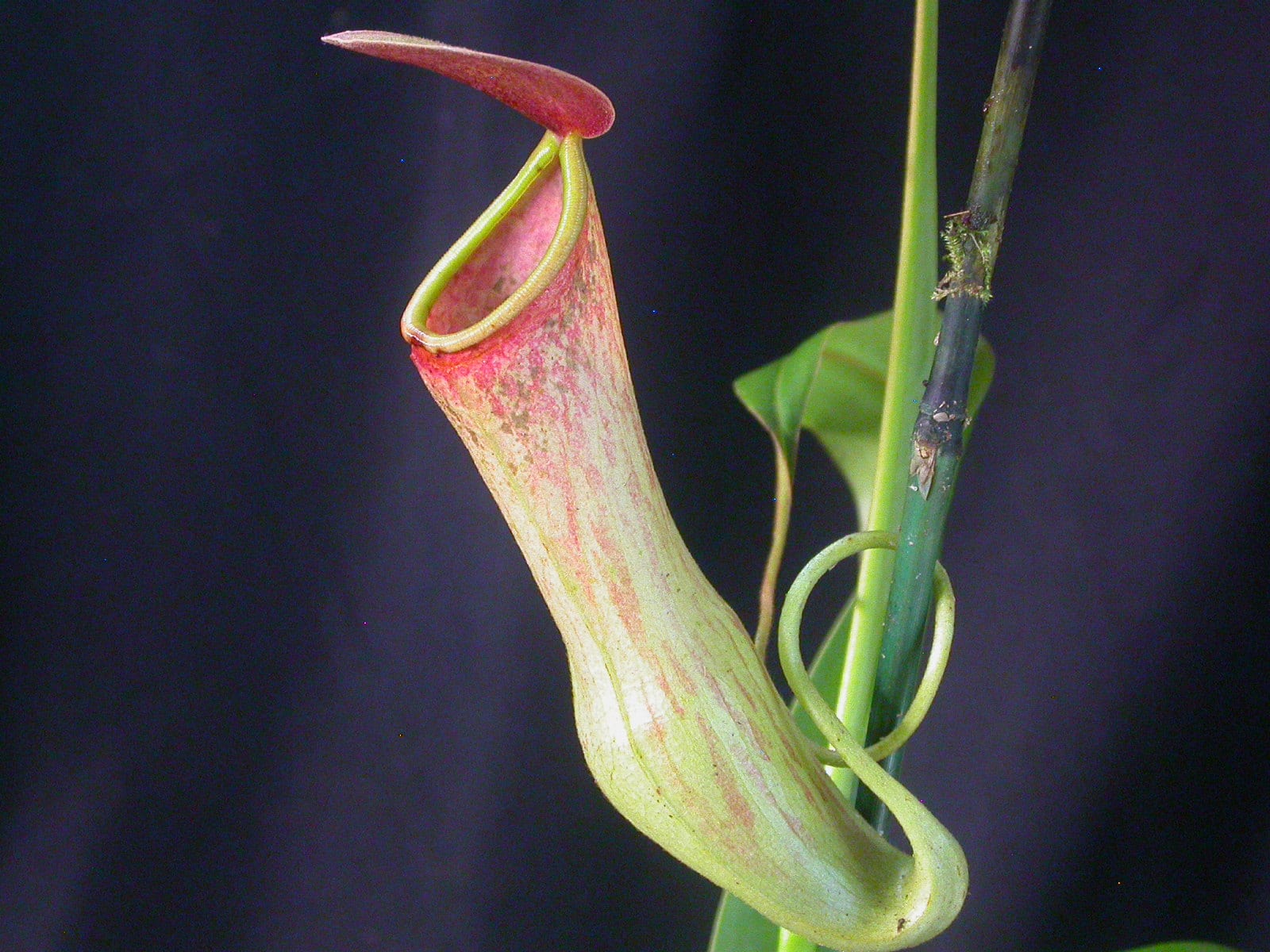
 © JeremiahsCPs (English Wikipedia) / Public domain
Nepenthes khasiana
Nepenthes khasiana is the only pitcher plant species native to India, with slender green pitchers marked with reddish-brown streaks; the pitchers are thought to lure insects with a blue fluorescence. It is a perennial vine that can reach around 4 meters, with pitchers just under 20cm long. The species is listed in CITES Appendix I, and in Japan any sale or transfer in principle requires a registration certificate under the Act on Conservation of Endangered Species. Plants propagated in Japan are also subject to registration, so always confirm that a registration certificate comes with the plant when buying. It suits intermediate growers, and its unusual form has made it a favorite among carnivorous plant enthusiasts.
View Nepenthes khasiana encyclopedia →0% commission on your first sales!Register by September 30, 2026 and your first 2 plants are commission-free!
Grower Wanted!
List your plants on GrowerDirect and sell directly to customers nationwide!
6 Transparency Commitments from GrowerDirect
Every Grower listing discloses variety, origin, light requirements, and difficulty level for Carnivorous Plants. Complete transparency, guaranteed.
- Variety Disclosed
- Real Photos
- Color Information
- Origin Disclosed
- Light Requirements
- Difficulty Level
Browse all 145 varieties
Light Requirements
Difficulty Level
Verified growers wanted for Carnivorous Plants
Growers are signing up now ahead of launch. Subscribe to be notified when new listings go live.
Getting alerts is free with a member account. When new listings match your saved search, we'll notify you by email and in-app.
Browse other categories
Are you growing carnivorous plants?
Register as a grower and connect with buyers directly.
Apply as a growerNepenthes khasiana key facts
- Growing Difficulty
- Intermediate
- Lifespan
- Perennial (climbing)
- Size
- Pitchers just under 20 cm long; stems to about 4 m
- Watering
- Very dilute fertilizer at most (catches insects)
- Temperature & Overwintering
- Its home is upland where nights are cool and days never get very hot. Keep it somewhere cool and airy in long hot spells, and protect it from frost in winter.
- Light & Placement
- Likes bright light, but harsh midsummer sun can scorch it. Keep it in bright part shade where humidity can be kept up.
- Watering
- Use rain water or water low in dissolved minerals and water before the mix dries out. Do not leave the pot standing in water.
- Soil & Repotting
- Plant in a free-draining, airy mix; pure sphagnum or orchid mix with sphagnum or perlite are common choices.
- Fertilizer
- If using chemical fertilizer, use it at very low strength; an occasional insect dropped into a pitcher is enough.
- Pests & Cautions
- A CITES Appendix I species; selling or giving plants within Japan requires a registration certificate. Do not buy plants without one.
About Nepenthes khasiana
Nepenthes khasiana, India's only native pitcher plant, has slender green pitchers with reddish-brown streaks thought to lure insects with blue fluorescence. A CITES Appendix I species; sale or transfer in Japan requires a registration certificate.
7 things to know before growing Nepenthes khasiana
1Placement and Light
It prefers bright, filtered light, such as near a window with a sheer curtain, rather than direct sun. Strong midsummer sunlight can damage the leaves and pitchers, so some shading is helpful.
2Watering Basics
Water thoroughly once the surface of the soil starts to dry out. Letting it dry out too much can prevent the pitchers from developing well, so keep an eye on moisture levels.
3Well-Draining Soil
It grows best in an airy, well-draining medium such as sphagnum moss. A commercial carnivorous plant mix makes upkeep easier while helping prevent root rot.
4Keep Humidity High
Dry air can make it difficult for the pitchers to form properly. Misting or using a humidifier to keep the surrounding air more humid helps encourage good growth.
5Repotting Every Few Years
As a vining plant, its roots spread over time, so repotting into a slightly larger pot every few years helps keep growth steady. It's best done during the warmer months when growth is most active.
6Seasonal Care
Growth slows as temperatures drop, so water a bit less often during cooler months. It isn't very cold-hardy, so keep it in a warm spot indoors over winter.
7Choosing a Plant
Look for a plant with sturdy vines and a few pitchers already formed, as these tend to establish more reliably afterward. It also helps to check that the leaves and vines look healthy and glossy.
Frequently asked questions about Nepenthes khasiana
- Q.Can beginners grow this plant?
- A.It's better suited to growers with some prior experience rather than absolute beginners. Paying close attention to humidity and placement early on will make it easier to manage.
- Q.How big do the pitchers get?
- A.The pitchers grow to just under 20cm in length. The exact size varies somewhat depending on the plant's condition and growing environment.
- Q.How long do the vines grow?
- A.As a perennial vine, it can eventually reach around 4 meters in length. Preparing space with a support or hanging setup in advance makes it easier to manage as it grows.
- Q.Is overwintering difficult?
- A.It isn't very cold-tolerant, so it needs to be kept in a warm spot indoors during winter. Watering should also be reduced somewhat as temperatures drop.
- Q.Why aren't the pitchers forming well?
- A.Insufficient humidity or light are the most likely causes. Try adjusting its placement and finding ways to keep the surrounding humidity higher.
Handy Growing Tools for Nepenthes khasiana
Learn more about Nepenthes khasiana in the encyclopedia
View Nepenthes khasiana encyclopedia entry →
Care difficulty, size, origin and light needs — all basics covered.
More in this category
Can't find the plant you're looking for?
Post your wishes for free and growers with matching plants will contact you with introductions.